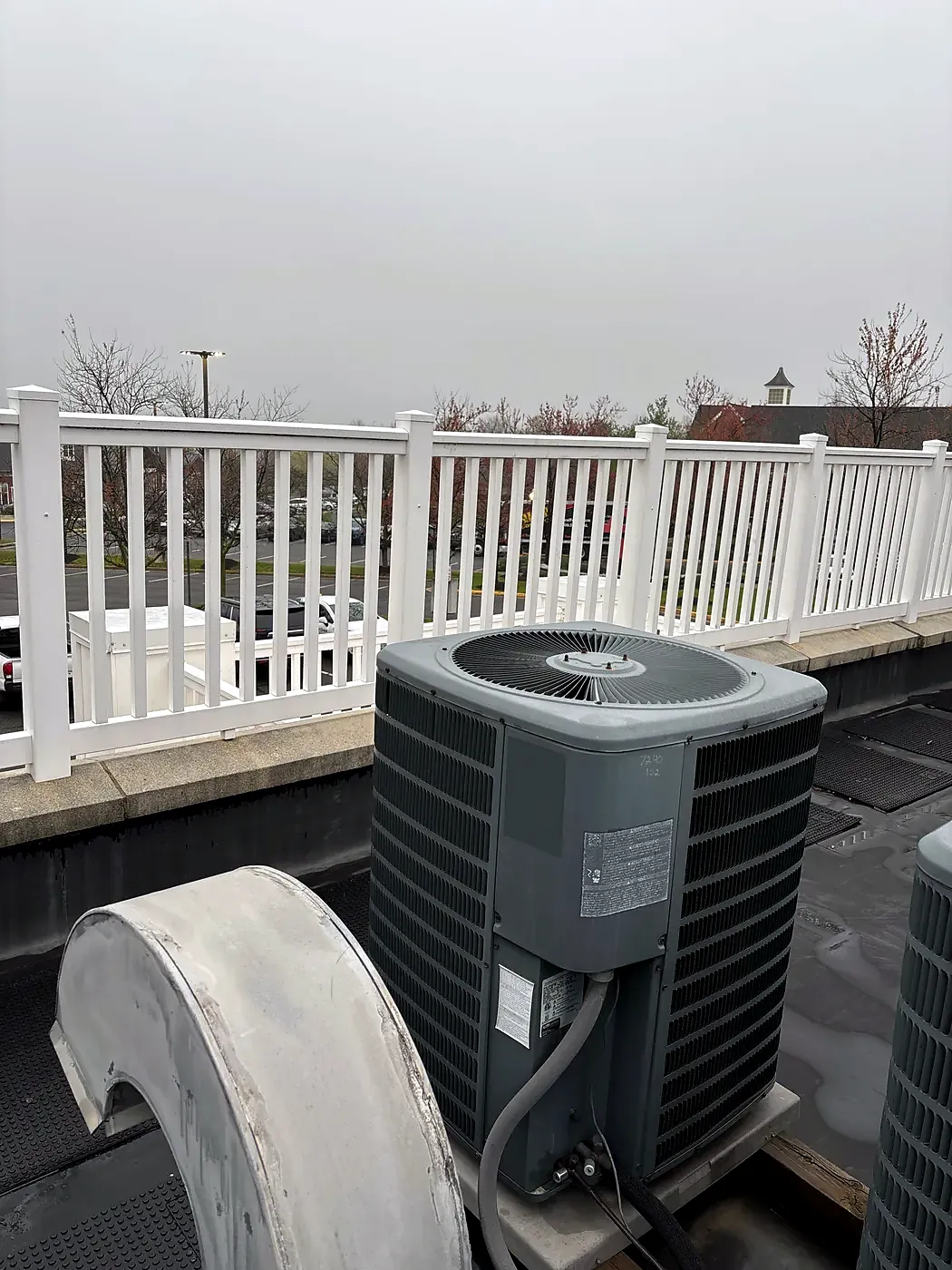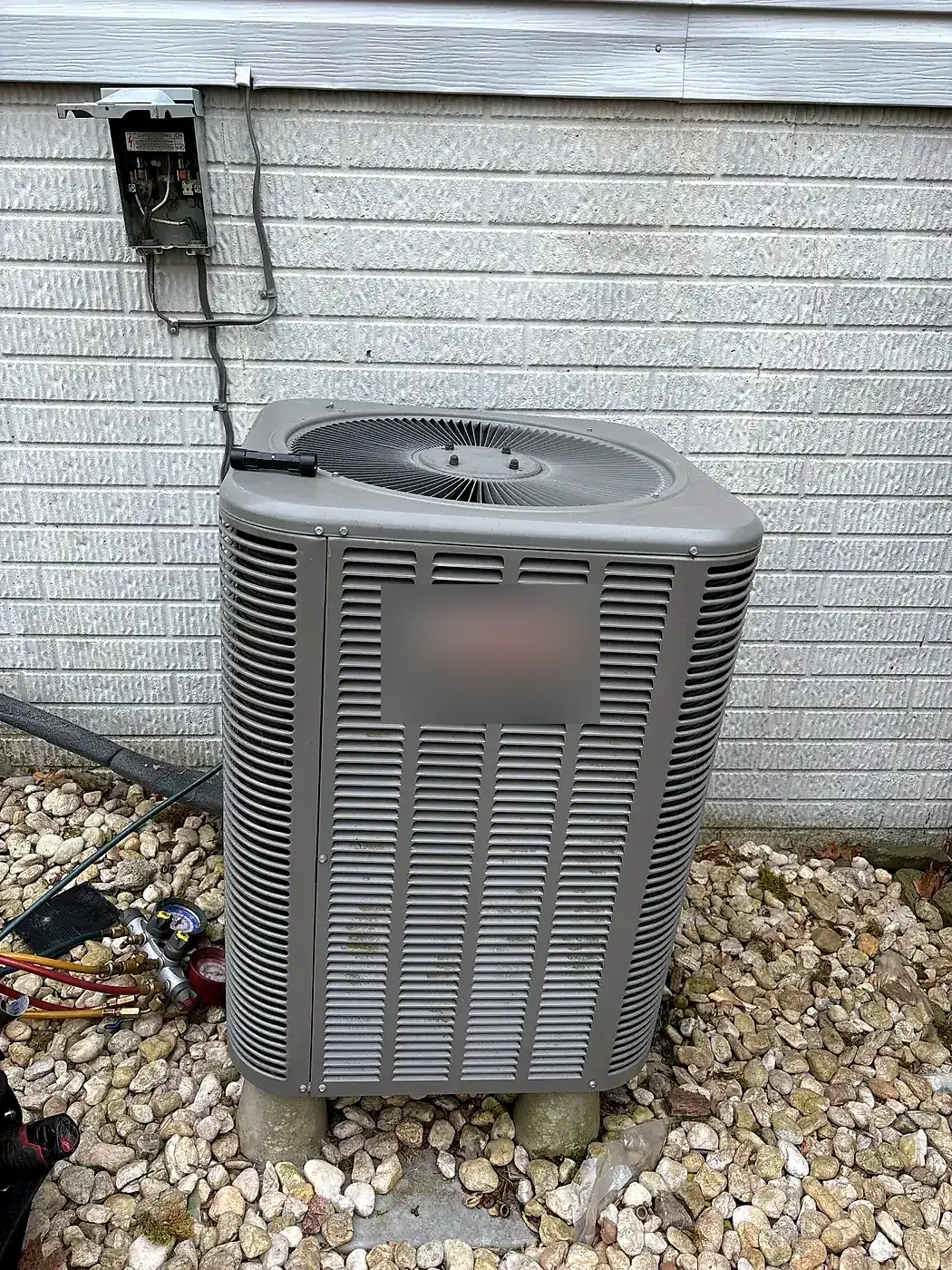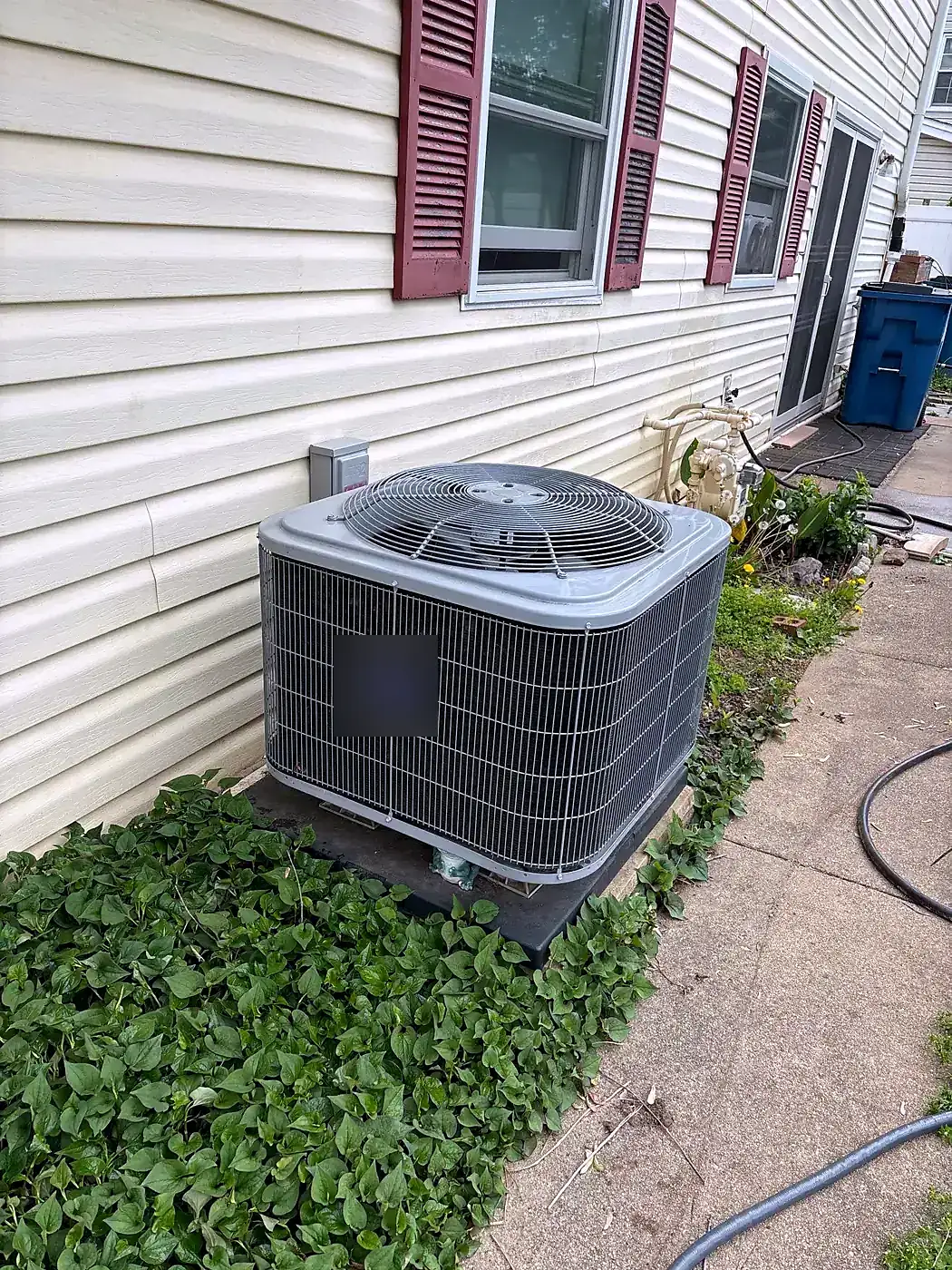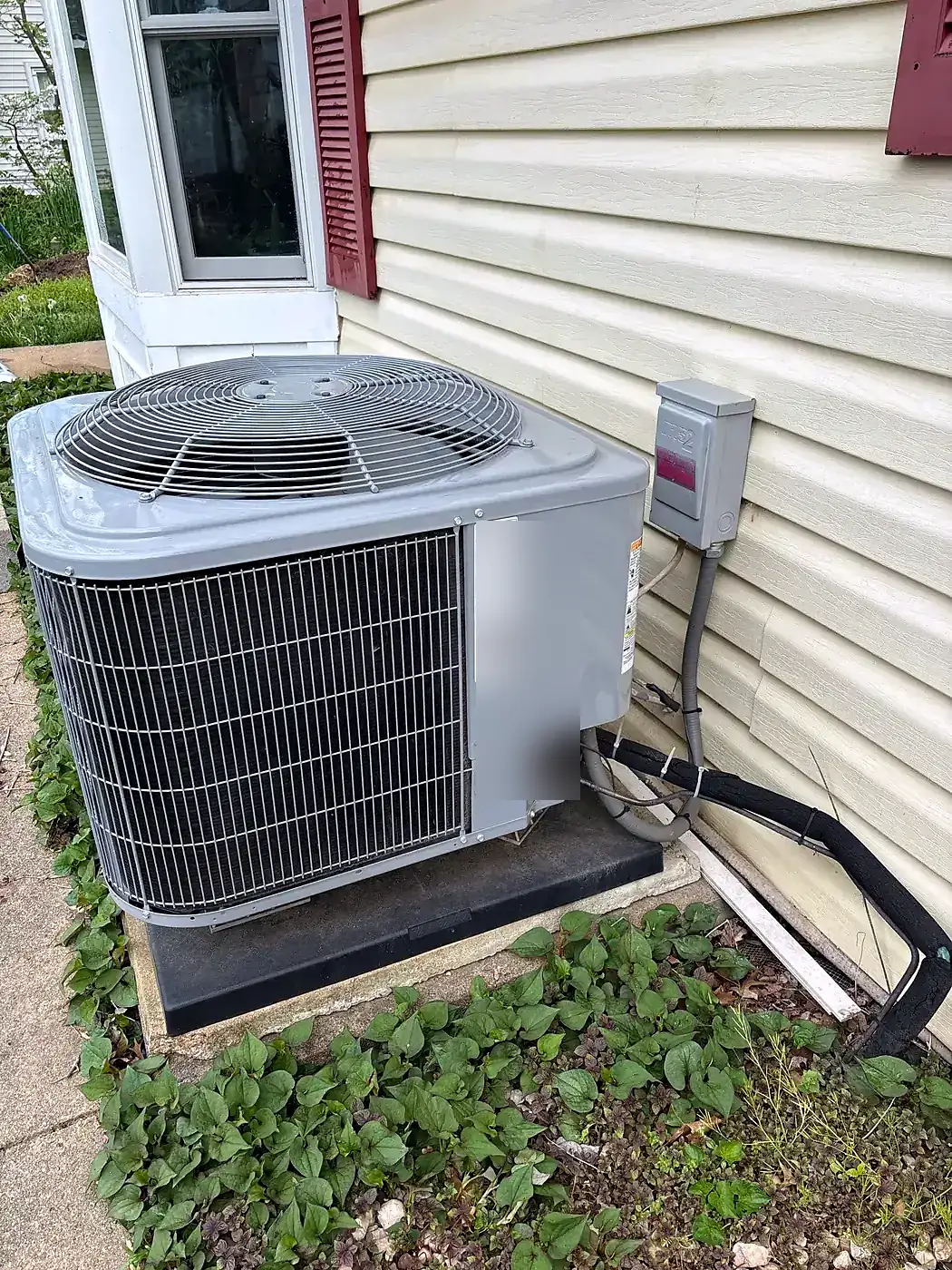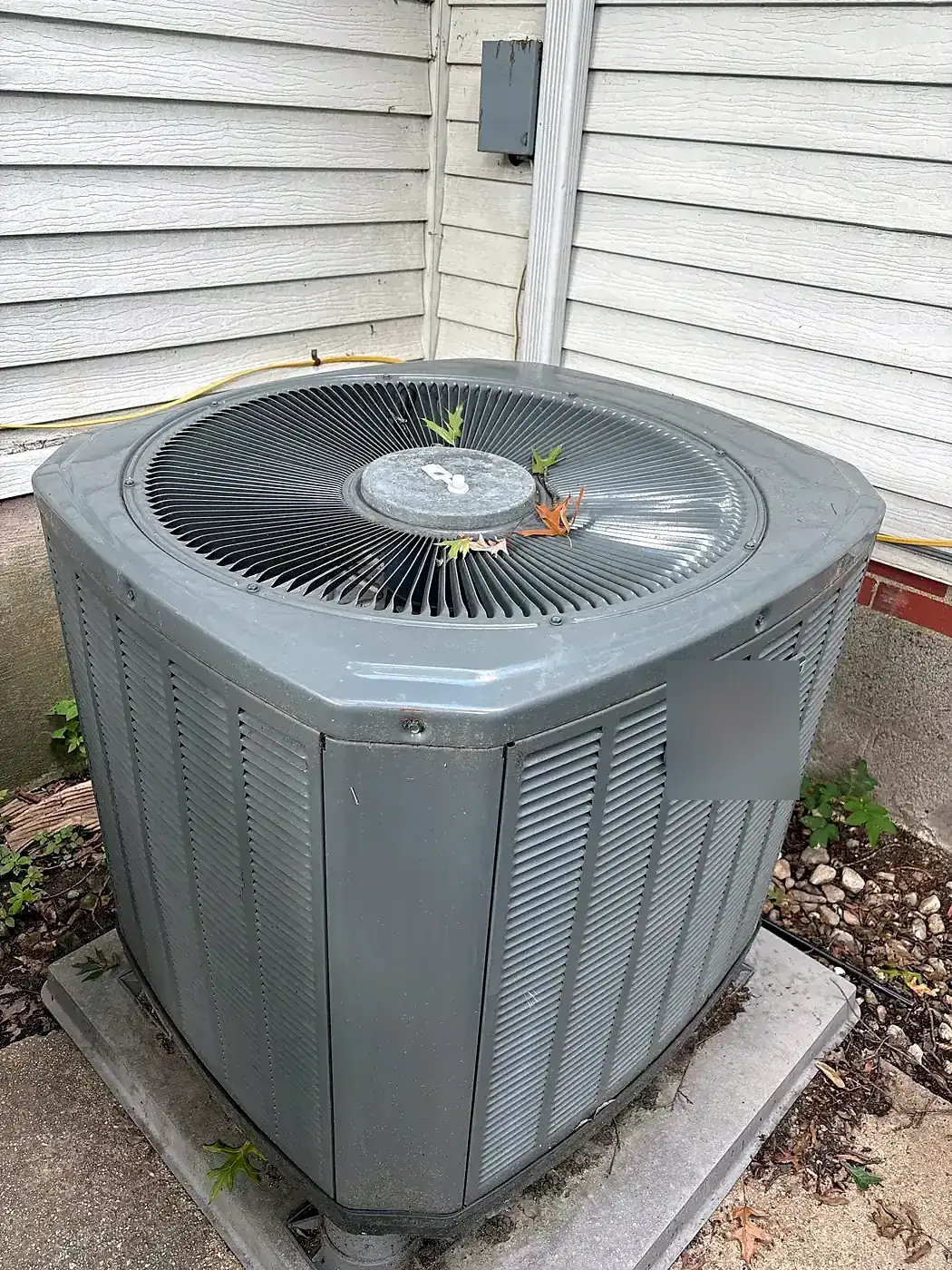
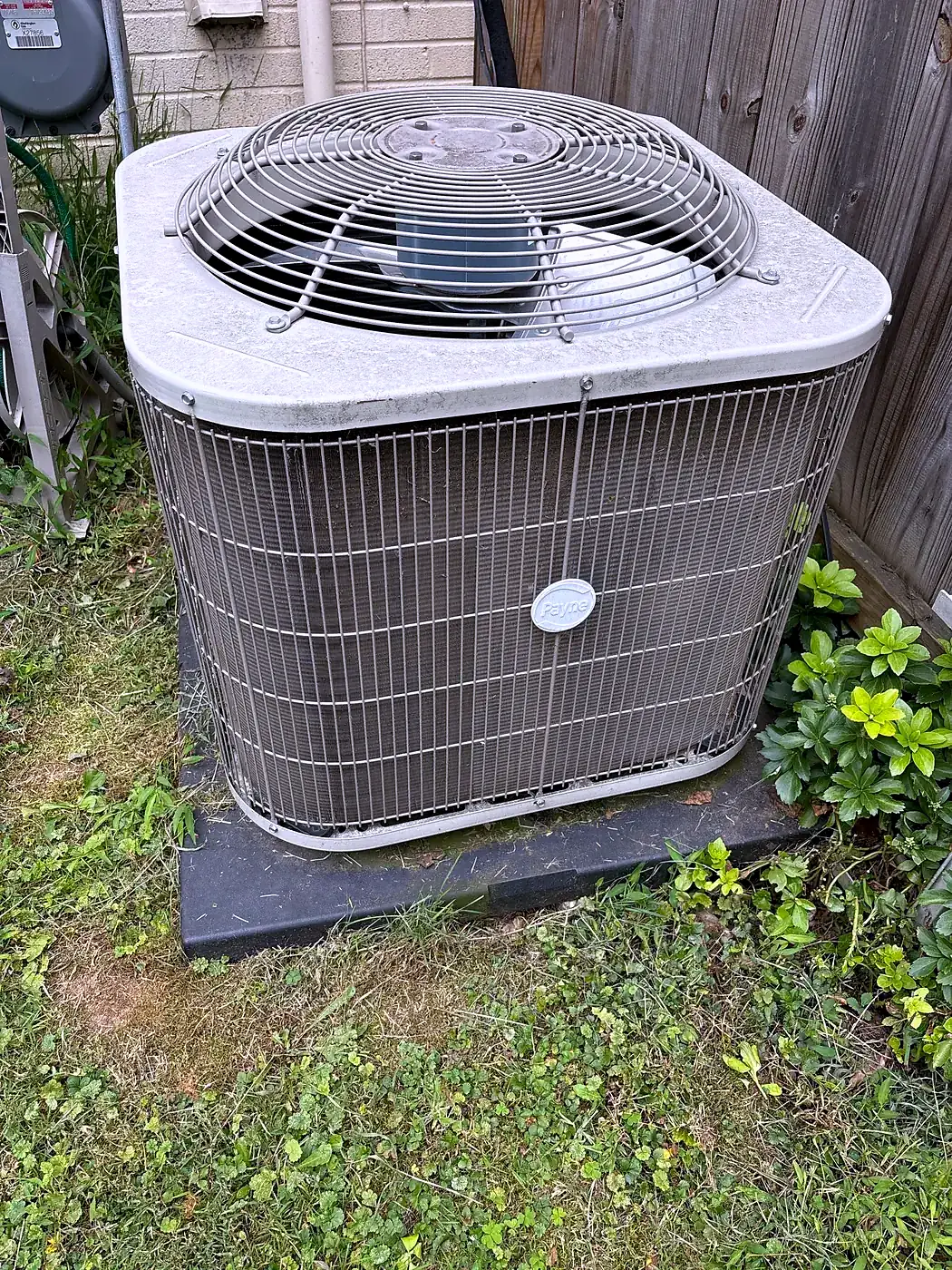
Replacing an air conditioner properly means more than swapping the box outside. The outdoor unit and the indoor evaporator coil are a matched pair and are replaced together. The existing copper line set is recovered, flushed with RX11 and nitrogen, pressure-tested and evacuated to a deep vacuum before any refrigerant goes in. The condensate path, the disconnect, the pad and the duct transition are all renewed. The charge is then set by subcooling to the manufacturer's specification and the result verified by measuring the temperature split across the coil.
How an air conditioning installation is sized
Tonnage is not a matter of taste and it is not copied off the old data plate without thought. An oversized system short cycles, never runs long enough to pull humidity out of the air, and leaves a house that is cold and clammy. An undersized one runs all afternoon and never catches up.
The systems we put in run from around one and a half tons in a condo up to five tons in a large house, with two, two and a half, three and three and a half tons covering most of what we install. What settles the number is the house — its volume, its insulation, its glazing, its orientation — together with the duct system that already exists and what the homeowner actually complains about.
- Where the equipment lives. An attic air handler, a basement furnace and coil, a condo closet and a rooftop package unit are four different jobs with four different constraints.
- What the ducts can carry. We have run new duct and added vents to rooms that were never served, including opening drywall and a window opening to route a run, and fitting new flexible duct to a kitchen that had no supply at all. Where the duct is the limit, see ductwork repair, sealing and venting.
- Whether the house should stay on gas at all. Some homeowners take a replacement as the moment to move off gas heat entirely, which turns the job into heat pump repair and installation instead.
- Zoning or a second system. Where one system cannot serve an area properly, we have priced adding zoning dampers against installing a separate system with its own ductwork, and let the homeowner choose.
What a complete air conditioning replacement includes
A full changeout is a day of ordered steps. Skipping any of them is how a new system ends up performing like the old one:
- Recover the existing refrigerant. Legally, before anything is disconnected. Older systems hold R-22 and we recover that too.
- Remove the old equipment and haul it away — condenser, coil, pad, disconnect box, drain pan and drain line.
- Deal with access. We have removed a water heater to get equipment in and out of a mechanical room, taken out built-in shelving that boxed in a condo air handler, and cut a ceiling for access where there was no other route.
- Set the new outdoor unit. A 32 by 32 or 36 by 36 pad, four pump-up risers to lift the unit clear of the ground, and a new disconnect box with fuses.
- Set the new indoor equipment. A matched evaporator coil with a new filter drier, brazed connections, and a fabricated sheet metal transition where the coil meets the duct, because the new cabinet is rarely the same size as the old one.
- Rebuild the condensate path. A new drain line, an EZ trap with a safety switch, and on attic equipment a drain pan with a float switch that shuts the system down on overflow.
- Flush, test, evacuate and charge, then commission the system and show you how it runs.
Outdoor clearances get corrected at the same time. On one job the existing condenser stood two feet from the gas meter and the new unit was relocated to gain the required clearance; on another, a condenser hung on a wall bracket came down onto a proper ground pad, which meant extending the electrical whip and the thermostat wiring to reach it.
Why the line set matters on an AC installation
The copper refrigerant lines between the outdoor unit and the indoor coil are usually buried in a wall or a floor, and replacing them means opening the house up. In most cases they do not have to be replaced — but they absolutely have to be cleaned.
- Flush with RX11 and nitrogen. This drives out the old compressor oil, any acid and any moisture. It matters most on a changeout from R-22 to R-410A, because the two refrigerants use different oils and mixing them ruins a new compressor.
- Pressure-test with nitrogen, at 150 psi, and watch the gauge. A line set that will not hold nitrogen will not hold refrigerant either.
- Pull a deep vacuum, to 500 microns. That is the number our technicians work to. A vacuum boils moisture out of the system; anything left behind turns into acid and destroys the compressor slowly.
- Replace the insulation if it has failed. We have pulled attic equipment and found the line set insulation broken down along its whole length, and replaced it as part of the job.
Where there is no existing line set — a new system, a mini split, an addition — we run it. Runs of 25, 30, 40 and 75 feet of line set are all work we have done, along with the matching condensate line and the control wiring.
Why an air conditioning coil is replaced with the condenser
The outdoor unit and the indoor evaporator coil are engineered as a pair. Putting a new condenser onto a coil that is ten or fifteen years old gives you neither the rated efficiency nor a warranty that means anything, and the coil is the component most likely to leak next.
| What is being replaced | What has to go with it | Why |
|---|---|---|
| Outdoor condenser only | The matched evaporator coil, a new filter drier, the pad, the disconnect and the drain line | A mismatched pair does not deliver its rated capacity, and the old coil is the next leak |
| Condenser and coil, furnace retained | A sheet metal transition between the new coil and the existing plenum | Cabinet dimensions change between models; the duct connection has to be fabricated to suit |
| Full system: furnace, coil and condenser | Flue and venting work, gas line reconnection and leak test, return and supply plenum reattachment | The furnace is the cabinet the coil sits on — see heating and furnace installation |
| Packaged rooftop or gas package unit | A new drain line to the main drain, an EZ trap, and reconnection to the trunk supply | Everything is in one cabinet, so the connections outside it carry the whole job |
Evacuation, charging and start-up on a new air conditioner
This is the part of the job a homeowner cannot see and a bad installer can skip. It is also the part that decides whether the equipment lasts.
- Deep vacuum to 500 microns, held and verified, to pull moisture and non-condensables out of the system before the charge goes in.
- Charge set by subcooling to the manufacturer's published specification, not by feel and not by a pressure chart alone. Every system we commission gets its charge set this way.
- Temperature split verified. We measure supply and return air across the coil and record the reading. A delta-T check is the proof that the airflow and the charge are both right.
- Drain line flushed with nitrogen and the safety switch tested, so the first blocked drain shuts the system down rather than soaking a ceiling.
- Electrical checked — disconnect, fuses, whip and control wiring — and the thermostat set up and calibrated. Where a homeowner wants a Wi-Fi thermostat fitted with the new system, that happens now; see thermostat installation.
Do you need a permit for air conditioning installation in Virginia?
Yes. A repair does not require a permit; replacing equipment does. We pull and process the permit ourselves, the work is performed according to the Virginia building code, and the job is not closed out until it passes final inspection. On permitted work the final portion of payment is held back until that inspection passes — which is how it should be, and how we have always done it.
Permit practice also drives parts of the scope that a homeowner did not ask for and would not think to compare on a quote: a properly sized disconnect, a correctly supported pad, condensate overflow protection, a drain that discharges somewhere legitimate, and gas and flue work reinstated correctly where a furnace shares the installation. If a previous installer skipped them, they get put right.
Air conditioning replacement or repair: when replacement is right
We repair a great deal more equipment than we replace, and the diagnostics behind that decision are set out on air conditioning repair. Replacement becomes the sensible answer in a few specific situations:
- A failed compressor, particularly the pattern we see repeatedly of low refrigerant, a burned capacitor and a weak compressor arriving together.
- A genuine refrigerant leak on an obsolete R-22 system. We have replaced systems where a prior service call found the equipment out of refrigerant with a weak compressor, and replacement was the recommendation rather than another recharge.
- A leaking evaporator coil on an aged system, where the coil and the condenser are both near the end.
- A furnace with a rusted or cracked heat exchanger underneath the coil, which is unsafe to run whatever the cooling side is doing.
- A house being reconfigured. Additions, basement finishes and whole-house renovations all change the load, and we have installed complete systems as part of that work.
How long does an air conditioning installation take?
A straight changeout — condenser, coil and the connections around them — is typically a single day. A full system with the furnace, new venting and a new thermostat generally runs a day or two. Work grows beyond that when the scope does:
- New ductwork. We have run 40 feet of supply and 40 feet of return converting a house off radiators and baseboards, and 50 feet of duct with ten six-inch runs and sixteen registers for a new system serving part of a home.
- Access problems: equipment behind a water heater, shelving built around an air handler, a condo with a tight closet, or an attic with a difficult hatch.
- Two systems in one house. Attic-and-basement pairs are common here, and replacing both at once is a different piece of planning than replacing one.
- Electrical work. Where the panel has no capacity for the new equipment, that is its own scope — see electrical panel upgrades and replacement.
What air conditioning installation costs, and how we price it
We do not quote equipment by phone and we do not publish prices. Two houses that look identical from the street differ by tonnage, by whether the coil is in an attic or on a furnace, by the state of the line set, by duct and transition work, by clearance problems around the outdoor unit and by what the previous installer left behind.
An estimator visits the property, measures and inspects what is actually there, and gives you a written price for a defined scope before anything is ordered. Permit and processing fees are written into that contract, and the final payment is tied to passing inspection.