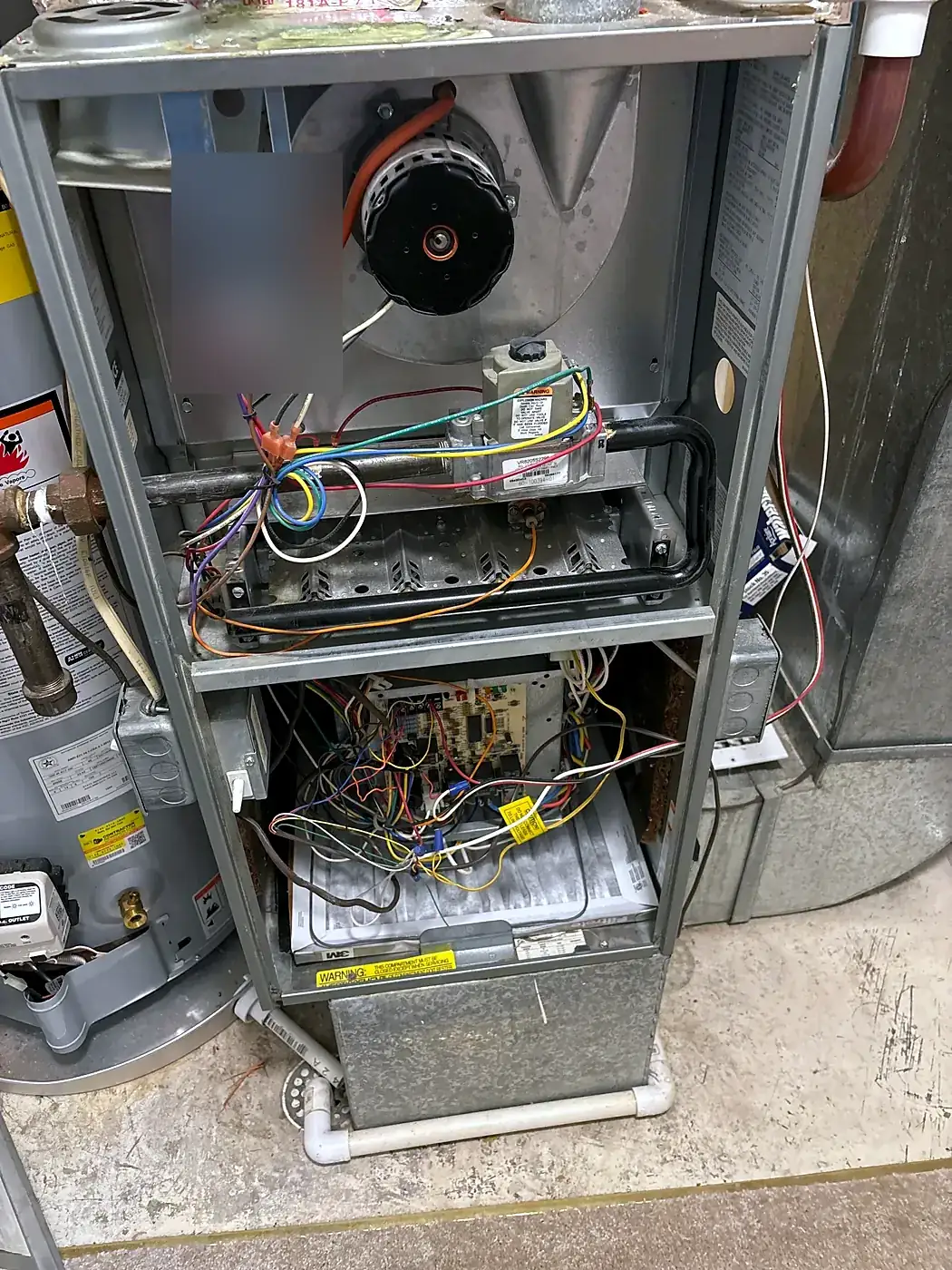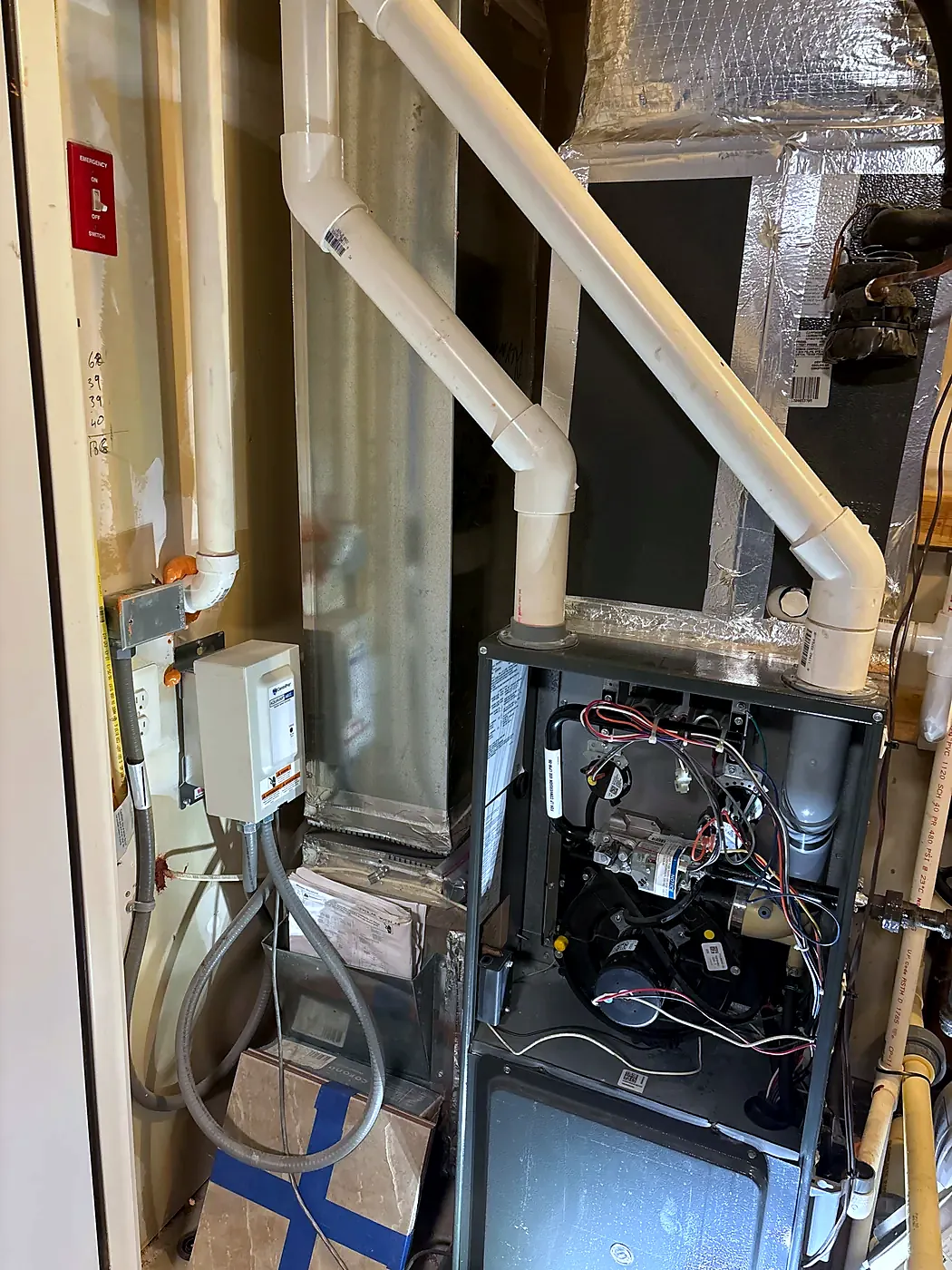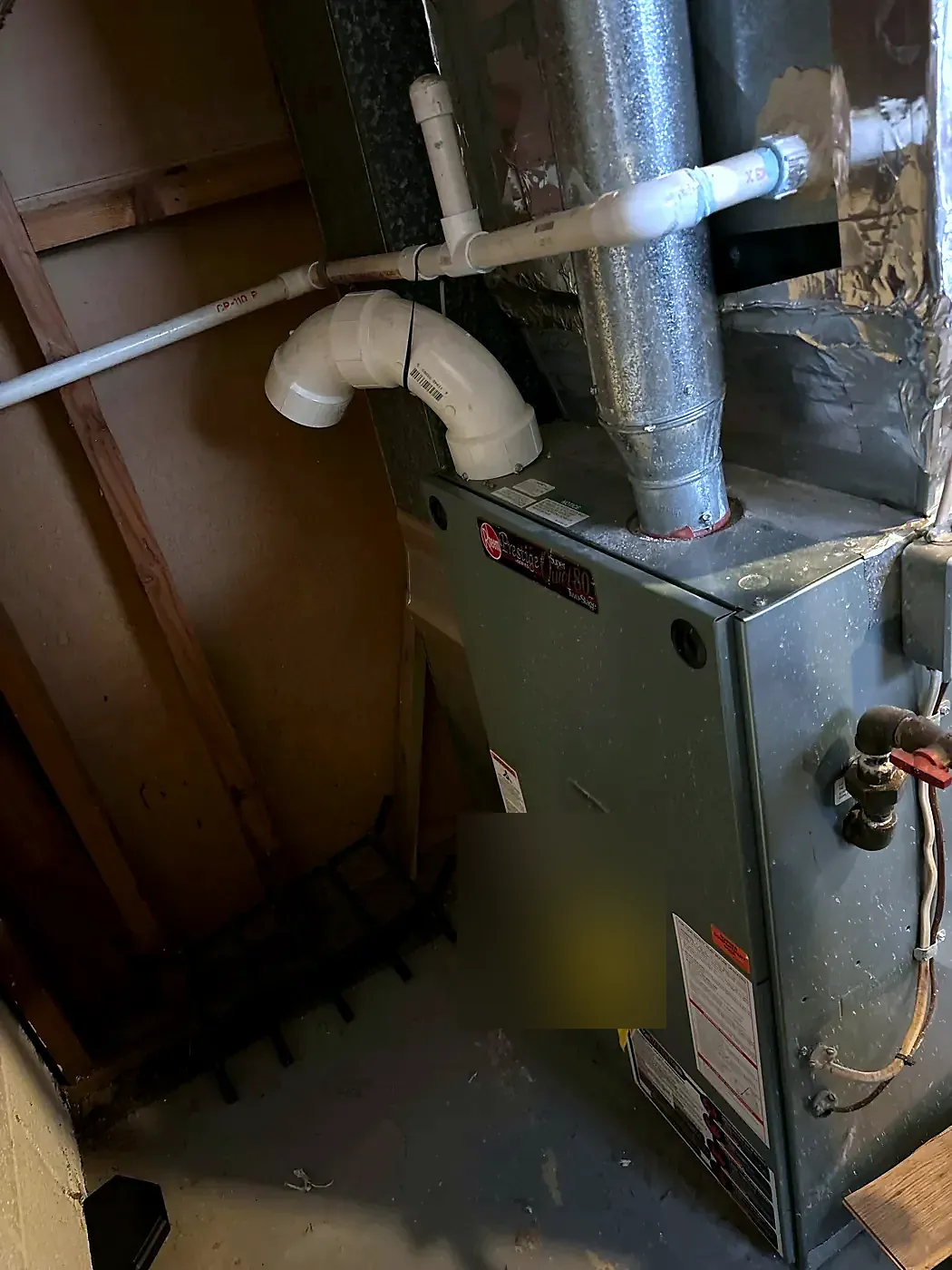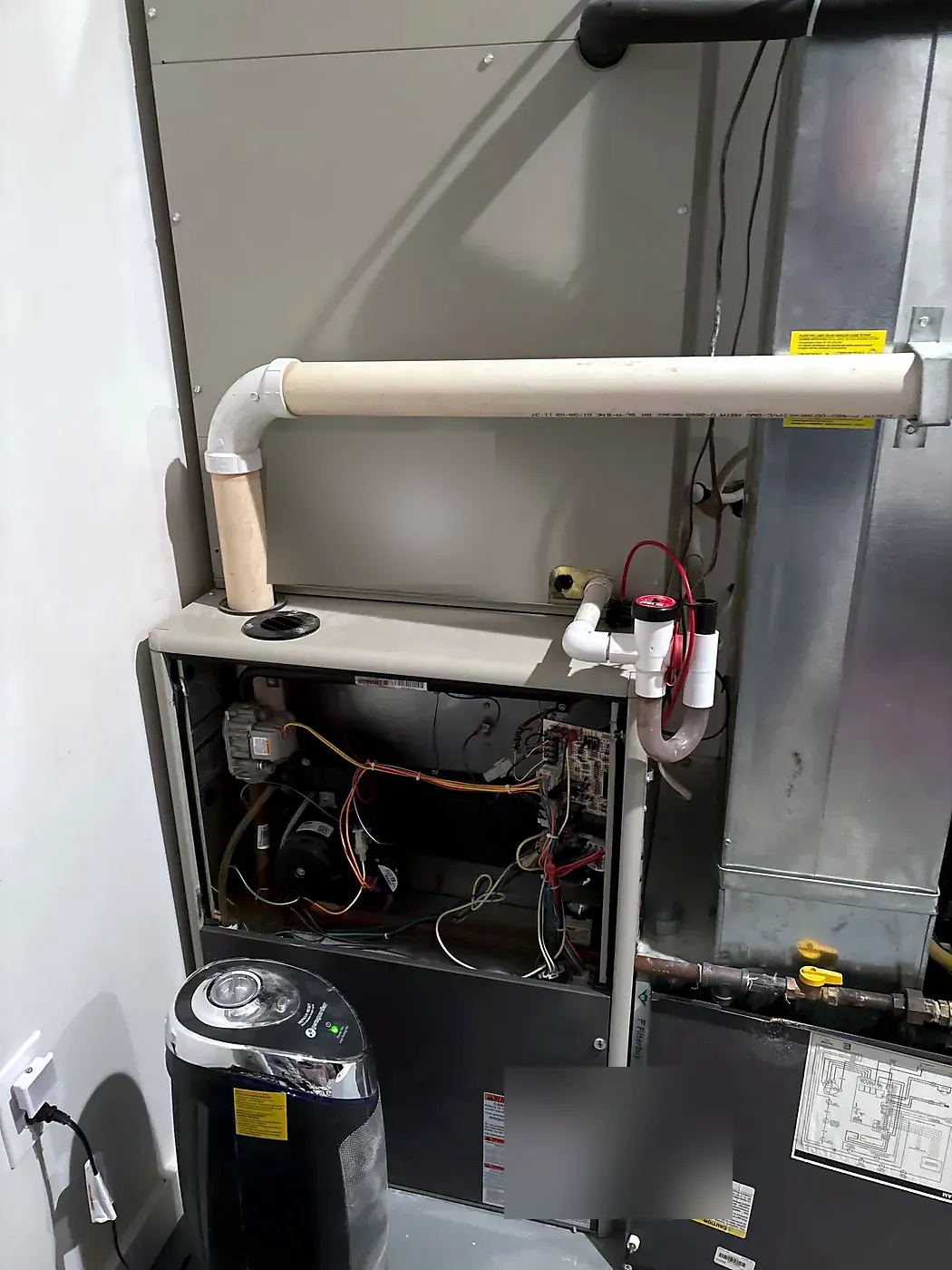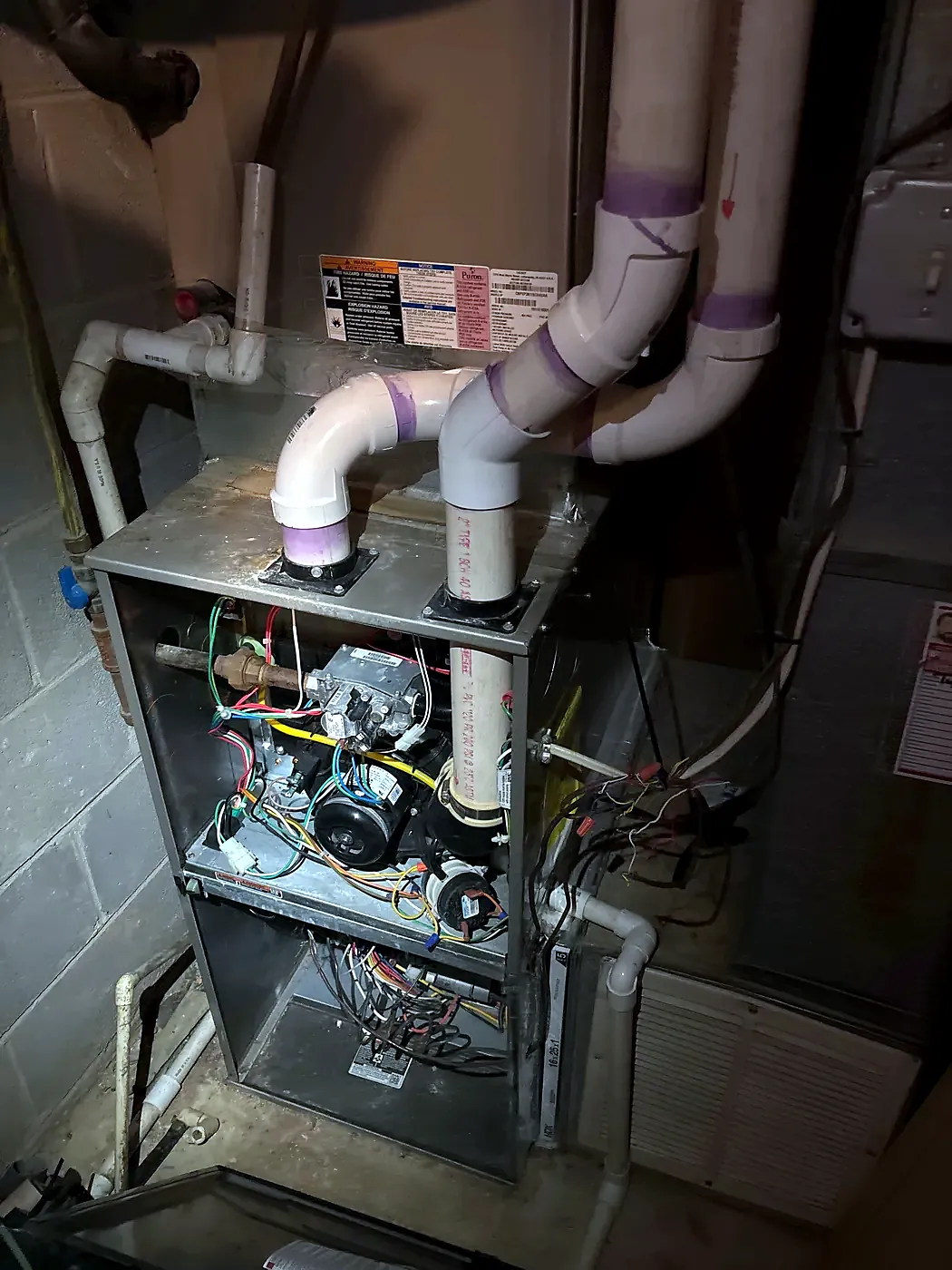
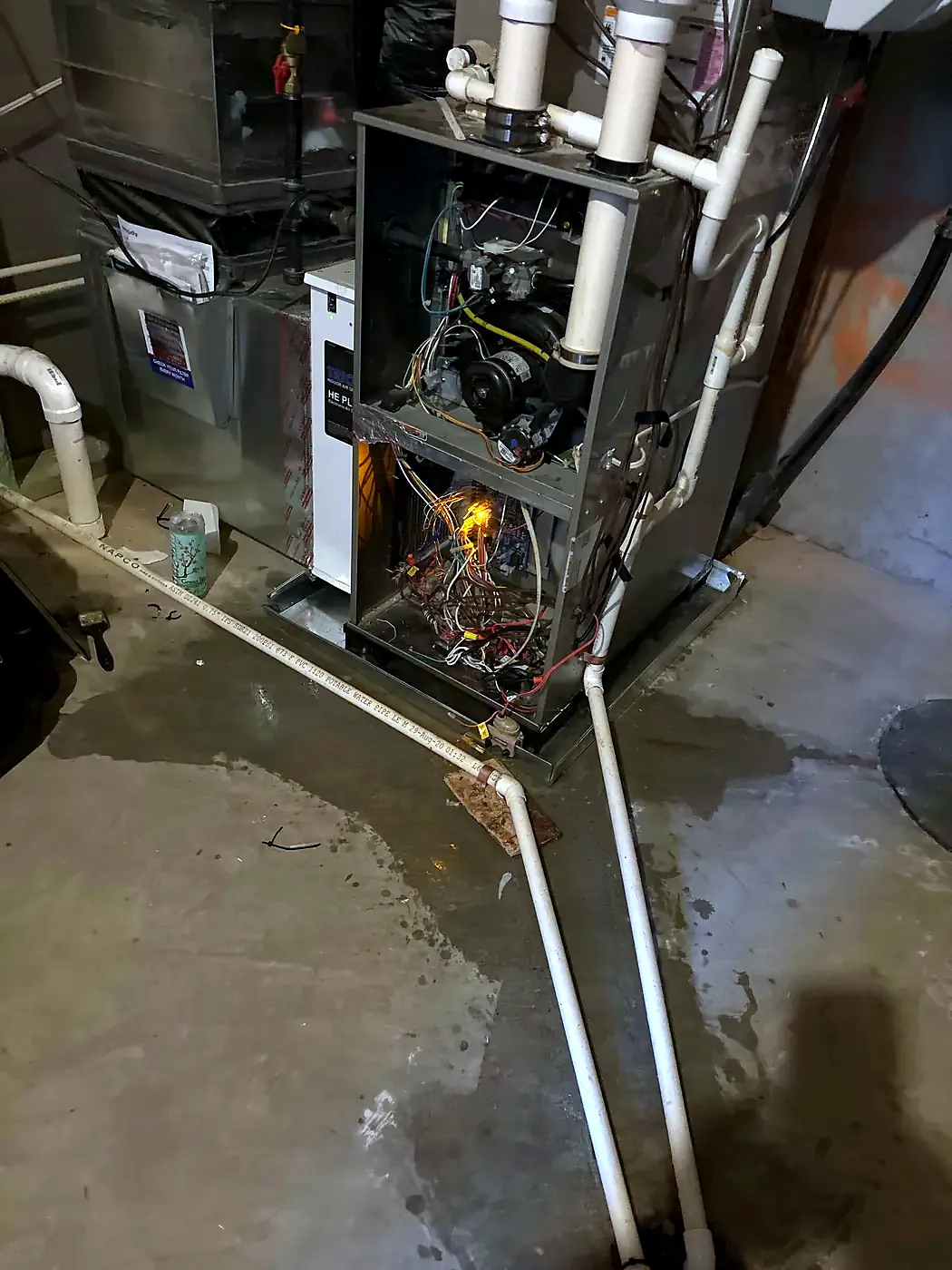
Most no-heat calls come down to ignition, controls, airflow or safety. On a gas furnace that means a failed igniter or flame sensor, a control transformer or control board that has died, a clogged filter choking airflow, or a safety device correctly refusing to let the burner light. The one fault that is not repairable is a rusted or cracked heat exchanger, which makes a furnace unsafe to run at any price. A technician establishes which of these you have on site, with a combustion and safety check as part of the visit.
Why a furnace stops producing heat
A gas furnace has to prove several things to itself before it will light, and it will refuse if any one of them is missing. That is a feature, not a fault. These are the causes we find behind a no-heat call:
- A failed igniter or flame sensor
- The igniter lights the gas; the flame sensor proves to the control board that it lit. A dirty or failed sensor shuts the gas off within seconds of ignition, which the homeowner experiences as a furnace that tries and gives up. Igniter and flame sensor replacement is among the most common repairs we make.
- A dead control transformer
- The transformer supplies the low-voltage control circuit. When it goes, nothing responds and the system appears completely dead even though the gas and the line voltage are both present.
- A damaged control board
- We have been called out for what the homeowner described as a thermostat problem and found a failed control board at the furnace, along with a filter so clogged it was restricting the air across the heat exchanger. Both had to be replaced.
- A clogged air filter
- This is the most preventable no-heat cause there is. Restricted return air lets the heat exchanger overheat, the high-limit switch opens, and the furnace shuts itself down. Left long enough it stresses the exchanger itself.
- Thermostat and control wiring
- Brittle, corroded or miswired thermostat cable produces intermittent faults that are maddening to live with. Where the wiring is the problem we pull new cable rather than patch it, and reset the thermostat afterwards.
- A pressure switch or venting fault
- The pressure switch proves the inducer is drawing combustion products out of the house. A fouled inducer motor, a blocked flue or a failing switch stops the sequence before the burner ever lights.
Cracked or rusted heat exchanger: why a furnace gets condemned
This is the one finding that ends the conversation about parts. The heat exchanger is the steel wall between the burning gas and the air you breathe. When it rusts through or cracks, combustion products can enter the supply air, and there is no patch, no sealant and no part that restores it.
On one no-heat call our technician ran the standard heating inspection on arrival and found a badly rusted heat exchanger. The furnace was unsafe to run, and the recommendation was replacement rather than repair — which is how it was written up, and what was done.
Because of that risk, a heating service call is also a safety call. Our technicians inspect the heat exchanger, check for carbon monoxide, check the pressure switch and inspect the venting. We carried that same per-unit routine across a fall inspection program covering twenty-six apartment units: fan and motor, air filters, the heating assembly, the electrical components, the thermostat, the heat exchanger, a carbon monoxide check and the pressure switch on every one.
If replacement is the answer, the job itself is described on heating and furnace installation.
Why a furnace short cycles or blows cold air
A furnace that lights, runs briefly and shuts down, or one that blows air that never gets properly warm, is telling you something specific:
- Overheating on restricted airflow. A filter, a closed-off return, crushed duct or a failing blower. The high-limit opens, the burner stops, the blower keeps running and you feel cool air. It repeats every few minutes.
- Flame sensor dropout. The burner lights and the flame is not proved, so the gas valve closes. The cycle repeats on a timer.
- Gas pressure that is not set correctly. Manifold pressure has to be regulated to the manufacturer's specification. We regulate it as part of any furnace we install and check it on any furnace we service.
- An undersized gas supply. We were called to install a gas line regulator and flagged that it might not be sufficient to operate the appliance, because the company that had installed the homeowner's new furnace appeared not to have calculated the BTU requirement against the existing gas line. On another job the original gas line was judged too small for an 80,000 BTU furnace before the equipment went in.
- A duct system that cannot distribute the heat. Rooms that never warm up are usually a duct problem rather than a furnace problem — see ductwork repair, sealing and venting.
What a heating repair service call includes
Our technicians run a standing inspection checklist on arrival rather than chasing the symptom straight to a part. It covers the heating assembly, the blower assembly, the fan and motor, the air filters, the electrical components, the thermostat, the evaporator coil and the condensate areas, the refrigerant charge where there is a cooling side, and the compressor and condenser coil outside.
- Watch the start-up sequence. Call for heat, watch the inducer, the pressure switch, the igniter, the burner and the flame proof, and see exactly where it stops.
- Check the filter and the return first. Airflow explains an enormous share of the faults we are called out for, and a reading taken on a starved system misleads everyone.
- Inspect the heat exchanger and check for carbon monoxide. This happens on every heating call, not only when the homeowner asks.
- Test the electrical components — transformer, control board, limit and pressure switches, igniter and flame sensor, blower motor and capacitor.
- Check gas pressure and the gas connection. Including the drip leg, the shutoff and the flexible connector at the furnace.
- Verify the repair by temperature rise. We measure supply against return air across the furnace and confirm the delta-T before we leave.
- Show you what was found and what the options are, including leaving a marginal component alone where that is the honest answer.
Households on our annual service agreement get two tune-ups a year against a 24-point inspection: inspect and adjust the blower assembly, test refrigerant, inspect and tune the burners, inspect the evaporator coil, clean the ignition assembly, clean and inspect filters, and calibrate the thermostat.
Gas leaks, drip legs and gas piping at the furnace
Heating work and gas work are the same trade in this house, and a fair number of our heating calls turn out to be gas piping calls.
- On a reported gas leak, our technician located the source on the line serving the furnace. The repair replaced the drip leg, fitted a new tee, a new braided flexible connector into the furnace, a nipple and a shutoff valve, and replaced roughly five feet of gas line back to the lower tee in the house. The furnace was relit and a permit was pulled for the work.
- On a regulator installation, the line was shut off, leaded, air-tested, a partial section of gas pipe replaced, a cutoff valve fitted and the permit pulled.
- On another job the crew could not tap the existing gas line as planned, because a previous owner had built the crawl space up with dirt and left no clearance under the floorboards. The line was rerouted by drilling through the concrete wall between the furnace room and the kitchen, and a broken gas valve and a rusted-out section of pipe at the appliance were replaced.
Gas work is permitted work and it is performed to the Virginia building code. Larger gas piping projects are covered on gas line installation and repair.
Furnace repair or replacement: how to decide
We repair far more furnaces than we replace. There are four findings that move the decision:
- A rusted or cracked heat exchanger. Not repairable, not safe to run, not negotiable.
- Repeated failures on an aged unit. When the igniter, the transformer, the inducer and the board have each had their turn, the next part is not the last part.
- An oil furnace at the end of its life. We have replaced aging oil furnaces as part of larger mechanical-room work, and oil equipment tends to reach that point sooner.
- A heating system being replaced alongside cooling anyway. Where the coil sits on top of the furnace and the outdoor unit is also finished, doing it once is better than doing it twice.
Before recommending replacement we check warranty status with the manufacturer, using the model and serial number. Registration is mandatory for the extended parts coverage most manufacturers offer, and we have made warranty claims on parts that homeowners assumed were out of coverage.
Water, humidifiers and condensate on a heating system
Water shows up in heating calls more often than homeowners expect, and not always from the furnace.
- A failed condensate pump. We have been called to water on a basement floor that traced to a dead condensate pump on the heating and cooling system.
- A fouled humidifier drain line. We have flushed humidifier drain lines and replaced humidifier panels and drain flex lines found dirty during a service call.
- A humidifier running continuously. On a call about a persistently high water bill, our technician checked the furnace humidifier and recommended replacing it as a possible source of continuous water use.
- Venting and roof penetrations. On a roof leak call the leak path proved to be failing plumbing vent boots and deteriorated caulking around the furnace vent pipe, which was stripped back and resealed with heat-resistant exterior caulking.
Humidifier and air quality equipment is covered on humidifiers and indoor air quality.
How long does a furnace last?
Fifteen to twenty years is a reasonable expectation for a gas furnace that has been serviced, filtered and vented properly. What shortens it is predictable: years of restricted airflow from neglected filters, a flue or chimney connection that was never right, gas pressure that was never regulated, and a system that was oversized to begin with and has spent its life short cycling.
The heat exchanger is the component that decides the furnace's age, and it is the one most punished by overheating. That is the practical argument for a filter change and an annual inspection: it is the cheapest protection available for the single most expensive part.
If the house is heated by a boiler and radiators rather than forced air, the equipment and the faults are different — see boiler repair and installation. If the outdoor unit provides the heat, see heat pump repair and installation.
What heating repair costs, and how we price it
We do not quote heating repairs by phone and we do not publish rates. Two furnaces with the same symptom can be an inexpensive sensor on one and a condemned heat exchanger on the other, and the gas, venting and duct conditions around them differ house to house.
An estimator or technician comes to the property, diagnoses the actual system, and gives you a written price before any work begins. Where a repair requires a permit — gas piping work does — we pull and process it ourselves and the work is performed according to the Virginia building code.