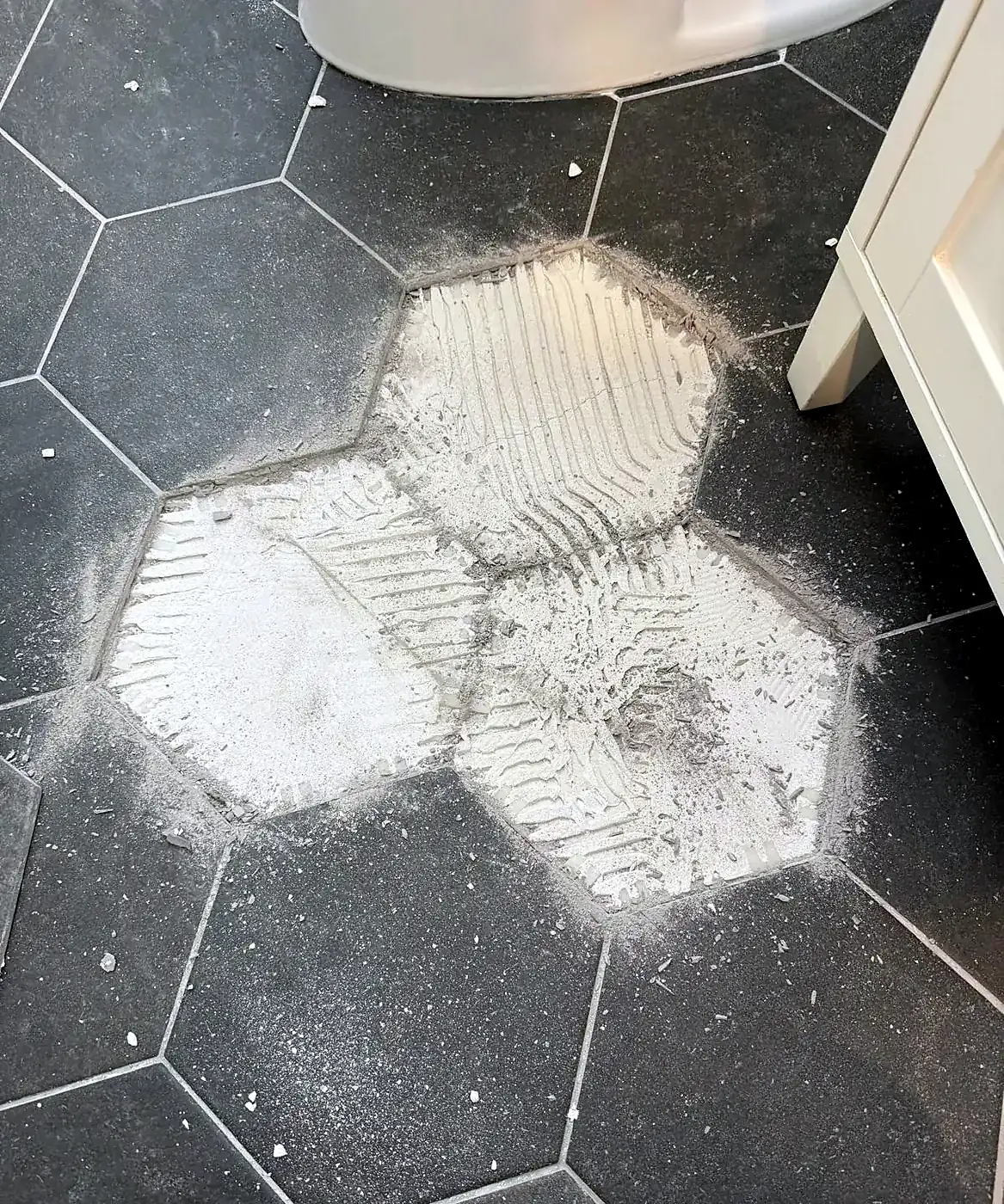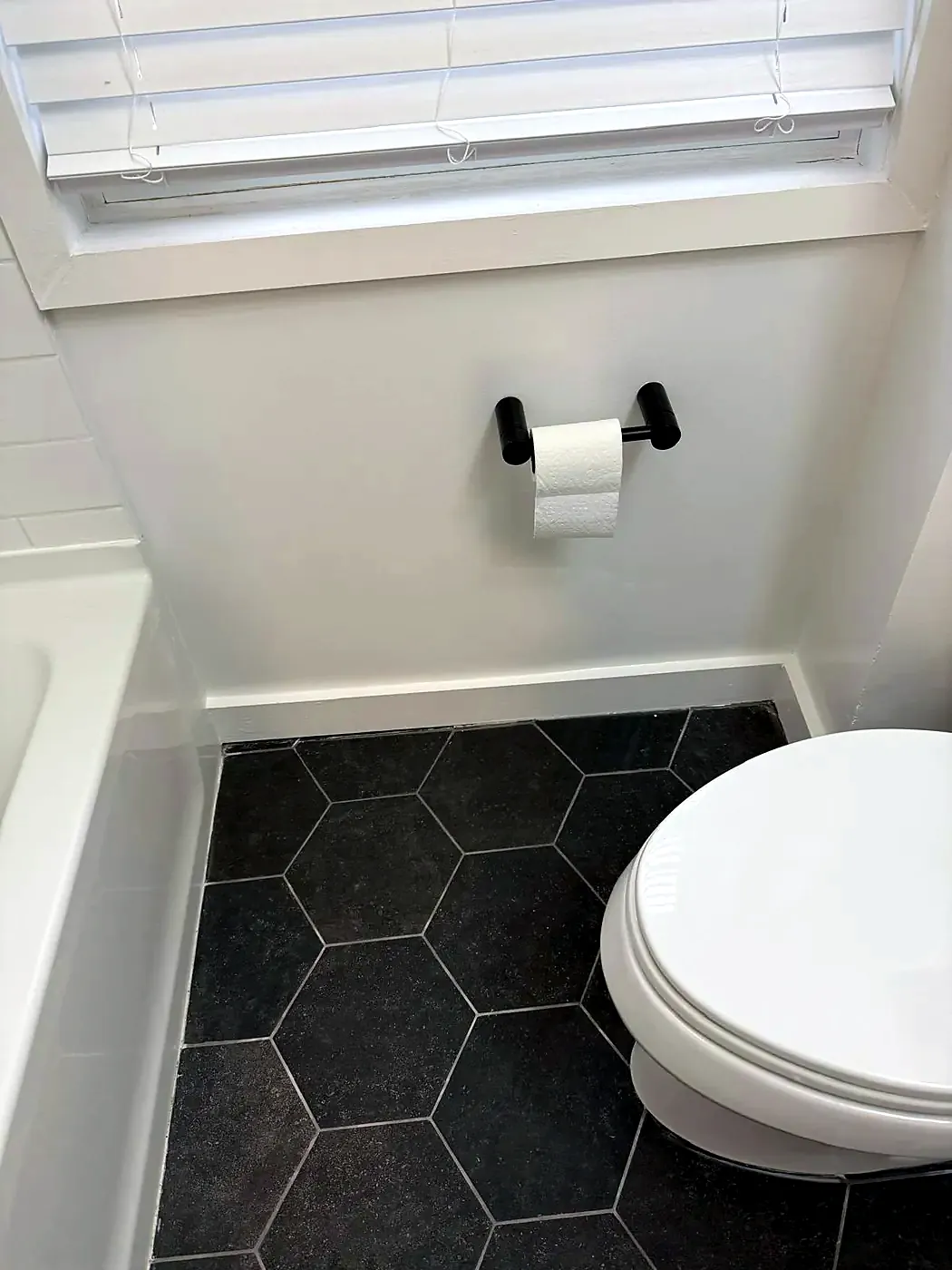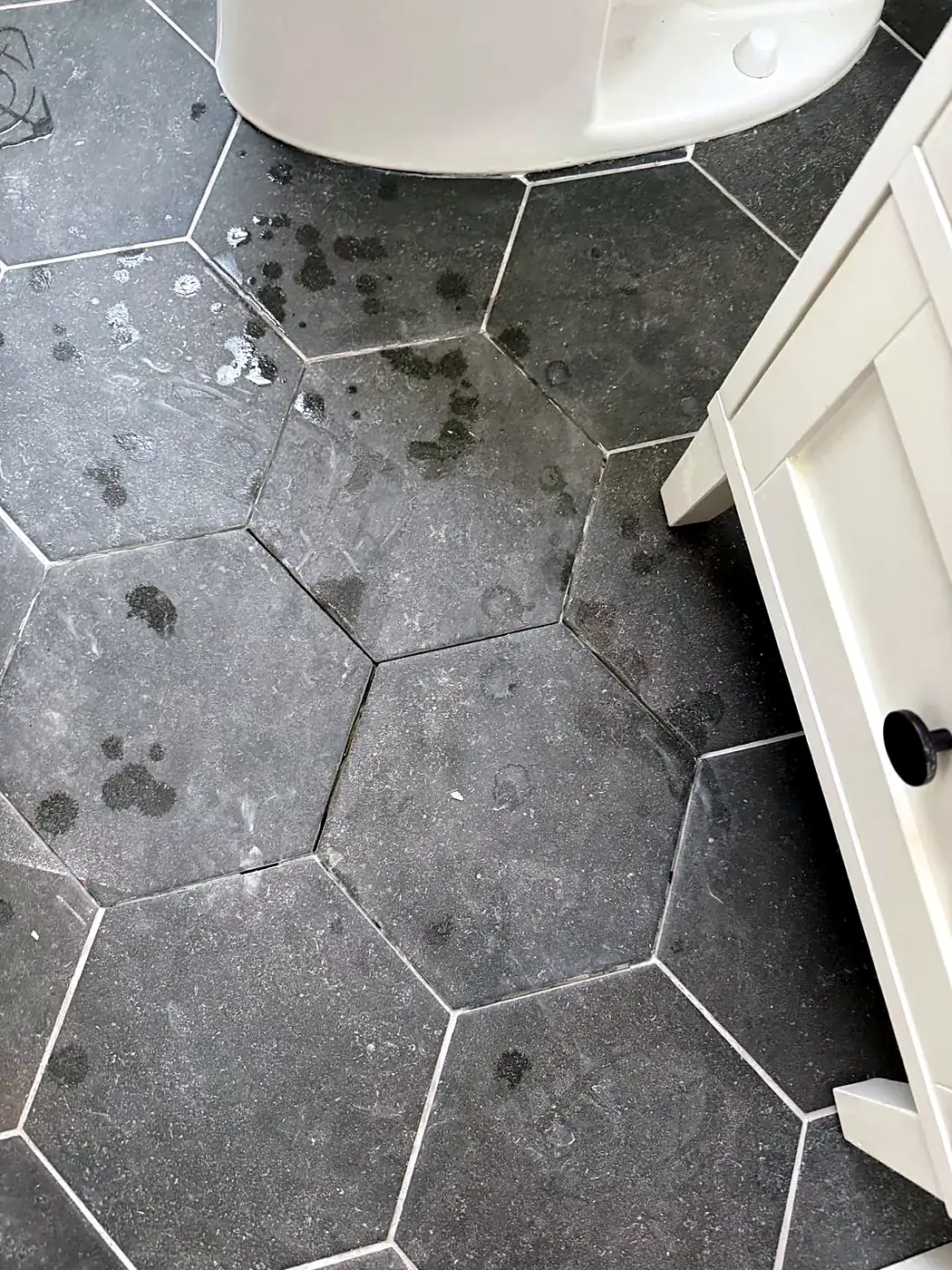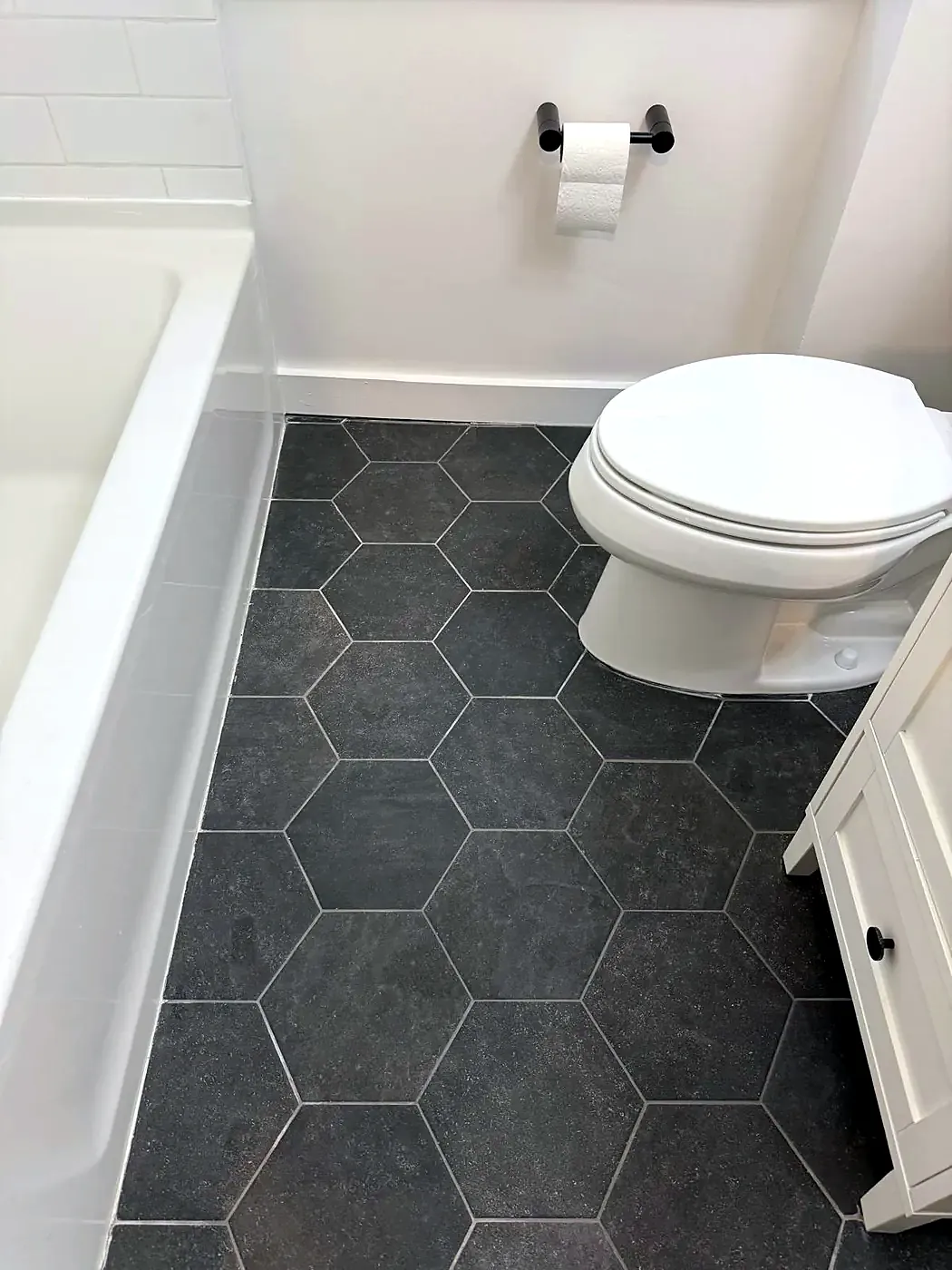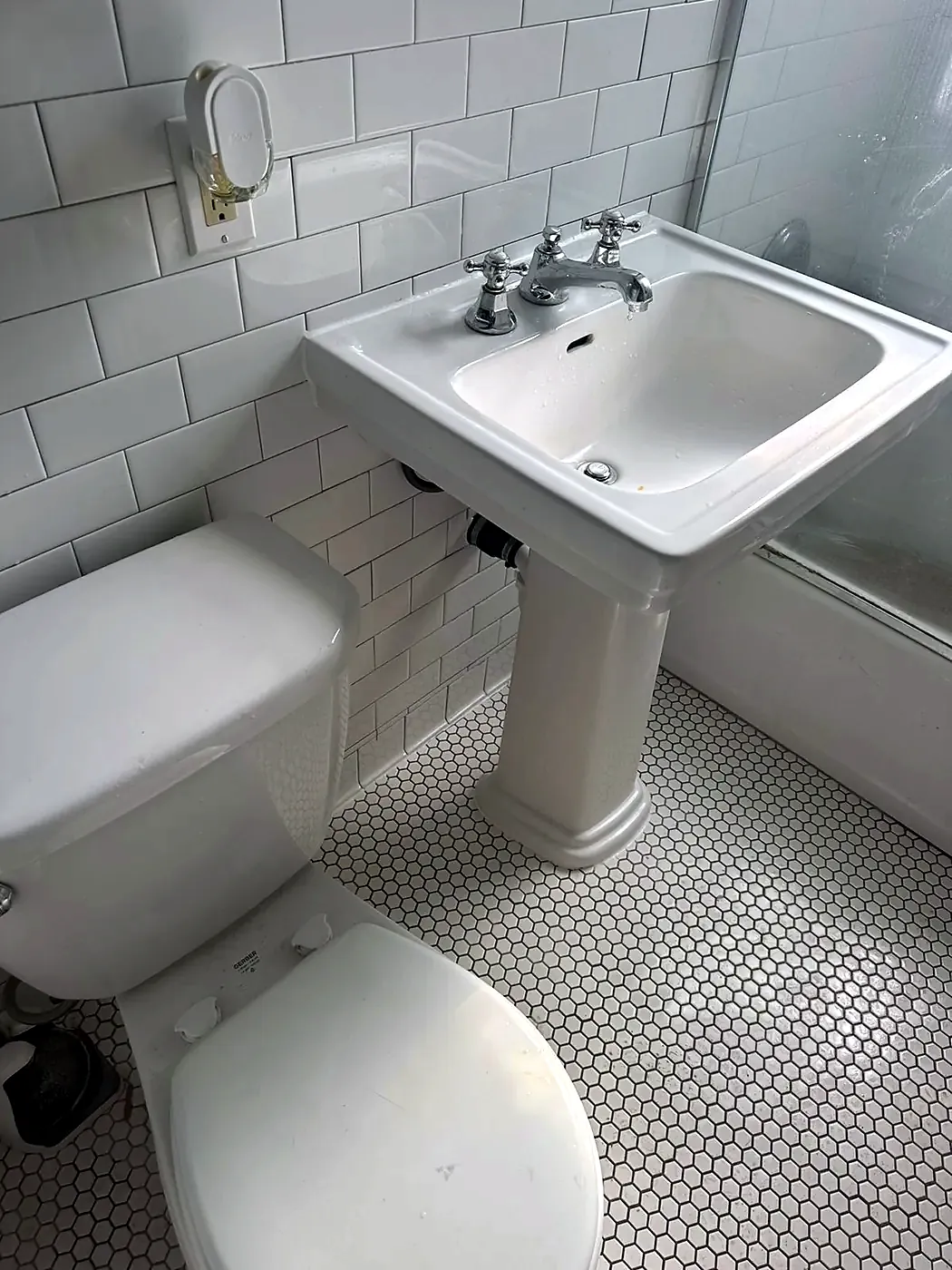
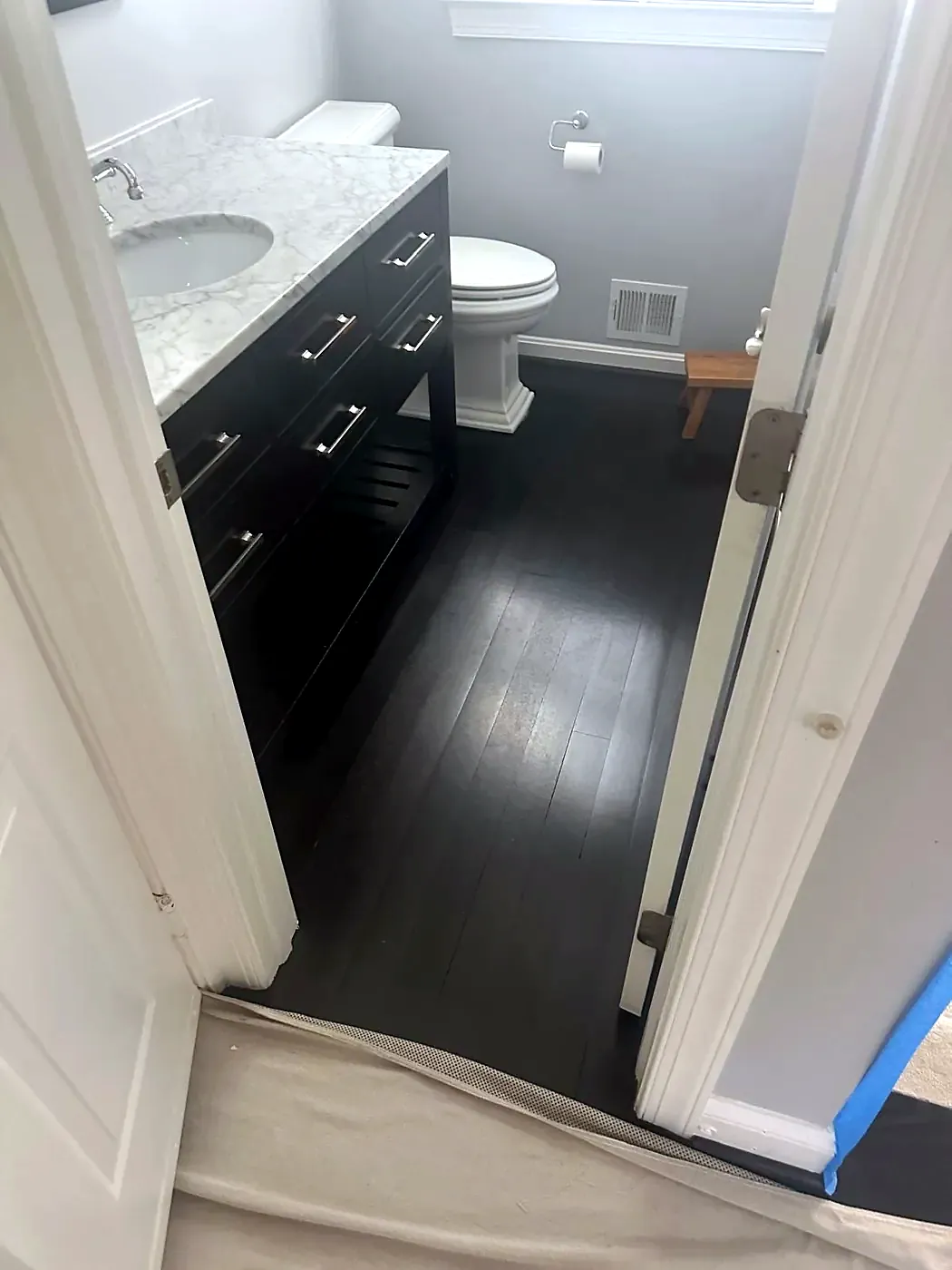
A cracked or hollow-sounding tile is a symptom of what is underneath it. Nine times out of ten the fault is the substrate: a subfloor that flexes because it was never screwed down, a mortar bed that has broken up, a shower pan membrane that has failed, or wallboard used behind tile where cement board belongs. We take the tile up, inspect and correct the deck or the wall behind it, then re-tile onto a substrate that will hold.
Why tile cracks or comes loose
The tile and the grout are the last things to fail, not the first. When you press a loose tile and it clicks, or a grout line opens in a straight run across a floor, this is what is usually behind it:
- A deck that flexes
- Tile has no ability to bend. If the subfloor deflects underfoot, the bond breaks and the grout goes first. Our standard before any floor tile is to screw the existing subfloor down to the joists at six-inch centers and sand the joints flat, then build up from there.
- A failed mortar bed
- Older bathrooms here were tiled on a concrete bed, sometimes two inches of it over mesh wire. Once that bed cracks, every tile on it is loose whether it sounds like it or not.
- Water behind the wall
- Where wallboard was used behind shower tile instead of cement board, moisture gets past the grout and the board turns to paste. We inspect the wallboard behind the tile for water damage on every regrout and recaulk we do, and we report what is there.
- A failed shower pan
- On one job the shower floor and lower wall tile had failed and a leak had damaged the ceiling drywall below. The pan assembly — membrane, concrete pad and tile together — had gone as a unit. No amount of tile work fixes that from the top.
- Movement in the structure
- One property had the main level floor dropped several inches toward one side, with a crack around half an inch wide running roughly eleven feet across. A structural engineer attributed it to foundation settlement, with a large tree close to the rear corner and a steeply sloped side yard draining toward the house as contributing factors. Tile will crack in that line again and again until the ground stops moving — see foundation, grading and crawl space repair.
- No movement joint at a change of plane
- Grout is rigid. Where two planes meet — wall to wall, wall to floor, tile to tub — the joint has to be flexible. Grout in those corners cracks out within a season.
The substrate is usually the real fault in a tile repair
This is the part that separates a tile job that lasts twenty years from one that looks perfect for two. When we take failing tile off, we are not looking at the tile. We are looking at what it came off.
Our standard for a bathroom floor rebuild is a stack, not a surface:
- The existing subfloor is screwed down to the joists, typically at six-inch centers, and the joints sanded flat. Screwing an old squeaking deck down costs almost nothing at this stage and it is the single biggest factor in whether the finished floor cracks.
- A new layer of plywood — five-eighths inch on the floors we rebuild — installed with glue and screws, not screws alone.
- Cement board over that, half-inch, again glued and screwed. We standardize on Durock cement board, and it goes down as a board, not as a coating.
- Then the tile, set into mortar, with sanded grout in the field and silicone at every change of plane.
On walls, the same principle applies: where a shower is being retiled, the walls are stripped to the framing and re-boarded in cement board rather than tiling over wallboard. It is the most common shortcut we find behind failed shower tile, and it is the reason we do not tile over wallboard in a wet area, ever.
What we find under a failing tile floor
Old floors in this area are layered. Homeowners are regularly surprised by how much comes out before anything goes back:
- Tile over tile over concrete. One bathroom floor turned out to be eight-inch ceramic tile laid over a second layer of one-inch ceramic, over two inches of concrete and mesh wire, on a half-inch subfloor. All of it came out, and the half-inch subfloor was replaced with three-quarter inch OSB, glued and screwed.
- A rotted subfloor. On a multi-room job the subfloor under one bathroom was found damaged and rotted once the tile was up. That is not an add-on, it is the job.
- A wet deck under a tub or pan. The plywood under a failing shower pan is inspected for damage and treated with mold control before anything new is set on it. We do this as a matter of course, not only when it looks bad.
- Nothing holding it down. A subfloor that was never properly fastened, so the whole floor moves as one soft sheet.
- Missing insulation around pipes. One floor rebuild found insulation lost at the exterior wall and around the plumbing lines in the cavity below.
Everything found under a floor is reported to the homeowner before the new deck goes down. Subfloor and framing get inspected and reported before anything is closed up — that is written into our contracts, not offered as a favor.
What goes behind a shower wall tile installation
A tiled shower is a waterproofing assembly with a decorative face. Built correctly, this is what is behind it:
- Cement board on the walls and the shower floor, not wallboard. This is standardized across our bathroom work.
- Tile carried full height to the ceiling rather than stopped at an arbitrary line where the top course becomes a permanent water trap.
- A recessed niche formed in the wall where one is wanted, built into the framing and boarded in cement board like the rest of the wall.
- A new pan and floor drain where the old assembly has failed, tied into the existing plumbing, with the deck below it inspected and treated first.
- New in-wall shower piping and a single-handle valve where the wall is open anyway. Opening a tiled wall twice is the expensive way to do it.
- Sanded grout in the field, silicone at every change of plane. Corners, the wall-to-floor joint and the tile-to-tub joint are movement joints, not grout joints.
Where a shower is leaking rather than simply looking tired, the leak comes first — see shower leak repair — and the ceiling below it is dealt with as drywall and ceiling repair.
Can a few loose tiles be fixed, or does the whole tile floor come up?
Sometimes a spot repair is genuinely the right answer, and we will say so. One job in our files was exactly that: five loose tiles in an upstairs bathroom, with failed grout and caulk around them. Another needed one vertical row of wall tile taken out to reach the shower faucet plumbing behind it, then made good.
A spot repair works when three conditions hold:
- The substrate under the loose tiles is sound. If it is soft, wet or moving, replacing the tile just puts a new tile on a bad bed.
- The failure is local. A few tiles in one area, not a line of cracks running across the room, and not hollow sound everywhere you tap.
- The tile can be matched, or the area is discreet. Color and batch shift over the years. We will tell you honestly whether a replacement tile will read as a replacement.
Where those conditions do not hold, patching is money you will spend again. A floor that flexes, a mortar bed that has broken up or a shower wall with damaged board behind it needs the substrate rebuilt, and we would rather lose the small job than sell you the wrong one.
Grout, silicone and what holds a tile installation together
Three different materials do three different jobs, and using the wrong one in the wrong place is the most common failure we are called out to:
- Mortar
- The bond coat between the cement board and the tile. It is what holds the tile on. It is not a leveling compound and it will not bridge a deck that moves.
- Sanded grout
- Fills the joints between tiles in the field. We use sanded grout, and acrylic-fortified tile grout on shower walls where a regrout is being carried out. Grout is rigid and it is not waterproof on its own — it is a filler, not a seal.
- Silicone
- Goes at every change of plane: internal corners, wall to floor, tile to tub, around the base of a toilet and along a vanity. These joints move, and grout in them cracks. This is the boundary between tile work and bathroom caulking and re-caulking.
When only the joints have failed and the tile and substrate are sound, the answer is a regrout rather than a re-tile — see bathroom regrouting.
Kitchen backsplash and floor tile installation
Not all tile work is a bathroom. A good share of our tile installation is elsewhere in the house:
- Kitchen backsplashes, including jobs where the homeowner supplies the tile themselves. The substrate behind a backsplash is usually sound wallboard, which is fine above a counter away from standing water.
- Kitchen and entrance floors, often as part of a wider refresh where carpet or vinyl is coming out anyway.
- Laundry rooms. Where a laundry has vinyl over a deck that gets wet, tile over a properly built-up floor is what we recommend and why.
- Full kitchen floor rebuilds, where the deck is screwed down, re-sheeted in plywood and boarded in cement board before any tile is set — the same stack we use in a bathroom.
Where tile is going in as part of a larger job, it is scheduled around the trades rather than squeezed in at the end. Electrical rough-in, plumbing relocations and framing are all done to the Virginia building code and inspected before the floor closes up.
What tile repair and tile installation costs
We do not quote tile by phone and we do not publish prices. Two floors of identical size can differ by everything that matters: what is under the existing tile, how many layers have to come out, whether the deck is sound, whether a shower pan has failed, and whether the framing under it needs work before anything is rebuilt.
An estimator comes to the property, looks at the actual condition, and gives you a written price before any work begins. Where the state of the subfloor cannot be known until the tile is up — which is normal — the contract says so, and what is found is reported to you and agreed before it is corrected.
Sam & Sons Services has been tiling, repairing and rebuilding bathrooms and floors across Northern Virginia since 1999, and takes handyman and tile work in Washington DC as well. Licensed in Virginia, DPOR #2705070610. Call (703) 256-8080.