 Skip to content

Common plumbing problems in Northern Virginia are defined by a specific set of regional pressures: aging pipe infrastructure, clay-heavy soil that shifts with seasonal freeze-thaw cycles, and hard water that accelerates mineral buildup. These local conditions make residential plumbing issues more frequent and more damaging than homeowners often expect. Leaky faucets, clogged drains, and sewer line failures are the most reported calls across Arlington, Fairfax, and Alexandria. Catching these problems early saves money and prevents structural damage. Sam & Sons Services has responded to these exact issues across Northern Virginia for over 20 years.
1. What causes frequent leaky faucets in Northern Virginia homes?
Leaky faucets are the most common residential plumbing complaint in the region. The primary causes are worn washers, corroded valve seats, and loose packing nuts. Hard water accelerates wear on internal faucet components, which means fixtures in Northern Virginia homes tend to fail faster than the national average.
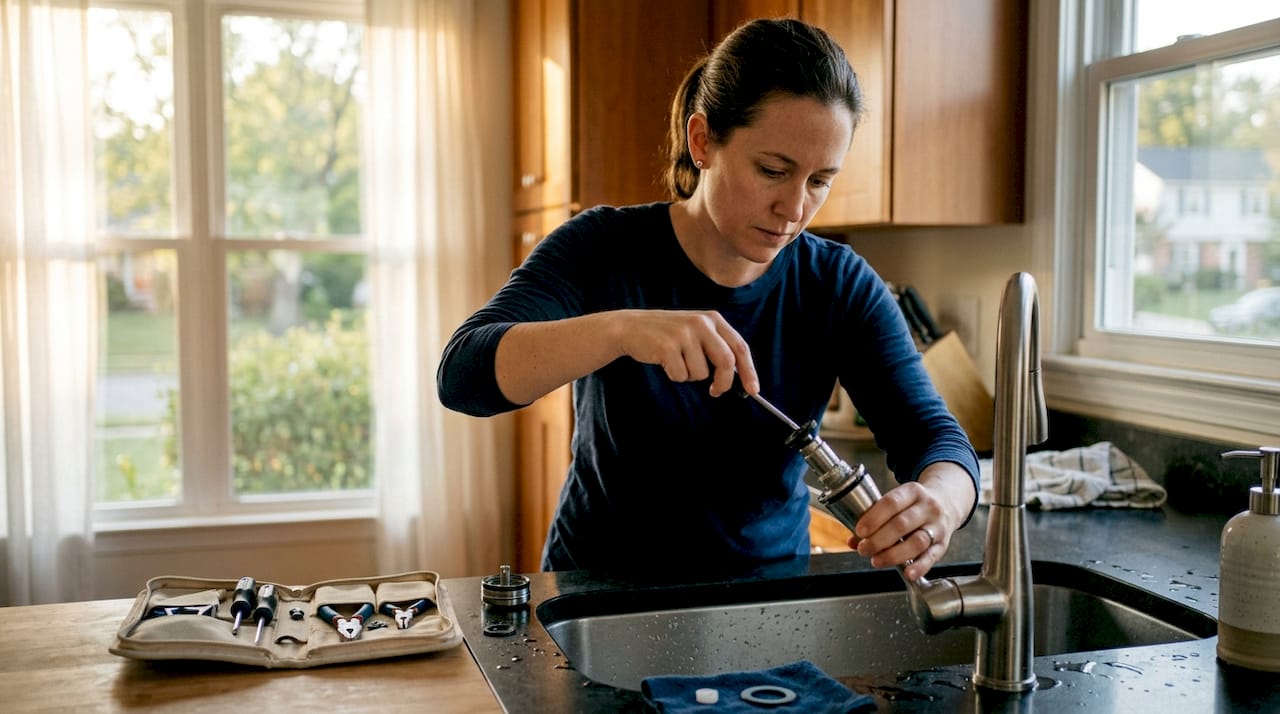
A dripping faucet wastes more water than most homeowners realize. Small leaks left unchecked lead to mold growth, cabinet rot, and higher utility bills over time.
DIY fixes that work:
- Replace worn rubber washers in compression faucets
- Tighten packing nuts on older ball-style faucets
- Swap out cartridges in single-handle faucets
When to call a professional: If the leak returns after a washer replacement, the valve seat is likely corroded. Grinding or reseating a valve seat requires specialized tools. Sam & Sons Services handles these repairs quickly, often in a single visit.
Pro Tip: Turn off the water supply under the sink before any faucet repair. If you cannot locate the shut-off valve, find your home’s main shut-off first. Knowing its location prevents a minor repair from becoming a flood.
2. How to identify and handle clogged drains in Northern Virginia homes
Clogged drains rank second among the most reported plumbing issues in Virginia. The culprits in most Northern Virginia homes are hair, grease, soap scum, and tree root intrusion in older sewer laterals. Homes built before 1980 are especially vulnerable because their drain lines often run near mature trees with aggressive root systems.
Warning signs of a developing clog:
- Water draining slowly in one or more fixtures
- Gurgling sounds from drains after water runs
- Standing water in the shower or bathtub
- Foul odors rising from floor drains
Chemical drain cleaners damage aging pipes and do not address root intrusion or grease buildup. This is especially true for homes with cast iron or aged PVC lines, both of which are common in Northern Virginia properties. The chemical reaction that clears a soft clog also eats away at pipe walls over time.
Safe alternatives include a drain snake for surface clogs and hydro-jetting for deeper blockages. For root intrusion, a licensed plumber with a camera inspection tool is the only reliable solution.
Pro Tip: Install mesh drain covers in every shower and tub. This single step eliminates the majority of hair-related clogs and costs less than $5 per drain.
3. What leads to low water pressure and how to fix it
Low water pressure is a symptom, not a standalone problem. Mineral deposits, valve malfunctions, and pipe leaks are the three most common causes in Northern Virginia homes. Hard water from the region’s municipal supply leaves calcium and magnesium deposits inside pipes and fixtures, gradually narrowing the flow path.
Steps to diagnose low water pressure:
- Check the main shut-off valve. A partially closed valve reduces pressure throughout the house.
- Test pressure at a single fixture. If only one faucet is slow, the aerator is likely clogged with mineral deposits.
- Inspect the pressure-reducing valve (PRV) near the main line entry. A failing PRV drops house-wide pressure.
- Look for wet spots on walls or ceilings. A hidden pipe leak diverts flow and lowers pressure at fixtures.
- Contact your water utility. Pressure drops sometimes originate at the street-level supply line.
If steps 1 through 4 do not identify the cause, the problem likely sits inside the wall or under the slab. A licensed plumber can use pressure gauges and thermal imaging to locate the source without unnecessary demolition. Sam & Sons Services offers 24/7 plumbing repair for pressure emergencies that cannot wait.
4. Common water heater issues and maintenance tips
Water heater problems are among the most disruptive plumbing issues in Virginia homes. Sediment buildup causes rumbling noises and inconsistent water temperatures, and it forces the heating element to work harder. Left unaddressed, sediment shortens the unit’s lifespan significantly.
Signs your water heater needs attention:
- Rumbling or popping sounds during heating cycles
- Rusty or discolored hot water at the tap
- Water that runs warm but never fully hot
- Visible corrosion around the tank base or connections
- A pressure relief valve that drips or leaks
Annual flushing removes sediment and restores heating efficiency. The process takes about 30 minutes: connect a garden hose to the drain valve, run it to a floor drain or outside, and flush until the water runs clear. Most homeowners skip this step entirely, which is why water heater failures are so common in the region.
For units older than 10 years, an annual inspection by a licensed technician is the smarter call. A professional can check the anode rod, test the pressure relief valve, and assess whether repair or replacement is more cost-effective.
5. Recognizing sewer line problems before they become emergencies
Sewer line failures are the most expensive residential plumbing repairs in Northern Virginia. Tree root intrusion and grease buildup cause backups across multiple drains simultaneously, which is the clearest sign the problem is in the main line rather than a single fixture. Clay soil in much of Fairfax and Arlington County shifts during wet seasons, cracking older clay or cast iron sewer pipes.
Critical warning signs:
- Multiple drains backing up at the same time
- Persistent foul odors inside the home with no visible source
- Sewage smell or wet patches in the yard above the sewer line
- Toilets that gurgle when you run the bathroom sink
Sewer line problems cause major health and structural risks when ignored. Raw sewage backup introduces bacteria and mold into living spaces. Structural damage to the foundation can follow if a broken line saturates the soil beneath the slab.
A camera inspection is the standard diagnostic method. A licensed plumber runs a waterproof camera through the line to identify the exact location and nature of the blockage or break. Repairs range from hydro-jetting for soft blockages to trenchless pipe lining for cracked sections. Sam & Sons Services provides emergency plumbing in Arlington and across Northern Virginia for sewer situations that cannot wait.
Pro Tip: Know where your home’s main sewer clean-out is located. It is typically a capped pipe near the foundation or in the yard. Giving this location to your plumber saves time during an emergency call.
Key Takeaways
Proactive plumbing maintenance in Northern Virginia prevents the most expensive repairs, because regional factors like hard water, clay soil, and aging pipes accelerate damage faster than homeowners expect.
| Point | Details |
|---|---|
| Leaky faucets waste water fast | Replace worn washers early to prevent mold, cabinet damage, and high utility bills. |
| Avoid chemical drain cleaners | They damage cast iron and aged PVC pipes common in Northern Virginia homes. |
| Annual water heater flushing matters | Removing sediment each year extends the unit’s lifespan and restores heating efficiency. |
| Multiple drain backups signal sewer trouble | Simultaneous slow drains point to the main sewer line, not individual fixtures. |
| Know your shut-off valves | Locating the main and fixture shut-offs before an emergency limits water damage significantly. |
What 20 years of Northern Virginia plumbing calls taught me
The homeowners who spend the least on plumbing repairs are not the ones who are handy. They are the ones who inspect their systems twice a year and call a professional the moment something seems off. That pattern holds across every neighborhood we serve, from older Arlington bungalows to newer Fairfax townhomes.
The regional conditions here are genuinely harder on plumbing than most homeowners realize. Clay soil moves. Hard water deposits build up inside pipes you cannot see. Mature trees planted decades ago now have roots that follow water directly into sewer laterals. These are not problems you can solve with a bottle of drain cleaner or a YouTube tutorial.
My honest advice: treat your plumbing like you treat your HVAC. Schedule a checkup once a year. Have a licensed plumber look at your water heater, check your shut-off valves, and run a camera through your main sewer line every few years if your home is older than 25 years. The cost of that inspection is a fraction of what a sewer backup or burst pipe will cost you in repairs, cleanup, and lost time.
DIY has its place. Replacing a faucet washer, clearing a surface drain clog, or flushing your water heater are all reasonable homeowner tasks. But the moment you see multiple drains backing up, water pressure dropping house-wide, or discolored water from the tap, stop and call a licensed plumber. Those symptoms point to problems inside walls, under slabs, or in the main line. Guessing wrong costs far more than the service call.
— Sam
Sam & Sons Services is ready when Northern Virginia plumbing problems strike
Northern Virginia homeowners dealing with leaky faucets, clogged drains, water heater failures, or sewer line issues need a licensed team that knows the region’s specific challenges.

Sam & Sons Services has served homeowners across Fairfax, Arlington, Alexandria, and surrounding communities for over 20 years. The team is available 24/7 for urgent repairs and routine maintenance alike. Whether you need plumbing services in Fairfax or a full home repair assessment in Alexandria, licensed and insured technicians are ready to respond. Call today to schedule a plumbing inspection or get same-day service for emergency repairs.
FAQ
What are the most common plumbing problems in Northern Virginia?
Leaky faucets, clogged drains, low water pressure, water heater sediment buildup, and sewer line blockages are the most frequently reported residential plumbing issues in the region. Regional factors like hard water and clay soil accelerate these problems in Northern Virginia homes.
Can I use chemical drain cleaners on my Northern Virginia home’s pipes?
Plumbing professionals advise against chemical drain cleaners, especially in homes with cast iron or aged PVC pipes. These cleaners damage pipe walls over time and do not clear root intrusion or deep grease buildup.
How often should I flush my water heater in Virginia?
Annual flushing is the standard recommendation for water heaters in Virginia. Flushing removes sediment that causes rumbling noises, inconsistent temperatures, and reduced efficiency.
When should I call an emergency plumber instead of waiting?
Call an emergency plumber immediately if multiple drains back up at the same time, you smell sewage inside the home, or water pressure drops suddenly across all fixtures. These signs point to main line or sewer failures that worsen quickly without professional intervention.
How do I find a reliable plumber in Northern Virginia?
Look for a licensed, insured plumber with documented experience in the region. Sam & Sons Services offers 24/7 plumbing repair across Northern Virginia with over 20 years of local service experience.


You must be logged in to post a comment.