 Skip to content


Minor home repair is the process of fixing a specific part of a home to restore its function without changing the overall structure or design. Merriam-Webster defines repair as restoring something by replacing a part or putting together what is broken, with no improvement or redesign involved. That distinction matters whether you own your home, rent an apartment, or manage a property. Knowing what is minor home repair defined as, versus a major repair or renovation, helps you budget correctly, understand your legal rights, and decide when to pick up a tool yourself.
What is minor home repair defined as in practice?
Minor home repair is a localized restoration confined to a specific component or area of a home. It does not disturb the surrounding structure, alter the layout, or add new value to the property. The work simply returns something broken or worn to its previous working condition. Patching a small hole in drywall, tightening a loose cabinet hinge, or replacing a cracked outlet cover all fit this definition cleanly.
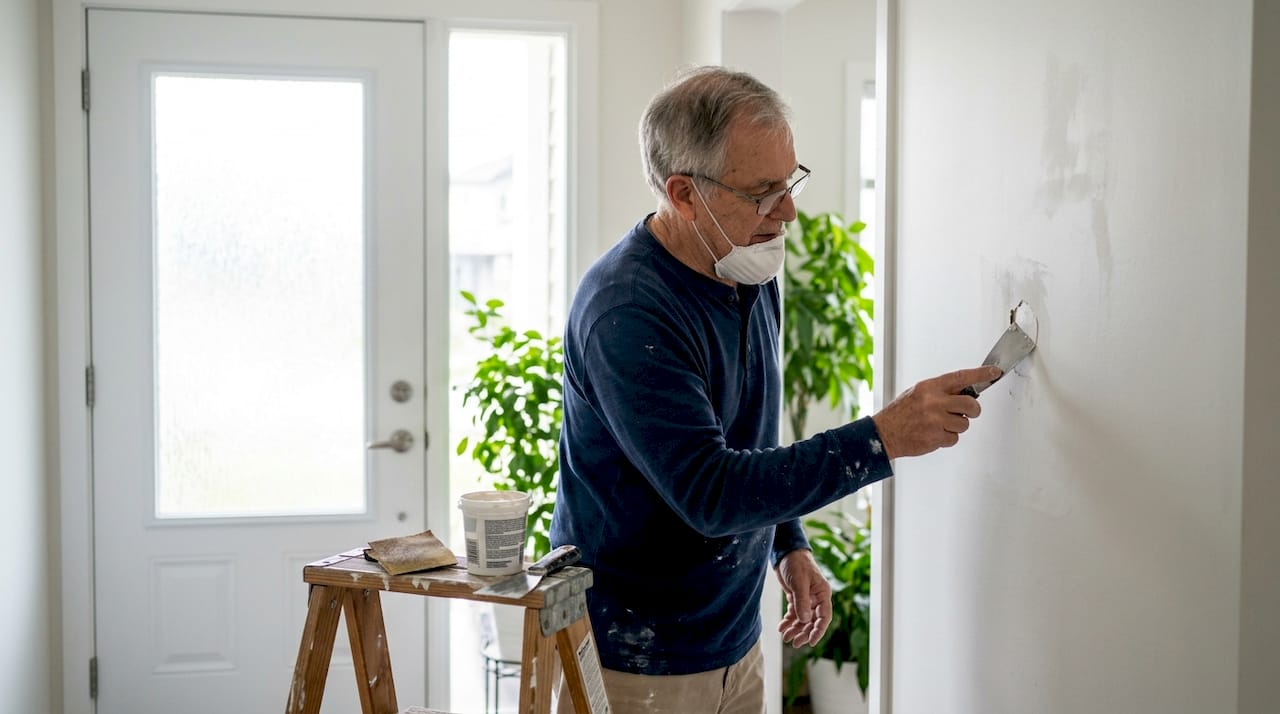
The industry term you will see in building codes and tax law is ordinary repair. That phrase signals work that is routine, limited in scope, and does not transform the property. Sam & Sons Services uses both terms interchangeably when talking with homeowners, because the practical meaning is identical. What matters is the test: does the work restore function without changing configuration? If yes, it is a minor repair.
What are common minor repair examples?
Minor repairs show up in every room of a home. The list below covers the most frequent calls Sam & Sons Services receives from homeowners and renters across Northern Virginia and Washington, DC.
Plumbing
- Fixing a dripping faucet or running toilet
- Replacing a worn supply line under a sink
- Clearing a slow drain with a hand snake
- Sealing a small pipe joint leak
Roofing
- Replacing a few shingles or sealing a small localized leak
- Resealing flashing around a vent pipe
Interior
- Patching and painting drywall holes
- Replacing a broken light switch cover or outlet plate
- Fixing a sticky door that no longer latches
- Re-caulking a bathtub or shower surround
Exterior
- Repainting a peeling section of trim
- Replacing a single broken window pane
- Tightening loose deck boards
What makes each item on this list a minor repair is its limited scope. The work targets one component, leaves the surrounding structure untouched, and restores function rather than adding something new.
Pro Tip: If a repair requires opening more than one wall, touching a load-bearing element, or replacing an entire system rather than a part of it, you have crossed into major repair territory. Stop and reassess before proceeding.
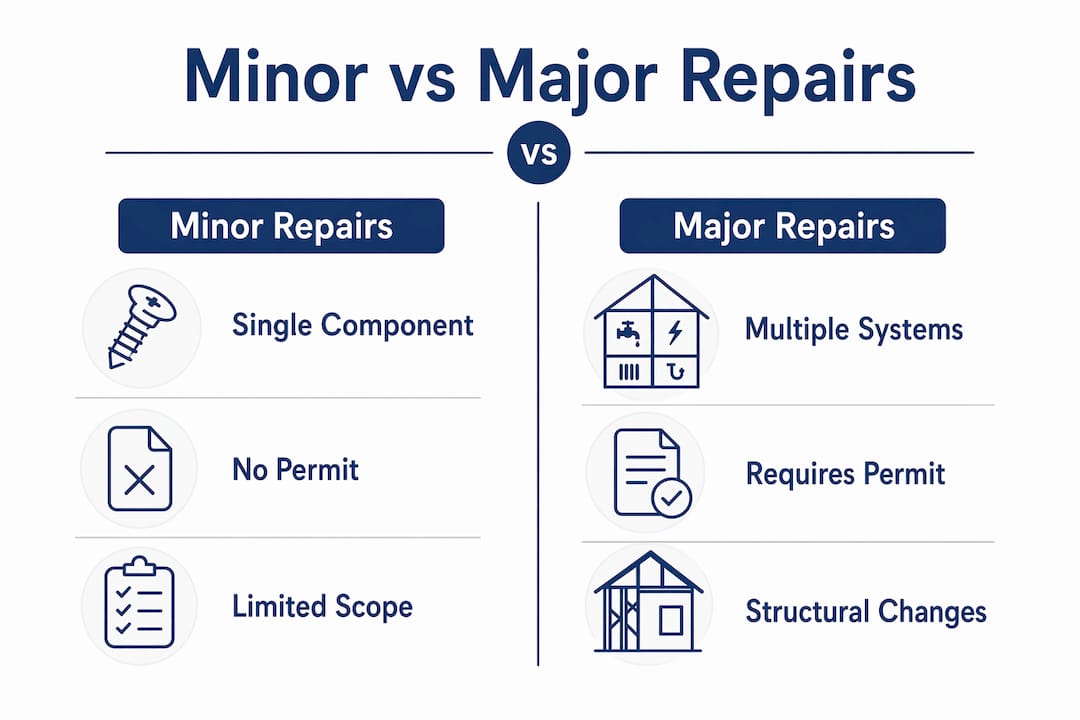
How do minor repairs differ from major repairs and improvements?
The difference between a minor repair, a major repair, and a home improvement comes down to three factors: scope, structural impact, and value addition. Minor repairs are small and localized. Major repairs address larger failures, such as replacing an entire roof or repiping a bathroom. Improvements go further by upgrading or transforming the property beyond its original condition.
| Feature | Minor repair | Major repair | Home improvement |
|---|---|---|---|
| Scope | Single component | System or large area | Whole room or addition |
| Structural impact | None | Possible | Common |
| Permit required | Rarely | Often | Almost always |
| Adds property value | No | Sometimes | Yes |
| Tax treatment | Expense immediately | Expense or capitalize | Must capitalize |
The tax angle is worth understanding. The IRS de minimis safe harbor allows homeowners and landlords to expense repairs costing $2,500 or less in the year they occur. Work that transforms or upgrades the property must be capitalized and depreciated over time. That single rule gives you a practical financial boundary between a repair and an improvement.
Permits follow a similar logic. Permit exemptions for ordinary repairs apply only when the work does not cut walls, disturb structural beams, or alter regulated systems such as plumbing or electrical wiring. Swapping a like-for-like faucet typically needs no permit. Rerouting a drain line almost always does.
Pro Tip: The moment a repair touches a regulated system, such as electrical wiring, gas lines, or load-bearing structure, treat it as a major repair regardless of how small it looks. Permit rules follow system involvement, not job size.
What are the legal and permitting rules for minor repairs?
Most minor repairs fall under permit exemptions in the International Residential Code, which most jurisdictions in Northern Virginia and Washington, DC follow. The exemption applies when the work is replacement-in-kind: same material, same location, no change to regulated systems. Replacing a broken window with the same size window qualifies. Adding a new window opening does not.
Key legal points for homeowners and renters:
- Permit exemption boundary: Work is exempt only if it avoids structural changes and regulated systems. Touching electrical wiring, plumbing supply lines, or gas connections typically triggers permit requirements even for small jobs.
- Landlord responsibilities: Landlords must address repairs that affect safety or habitability, such as a loose tile that creates a trip hazard. Cosmetic issues, like a scuffed wall, carry no legal obligation.
- Tenant responsibilities: Renters are generally responsible for minor damage they cause. Most leases require tenants to report habitability issues promptly and in writing.
- Documentation: Keep photos and written records of any repair request, especially for renters. Documenting the habitability impact, not just the inconvenience, is what resolves disputes.
- Cosmetic vs. functional: A peeling paint chip is cosmetic. A leaking pipe under a sink is functional and safety-related. The legal duty to repair tracks the functional and safety category, not the cosmetic one.
Renters in particular benefit from understanding this boundary. A landlord who ignores a dripping faucet may be within their rights. A landlord who ignores a ceiling leak creating mold is not.
DIY or professional? How to handle minor repairs the right way
Many minor repairs are genuinely within reach for a careful homeowner. The key is knowing which ones and having the right tools ready before you start.
Repairs most homeowners can handle safely:
- Patching small drywall holes with a pre-mixed joint compound and a putty knife
- Replacing a toilet flapper or fill valve
- Swapping a light switch cover or outlet plate
- Re-caulking a tub or shower
- Tightening loose door hinges or cabinet hardware
- Clearing a slow drain with a hand snake or a drain cleaning tool
Basic tools worth keeping on hand:
- Cordless drill and a basic bit set
- Putty knife and joint compound for drywall patches
- Adjustable wrench and slip-joint pliers for plumbing
- Voltage tester before touching any electrical component
- Caulk gun and waterproof caulk for wet areas
DIY minor repairs like changing a light switch cover or patching drywall are generally safe and permit-free. The boundary shifts the moment you open a wall or touch wiring. Common plumbing repairs like replacing a supply line are manageable, but anything involving the main shutoff, drain venting, or water heater connections warrants a licensed plumber.
Pro Tip: Photograph every repair before and after. That record protects you in landlord-tenant disputes, helps contractors understand what was already done, and supports any insurance or warranty claim down the road.
Electrical work deserves special caution. Replacing a cover plate is safe. Replacing a switch or outlet requires turning off the breaker and using a voltage tester to confirm the circuit is dead. Anything beyond that, such as adding a circuit, moving a panel breaker, or working in a subpanel, requires a licensed electrician. The risk is not just a fine. It is a fire.
Key takeaways
Minor home repair is defined as localized, function-restoring work that does not alter structure, trigger permit requirements, or add property value, and understanding that boundary protects both your budget and your legal standing.
| Point | Details |
|---|---|
| Core definition | Minor repairs restore function to a single component without changing structure or configuration. |
| Permit boundary | Permit exemptions apply only when work avoids regulated systems like electrical, plumbing, and structural elements. |
| Tax threshold | The IRS de minimis safe harbor lets you expense repairs costing $2,500 or less in the year they occur. |
| Landlord duty | Landlords must fix repairs affecting safety or habitability; cosmetic issues carry no legal obligation. |
| DIY limit | Homeowners can safely handle surface repairs but should call a licensed professional for any regulated system work. |
What 20 years of repair calls taught me about “minor”
The word minor trips people up more than almost any other term in home maintenance. Homeowners call us describing a “small plumbing issue” that turns out to be a corroded main shutoff. Renters call a ceiling stain “cosmetic” when it is actively hiding a slow leak above the drywall. The label people attach to a problem rarely matches its actual scope.
The most useful mental shift I can offer is this: stop asking whether a repair feels minor and start asking what it touches. A repair that stays within one component, leaves the surrounding structure alone, and simply returns something to working order is genuinely minor. The moment it reaches a regulated system or requires opening a wall to diagnose, the job has changed category even if the visible damage looks small.
Clear communication with contractors and landlords depends on this same precision. When you describe a repair accurately, you get accurate quotes, correct permit guidance, and faster resolution. Vague descriptions lead to scope creep, surprise costs, and disputes over who is responsible.
Proactive maintenance is the real answer to keeping repairs minor. A dripping faucet addressed in week one costs a washer and twenty minutes. Left for six months, it can mean a corroded valve seat, water damage to the cabinet floor, and a call to a plumber. The repairs that stay minor are the ones caught early.
— Sam
Professional minor home repair services from Sam & Sons Services
When a repair goes beyond what you want to handle yourself, Sam & Sons Services is ready to help. With over 20 years of experience serving homeowners and renters throughout Northern Virginia and Washington, DC, our licensed and insured technicians handle the full range of minor repairs without turning a small fix into a major project.

From dripping faucets and drywall patches to loose fixtures and door hardware, we show up prepared and finish the job right the first time. Check our handyman service FAQs for answers to common repair questions, or visit our Alexandria home repair page to book service in your area. We are available 24/7 for urgent repairs and offer competitive pricing with no hidden fees.
FAQ
What is the definition of a minor home repair?
A minor home repair is localized work that restores a single component to its original working condition without altering the home’s structure or configuration. Examples include fixing a dripping faucet, patching drywall, or replacing a few damaged shingles.
Do minor repairs require a building permit?
Most minor repairs are exempt from permit requirements as long as the work does not involve structural elements or regulated systems like electrical wiring, plumbing supply lines, or gas connections. Replacement-in-kind work, such as swapping a like-for-like faucet, typically qualifies for exemption.
Is a landlord required to fix minor repairs?
Landlords are legally required to address repairs that affect safety or habitability, such as a loose tile or a leaking pipe. Purely cosmetic issues, like a scuffed wall or worn carpet, generally carry no legal repair obligation.
What minor repairs can homeowners do themselves?
Homeowners can safely handle repairs like patching small drywall holes, replacing toilet flappers, re-caulking a tub, and swapping outlet covers. Any work touching electrical wiring beyond cover plates, or plumbing beyond simple fixture swaps, should involve a licensed professional.
How does a minor repair differ from a home improvement?
A minor repair restores a component to its original condition and does not add value or change the property’s configuration. A home improvement upgrades or transforms the property, must typically be capitalized for tax purposes, and almost always requires a building permit.


You must be logged in to post a comment.