 Skip to content


An air handler is the indoor component of a split HVAC system responsible for circulating conditioned air throughout your home or property. It does not generate heat or cooling on its own. Instead, it works alongside outdoor units like heat pumps or central air conditioners to deliver temperature-controlled air to every room. Understanding the role of air handler HVAC system components helps you make smarter decisions about maintenance, efficiency, and comfort in your property.
How does an air handler work in a home HVAC system?
The air handler pulls warm indoor air through a return vent and passes it across an evaporator coil or heating coil before pushing it back through your ductwork. That process is how your home gets cooled in summer or warmed in winter. The air handler distributes but does not generate thermal energy. All the actual heating or cooling happens at the coil, which connects to your outdoor unit.
Here is the step-by-step process of how an air handler works:
- Air intake: Return air from your living spaces enters the air handler through a filter.
- Filtration: The filter traps dust, pet dander, and debris before air reaches internal components.
- Conditioning: Air passes over the evaporator coil (for cooling) or a heating coil (for heating), changing its temperature.
- Moisture removal: During cooling, the evaporator coil pulls humidity out of the air as condensation.
- Distribution: The blower fan pushes the conditioned air through supply ducts and out through vents in each room.
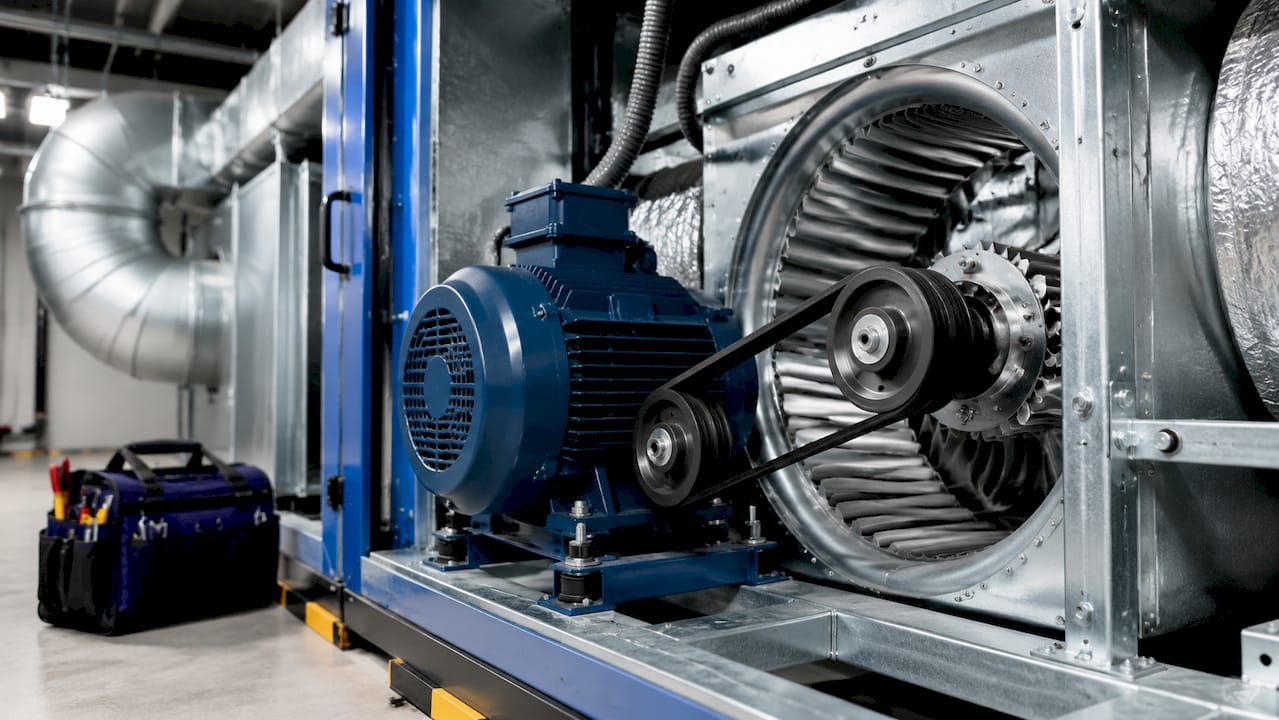
The blower motor is the mechanical heart of this process. Older systems use single-speed PSC motors, which run at full power or not at all. Modern Energy Star-qualified air handlers use electronically commutated motors (ECM), which operate at lower watt-hours per CFM than PSC motors. That difference translates directly to lower monthly energy bills without sacrificing comfort.
Pro Tip: If your system runs constantly but rooms still feel uneven in temperature, the blower motor may be undersized or failing. A licensed technician can test motor output and confirm whether a replacement is needed.
What are the key benefits of an air handler in HVAC?
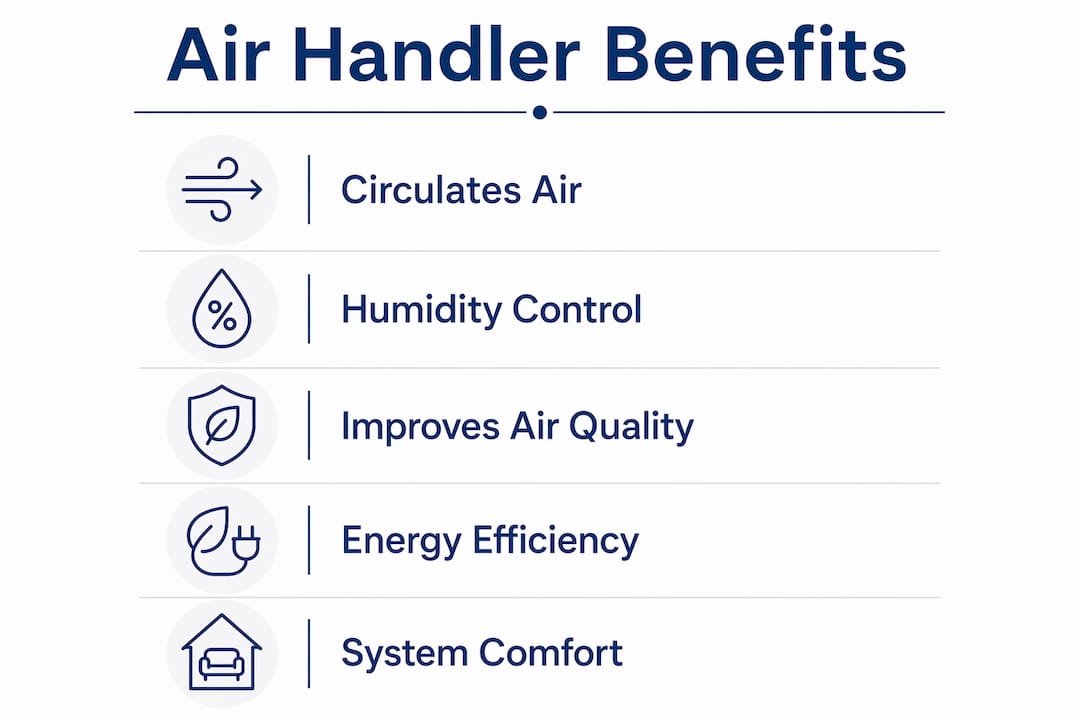
The air handler system benefits go well beyond simply moving air. When it functions correctly, it controls temperature, manages humidity, and protects indoor air quality across your entire property.
- Even temperature distribution: The blower fan pushes air to every zone of your home. Without it, uneven home temperatures and energy waste are the direct result of poor air movement.
- Humidity control: The EPA recommends maintaining indoor relative humidity between 30% and 50%. Air handlers help hit that range by pulling moisture out of the air as it passes over the evaporator coil during cooling cycles.
- Air filtration: Filters inside the air handler trap dust, allergens, and debris. These filters protect internal components rather than serve as whole-home air purification systems. Think of them as equipment protection first, air quality support second.
- Energy efficiency: Variable-speed blowers improve humidity control by slowing airflow over the coil for better moisture removal. They also consume less electricity than fixed-speed alternatives during partial-load conditions.
The humidity control point deserves extra attention. High indoor humidity makes a 75°F room feel like 80°F. When your air handler runs efficiently, it removes that excess moisture and your thermostat does not have to work as hard. That is a direct cost saving you can feel in your utility bills.
For homeowners who want cleaner indoor air beyond what a standard filter provides, pairing your HVAC system with a standalone air purifier is the more effective approach. The air handler’s filter is not designed to replace dedicated air purification.
Air handler vs. furnace vs. packaged unit: what is the difference?
Not every home has a separate air handler. Understanding which setup you have helps you know what to maintain and when to call a professional.
| System Type | Has Separate Air Handler? | How Air Is Moved |
|---|---|---|
| Split system with heat pump | Yes | Dedicated indoor air handler with blower and coil |
| Split system with AC only | Yes | Air handler handles distribution; outdoor unit handles cooling |
| Gas furnace system | No | Blower is built into the furnace cabinet |
| Packaged unit (rooftop or slab) | No | All components housed in one outdoor cabinet |
Air handlers are specific to split systems. In furnace or packaged unit systems, the blower is integrated and a separate air handler is not present. This distinction matters when you are troubleshooting comfort issues or planning a system upgrade.
A furnace blower and an air handler blower do the same basic job: move air through ducts. The key difference is that a furnace blower is built into a unit that also generates heat via gas combustion. An air handler is a standalone distribution unit that relies entirely on the outdoor equipment for thermal energy. If you have a heat pump, you almost certainly have an air handler indoors.
Packaged units are common in commercial buildings and some older homes. Because everything sits in one cabinet, there is no indoor air handler to maintain separately. All service work happens at the single outdoor unit.
What maintenance keeps an air handler running efficiently?
Routine air handler maintenance tips are straightforward, but many homeowners skip them until a problem shows up. Staying ahead of small issues prevents expensive repairs and keeps your system running at full efficiency.
- Filter inspection and replacement: Inspect the air filter at least once a month. Replace it every 1–3 months depending on filter type, pets in the home, and overall usage. A clogged filter forces the blower to work harder and reduces airflow to every room.
- Coil cleaning: The evaporator coil collects dust and mold over time. A dirty coil cannot transfer heat efficiently, which means your system runs longer to reach the set temperature. Regular filter and coil maintenance extends system life and keeps energy costs in check.
- Blower wheel inspection: Dust buildup on the blower wheel reduces airflow and strains the motor. A technician should inspect and clean it during annual service visits.
- Drain pan and condensate line: The drain pan collects moisture removed from the air. A clogged condensate line causes water to back up, which can lead to mold growth and water damage. Keeping this clear is especially important for property managers overseeing multiple units.
- Airflow checks: Weak airflow from vents, hot or cold spots in specific rooms, and unusual noises from the air handler cabinet are all signs that something needs attention.
Pro Tip: Schedule a professional air handler inspection every spring before cooling season starts. Catching a dirty coil or failing blower motor in April costs far less than an emergency repair in July.
For properties with heat pumps, pairing air handler maintenance with heat pump upkeep in Northern VA keeps both sides of your split system working together at peak performance.
How does ductwork quality affect air handler performance?
The air handler can only do its job if the ductwork connected to it is in good condition. An air handler cannot overcome airflow issues caused by poorly sized, leaky, or blocked ductwork. This is one of the most overlooked comfort problems in residential HVAC.
Leaky ducts allow conditioned air to escape into attics, crawl spaces, and wall cavities before it ever reaches your living areas. The result is rooms that never reach the set temperature, a system that runs longer than it should, and higher energy bills. The air handler keeps running because the thermostat never gets satisfied. The problem is not the air handler. It is the delivery path.
Blocked or undersized ducts create back pressure that forces the blower motor to work against resistance. Over time, that strain shortens motor life and reduces system efficiency. A professional duct inspection can identify restrictions, disconnected sections, and leaks that are invisible from inside the home.
Sealing and insulating ductwork is one of the highest-return investments a homeowner or property manager can make. It directly improves the air handler’s ability to deliver conditioned air where it is needed, without requiring any changes to the equipment itself. If you manage multiple properties, duct condition should be part of every HVAC assessment.
Key takeaways
The air handler is the distribution core of any split HVAC system, and its condition directly determines your home’s comfort, air quality, and energy costs.
| Point | Details |
|---|---|
| Air handler role | It distributes conditioned air but does not generate heating or cooling energy itself. |
| Humidity and comfort | Air handlers help maintain EPA-recommended indoor humidity of 30%–50% by removing moisture during cooling. |
| Filter function | Filters protect internal components first; they are not a substitute for dedicated air purification. |
| Motor efficiency | ECM motors in modern air handlers use significantly less energy than older PSC motors. |
| Ductwork dependency | Even a well-maintained air handler cannot compensate for leaky, blocked, or undersized ductwork. |
Why the air handler deserves more attention than it gets
Most homeowners focus on the outdoor unit when something goes wrong with their HVAC system. The compressor, the condenser, the refrigerant charge. Those components get the attention because they are visible and loud. The air handler sits quietly in a closet or attic and gets ignored until something breaks.
In my experience working with HVAC systems across Northern Virginia, the air handler is where most preventable comfort problems start. A dirty evaporator coil, a clogged filter, or a failing blower motor will cause uneven temperatures and higher bills long before the system throws an obvious error. By the time a homeowner notices, the problem has usually been building for months.
The maintenance steps are not complicated. Monthly filter checks take two minutes. An annual professional inspection costs a fraction of what a blower motor replacement or coil cleaning under emergency conditions will run you. What I see most often is not neglect out of laziness. It is neglect out of not knowing the air handler exists or what it does.
Property managers especially need to build air handler maintenance into their regular inspection schedules. A tenant who calls about uneven temperatures in july is almost always dealing with a problem that started in the spring. Staying ahead of it protects both the equipment and the tenant relationship.
Understanding how your system works is the first step toward keeping it running well. The air handler is not a mystery. It is a blower, a coil, and a filter working together. Treat those three things well, and your system will reward you with consistent comfort and lower operating costs.
— Sam & Sons Team
Keep your air handler running at its best with Samandsons
Air handler systems involve multiple components working together, and small issues can quietly grow into costly repairs. Samandsons has served homeowners and property managers throughout Northern Virginia for over 20 years, providing licensed, insured HVAC inspections, maintenance, and repairs with fast response times.

Whether you need a seasonal tune-up, a coil cleaning, or a full system assessment, the Samandsons team is available 24/7 to keep your home comfortable year-round. For homeowners and property managers across the region, our HVAC services in Northern Virginia cover everything from air handler inspections to full system diagnostics. You can also explore our home services in Arlington, VA and surrounding areas for a full picture of what we offer. Call Samandsons today to schedule your air handler inspection before the next season hits.
FAQ
What is the main role of an air handler in an HVAC system?
The air handler circulates conditioned air throughout your home by pulling in return air, passing it over heating or cooling coils, and pushing it through ductwork to each room. It distributes thermal energy but does not produce it.
Does every home have an air handler?
No. Air handlers are specific to split systems that use a heat pump or central air conditioner. Homes with gas furnaces or packaged units have the blower built into those systems and do not have a separate air handler.
How often should i replace my air handler filter?
Inspect the filter monthly and replace it every 1–3 months depending on filter type, household size, and whether you have pets. A clogged filter reduces airflow and forces the blower motor to work harder.
Can a bad air handler cause mold in my home?
Yes. A dirty evaporator coil or clogged condensate drain line creates conditions where moisture builds up inside the air handler cabinet. That moisture can lead to HVAC mold growth, which then circulates through your ductwork. Regular maintenance prevents this.
What is the difference between an air handler and a furnace?
A furnace generates heat through gas combustion and has a built-in blower. An air handler does not generate heat or cooling on its own. It relies on an outdoor heat pump or air conditioner for thermal energy and handles only the distribution of that conditioned air.

