 Skip to content

What is a plumbing emergency
A plumbing emergency is any plumbing problem that causes active water damage, creates a health or safety risk, or eliminates essential plumbing function in your home. Knowing what is a plumbing emergency before one strikes makes the difference between a quick fix and thousands of dollars in repairs. The core question is simple: can you safely contain the problem right now, or is damage spreading by the minute? Issues like burst pipes, sewage backups, and uncontrolled flooding all meet the emergency plumbing definition because they threaten your home, your health, or both at once.
What qualifies as a plumbing emergency?
A plumbing emergency meets at least one of four criteria: active water damage is occurring, a health or safety risk is present, essential plumbing service is lost, or waiting will significantly increase repair costs. These four questions form the foundation of every professional triage decision a licensed plumber makes when a call comes in at midnight.
Ask yourself these four questions when you face a plumbing problem:
- Is water actively damaging my home right now? Spreading water destroys drywall, insulation, and electrical systems fast.
- Is there a health or safety risk? Sewage exposure and gas leaks are immediate hazards.
- Have I lost essential plumbing? No running water or no working toilets in the entire house qualifies.
- Will waiting until morning make this worse? If yes, call now.
If you answer yes to even one of these, you are dealing with a genuine emergency. The damage and safety risk framework is the same one professional plumbers use to prioritize calls. Applying it yourself saves time and prevents panic-driven decisions.
Common types of plumbing emergencies at home
True plumbing emergencies include burst or leaking pipes you cannot stop, sewage backups, suspected gas leaks, water coming through ceilings or walls, loss of running water, a flooded basement, and overflowing toilets that cannot be shut off. Each of these scenarios shares one trait: delay makes the outcome dramatically worse.
Here is a breakdown of the most common types of plumbing emergencies in homes:
- Burst pipes: A burst pipe can release hundreds of gallons per hour. Water spreads behind walls and under floors within minutes, damaging structural materials and creating mold conditions.
- Sewage backup: Raw sewage is a Category 3 biohazard requiring professional restoration protocols. Contact with sewage water causes serious illness.
- Gas leaks: A gas smell near plumbing fixtures or water heaters requires immediate evacuation and a call to your gas utility before any plumber arrives.
- Flooding from any source: A flooded basement, whether from a broken supply line or a failed sump pump, causes structural damage and creates electrical hazards.
- Overflowing toilet that will not stop: If the shutoff valve behind the toilet fails and water keeps rising, that is an emergency.
- Water through ceilings or walls: Water spreading behind surfaces damages drywall, insulation, and electrical wiring rapidly. Every hour of delay raises repair costs.
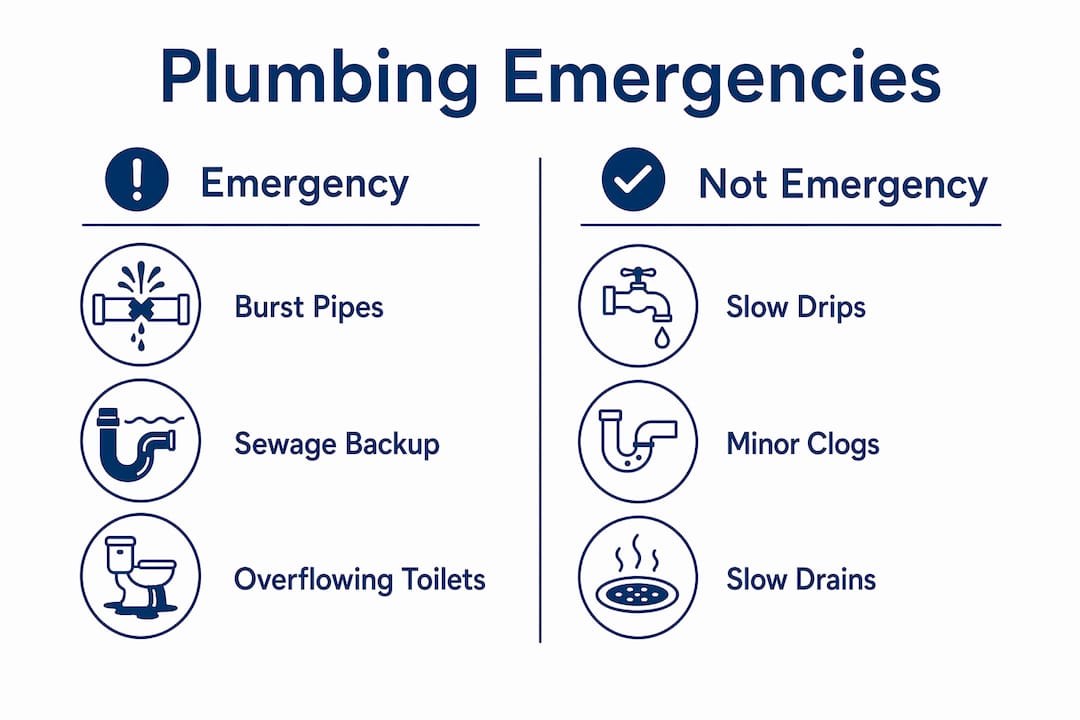
Use this quick reference table to separate true emergencies from issues that can wait:
| Situation | Emergency? | Reason |
|---|---|---|
| Burst pipe with uncontrolled flow | Yes | Active structural and water damage |
| Sewage backup in drains or toilets | Yes | Category 3 biohazard, health risk |
| Slow drip from a faucet | No | Containable, no immediate damage |
| Overflowing toilet, shutoff failed | Yes | Active flooding, water damage risk |
| Single slow drain in one sink | No | Localized, no safety risk |
| Water stain on ceiling, no active drip | No | Monitor closely, schedule repair soon |
| Gas smell near water heater | Yes | Immediate safety and explosion risk |
| Minor clog in one bathroom sink | No | Isolated, can wait for business hours |
Pro Tip: If any emergency involves water near electrical panels, outlets, or appliances, do not enter the area. Shut off the main breaker from a dry location before doing anything else.
How to tell a plumbing emergency from a minor issue
Not every leak or clog is an emergency. Slow drips, isolated slow drains, and minor clogs can often wait for a scheduled repair during normal business hours. The key concept is containment: can you safely isolate the problem so it causes no further damage overnight?
Professionals triage plumbing calls using a simple principle. If water flow can be safely stopped without worsening the damage, the situation is manageable. If you cannot isolate or stop the flow, it is urgent.
Apply this three-question framework to any plumbing problem:
- Can I stop or contain the water right now? Turning off the shutoff valve under a sink or behind a toilet often resolves the immediate risk for minor issues.
- Is anyone in the home at risk? Sewage exposure, gas smells, or electrical contact with water all create immediate danger.
- Will the damage spread significantly in the next 8 hours? A slow drip into a bucket will not. Water behind a wall will.
A clogged sink that drains slowly is not an emergency. A bathroom sink with a minor leak you can catch in a bowl is not an emergency. These are real problems worth fixing promptly, but they do not require a 2 a.m. service call. Saving emergency calls for true emergencies also saves you money, since after-hours rates are higher.
How to handle a plumbing emergency until the plumber arrives
The first 10 minutes of a plumbing emergency determine how much damage your home sustains. Acting quickly and correctly limits repair costs and keeps your family safe.
Follow these steps in order:
- Shut off the main water supply valve. The main shutoff valve is typically located near the basement wall where the water line enters the house. Turning it off stops water flow to the entire home. Find it before an emergency happens.
- Turn off the water heater. With the main supply off, your water heater can overheat or build pressure. Switch it to the off setting or pilot mode immediately.
- Avoid all contact between water and electricity. Do not use electrical appliances, outlets, or switches in any room where water is present. Shut off the breaker for affected areas if you can do so safely from a dry location.
- Stop all water use during a sewage backup. Continued water use during a sewage backup forces more contaminated water into living spaces. Do not flush toilets, run sinks, or use appliances connected to drains.
- Open windows and evacuate if you smell gas. Do not flip any switches. Leave the home and call your gas utility from outside.
- Document the damage. Take photos and video of all visible damage before any cleanup begins. This documentation is critical for homeowner’s insurance claims.
- Call a licensed emergency plumber. Provide your address, the type of problem, whether you have shut off the main valve, and whether you have lost running water or hot water.
Pro Tip: Take a photo of your main shutoff valve location right now and save it in your phone. In a midnight plumbing emergency at home, you will not want to search for it in the dark.
When should you call an emergency plumber?
Call an emergency plumber immediately when the problem involves active water damage, a health hazard, or a complete loss of essential plumbing that cannot be safely contained. Emergency plumbing response time is faster and more effective when you provide clear, specific information the moment you call.
When you call, have this information ready:
- The exact location of the problem in your home
- What the water or waste is doing (flowing, dripping, backing up)
- Whether you have shut off the main water supply
- Whether you have lost running water or hot water entirely
- Any visible damage to walls, ceilings, or floors
Licensed professionals handle health hazards like sewage and gas that no homeowner should address alone. Sewage backup requires professional Category 3 cleanup. Improper DIY handling spreads contamination and creates lasting health risks. Gas-related plumbing issues require both your gas utility and a licensed plumber working together.
After the call, stay out of affected areas, keep children and pets away from contaminated water, and follow any safety instructions the dispatcher gives you. A reliable emergency plumber will confirm an estimated arrival time and walk you through any additional steps to take while you wait.
Key takeaways
A plumbing emergency requires immediate action when it involves active water damage, a health risk, or loss of essential plumbing that cannot be safely contained.
| Point | Details |
|---|---|
| Core definition | A plumbing emergency threatens safety, health, or property with active or rapidly escalating damage. |
| Four-question test | Ask about active damage, health risk, essential service loss, and whether waiting increases costs. |
| Shut off water first | Locate your main shutoff valve now so you can act immediately when an emergency strikes. |
| Sewage is a biohazard | Stop all water use during a sewage backup and call a licensed professional immediately. |
| Clear info speeds response | Telling the plumber your problem type, location, and shutoff status reduces response time. |
What 20 years of emergency calls taught me
After two decades of responding to urgent plumbing calls across Northern Virginia, the pattern I see most often is not a dramatic burst pipe. It is a homeowner who waited too long on a warning sign they did not recognize.
Water stains on a ceiling are the most underestimated sign of a plumbing emergency I encounter. Homeowners see a yellow ring and schedule a paint touch-up. By the time I arrive, there is mold behind the drywall and a slow leak that has been running for weeks. The repair cost is five times what it would have been with an earlier call.
The second mistake I see constantly is not knowing where the main shutoff valve is. I have watched homeowners spend 20 minutes searching their basement while water pours through a ceiling. That 20 minutes is the difference between replacing drywall and replacing drywall plus flooring plus insulation.
My honest advice: walk through your home this week and find that valve. Label it. Show every adult in your household where it is. That single act of preparation does more to protect your home than any smart leak detector on the market.
Calm, fast action is the right response to any plumbing emergency. Panic leads to bad decisions, like trying to DIY a sewage cleanup or ignoring a gas smell because you think it might just be the neighbor’s yard. Trust your instincts when something looks or smells wrong. Call a licensed professional. The cost of a midnight service call is always less than the cost of waiting.
Sam & Sons Services is ready when you need emergency plumbing help
When a plumbing emergency hits your home in Northern Virginia, Sam & Sons Services is available 24 hours a day, 7 days a week. Our licensed and insured technicians respond fast, arrive prepared, and handle everything from burst pipes and sewage backups to main shutoff valve repairs and water heater failures.

Sam and sons has served homeowners throughout Alexandria, Arlington, Springfield, and surrounding communities for over 20 years. Whether you need a shower drain repair or a full emergency response at 3 a.m., our team is ready. Do not wait for damage to spread. Call Sam and Sons Services now or visit our website to request urgent service.
FAQ
What is the definition of a plumbing emergency?
A plumbing emergency is any plumbing issue that causes active water damage, creates a health or safety risk, or eliminates essential plumbing function in your home. If the problem cannot be safely contained, it requires immediate professional attention.
What are the most common plumbing emergencies in homes?
The most common plumbing emergencies include burst pipes, sewage backups, overflowing toilets that cannot be shut off, water through ceilings or walls, flooded basements, and suspected gas leaks near plumbing fixtures.
How do i handle a plumbing emergency until the plumber arrives?
Shut off the main water supply valve, turn off the water heater, avoid contact between water and electricity, stop all water use if sewage is involved, and document the damage with photos for your insurance claim.
What is a typical emergency plumbing response time?
Emergency plumbing response time varies by provider and location, but most licensed emergency plumbers aim to arrive within one to two hours of your call. Providing clear details about the problem and your address speeds up the process.
Is a slow drip or clogged drain a plumbing emergency?
A slow drip or single clogged drain is not a plumbing emergency if you can safely contain it. These issues can typically wait for a scheduled repair during normal business hours unless they are spreading or affecting multiple fixtures.


You must be logged in to post a comment.