 Skip to content


An HVAC emergency repair is defined as urgent service required when a heating or cooling system failure creates immediate danger to your safety, health, or property. Not every breakdown qualifies. The industry standard for what is an hvac emergency repair centers on three criteria: life-safety hazards like gas leaks or carbon monoxide, extreme indoor temperatures that threaten vulnerable occupants, and active failures causing structural damage such as flooding. Knowing the difference between a true emergency and a frustrating inconvenience protects your wallet and, more critically, your family.
What situations clearly indicate an HVAC emergency?
The clearest HVAC emergencies involve immediate threats to life. Gas leaks, carbon monoxide alarms, visible smoke, and electrical sparks all require evacuation and a 911 call before any repair attempt. These are not situations where you troubleshoot first.
Temperature extremes are the second major category. The industry uses the 90/40 rule as the threshold: no cooling when outdoor temperatures reach 90°F or above, and no heating when outdoor temperatures drop to 40°F or below. At those thresholds, indoor conditions can become life-threatening, and frozen pipes can burst within 8–12 hours. Households with infants, elderly residents, or people with medical conditions face risk even faster.
Beyond temperature and gas hazards, watch for these signs of HVAC system failure:
- Burning smell from vents or the unit: This signals overheating components or electrical faults. Shut the system off immediately.
- Persistent breaker trips: One reset is reasonable. A breaker that trips again immediately signals a high fire hazard requiring professional attention.
- Active water leaks: Water pooling near your air handler or furnace can damage flooring, drywall, and subfloor within hours.
- Loud banging, grinding, or hissing sounds: Banging often means a broken component; hissing near the refrigerant lines suggests a refrigerant leak.
- Ice buildup on the outdoor unit or refrigerant lines: This points to refrigerant loss or airflow failure, both of which damage the compressor if left running.
Pro Tip: Do a quick sensory sweep before calling anyone. Use your nose (gas or burning smell?), your ears (unusual sounds?), and your eyes (water, ice, or sparks?). This 60-second check gives you critical information to share with a dispatcher and helps you decide whether to evacuate or simply shut the system down.
Emergency vs. urgent vs. routine: how do you tell the difference?
Homeowners frequently confuse emergency repairs with urgent repairs, and that confusion leads to costly after-hours service calls that were not necessary. The distinction is straightforward once you apply it.
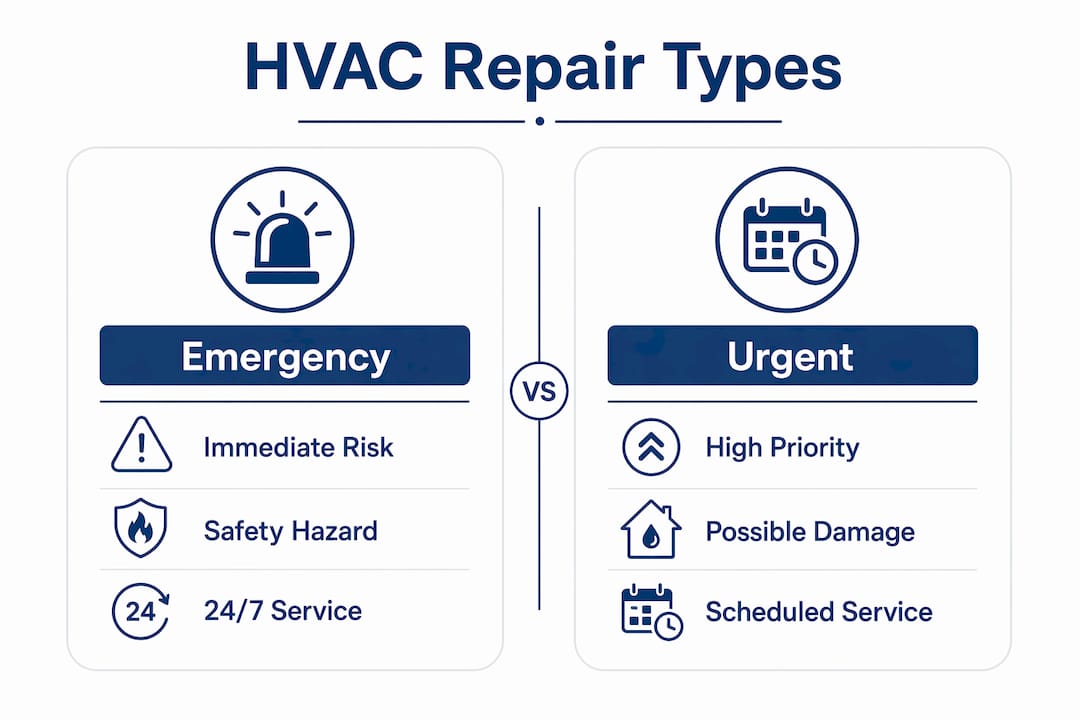
An emergency means immediate risk to safety, health, or property. An urgent repair is one that needs attention within 24 hours but poses no immediate danger. A routine repair can be scheduled at your convenience.
Use this framework to classify your situation:
- Check outdoor temperature first. If it is between 50°F and 85°F, a system failure is uncomfortable but rarely dangerous for healthy adults. In mild weather around 70°F, waiting until morning to call a technician is a reasonable and cost-conscious choice.
- Check for life-safety signals. Smell rotten eggs? Hear your CO detector? See sparks or smoke? Stop all other checks. Evacuate and call 911.
- Try basic homeowner fixes. Replace the thermostat batteries. Check the circuit breaker. Confirm the system switch is set correctly. These basic checks resolve a meaningful share of non-critical failures without any service call.
- Reset the breaker once, and only once. If it trips again immediately, do not reset it a second time. That repeated trip is a fire hazard signal.
- Assess who is in the home. Vulnerable occupants change the calculus. A healthy adult can manage a warm night with fans. An infant or a person with a heart condition cannot.
Pro Tip: Keep a simple log of your HVAC system’s behavior. Note the date, outdoor temperature, and what the system did. When you call a technician, that log cuts diagnostic time and helps you communicate clearly whether this is a pattern or a one-time event.
What should you do immediately if you suspect an HVAC emergency?
Your first actions in a true HVAC emergency determine whether the situation stays manageable or escalates. Follow these steps in order:
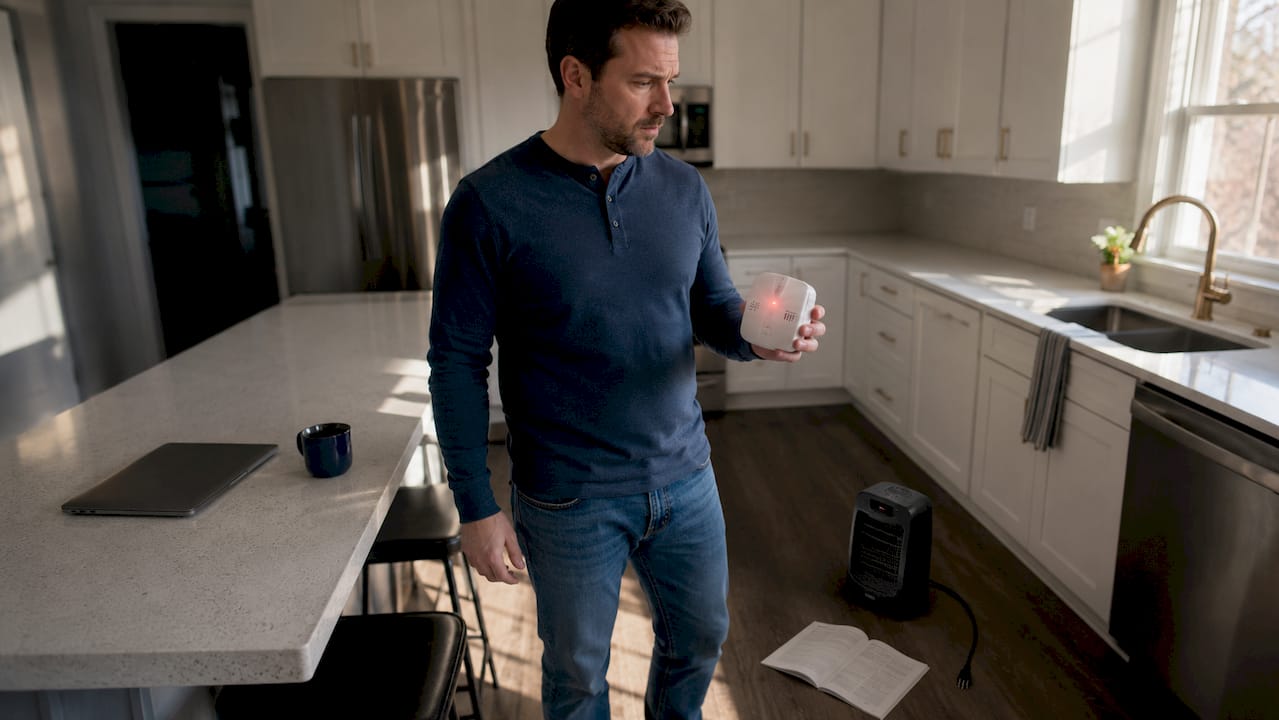
- Evacuate first for gas or CO. If you smell gas or your CO detector sounds, leave the building immediately. Do not flip light switches, use your phone indoors, or attempt any checks. Go outside, then call 911 and your gas utility.
- Shut off power at the breaker if you see sparks, smell burning, or notice electrical faults, and only if you can do so safely without entering a hazardous area.
- Turn off the gas supply valve if you know its location and can reach it safely from outside the affected area.
- Do not use any ignition sources near a suspected gas leak. That includes lighters, matches, and even light switches, which can spark.
- Move vulnerable occupants to a safe location. During heating failure in sub-40°F weather, move infants, elderly family members, and pets to a neighbor’s home, a hotel, or a community warming center while you wait for repairs.
- Call a licensed emergency HVAC technician once life-safety steps are complete. Provide your sensory sweep findings: what you smelled, heard, and saw. That information speeds up the response.
Common types of HVAC emergencies and their risks
Understanding the specific types of hvac emergencies home systems face helps you respond correctly to each one. Each scenario carries a different risk profile.
| Emergency Type | Key Warning Signs | Primary Risk |
|---|---|---|
| Gas leak | Rotten egg smell, hissing near furnace | Explosion, asphyxiation |
| Carbon monoxide leak | CO detector alarm, headache, nausea | Poisoning, death |
| Electrical fault | Sparks, burning smell, repeated breaker trips | Fire, electrocution |
| Refrigerant leak | Hissing sound, ice on lines, warm air output | Compressor failure, health exposure |
| Frozen or burst pipes | No heat during sub-40°F temps, water damage | Structural flooding, mold |
| Active water leak | Pooling water near air handler | Mold, drywall and floor damage |
Frozen or burst pipes caused by heating failure during extreme cold create cascading property damage. Water intrusion leads to mold growth within 24–48 hours, and mold remediation adds significant cost on top of the original repair. Acting within the first few hours of a heating failure in cold weather is not optional. It is the difference between a repair bill and a renovation.
Refrigerant leaks deserve special attention because they are easy to misread as a minor performance issue. A system blowing warm air with ice on the outdoor unit is not just underperforming. It is actively damaging the compressor, which is the most expensive component in the system. Running the unit in that condition turns a repair into a replacement.
Prevention and preparation: reducing HVAC emergencies before they start
The most cost-effective HVAC emergency repair is the one that never happens. Regular maintenance and filter changes prevent a significant share of common HVAC emergencies caused by airflow restrictions and overheating. Scheduling professional tune-ups before summer and winter seasons catches failing components before they fail completely.
A practical hvac emergency repair checklist for homeowners includes these preparation steps:
- Replace air filters every 1–3 months, depending on household dust and pet dander levels.
- Schedule a professional inspection in spring (before cooling season) and fall (before heating season).
- Test your CO detector and smoke alarms monthly. Replace batteries annually.
- Know the location of your gas shutoff valve and your electrical panel before you need them.
- Keep an HVAC emergency kit with a flashlight, voltage tester, spare filters, and your HVAC technician’s contact number. This kit helps you assess situations safely and communicate accurate details when you call for help.
Preventive heat pump maintenance in Reston, VA or a scheduled tune-up in Herndon costs a fraction of what emergency heating repair runs after hours. The financial case for maintenance is clear. The safety case is stronger.
| Service Type | Typical Timing | Cost Relative to Emergency |
|---|---|---|
| Seasonal tune-up | Spring and fall | Significantly lower |
| Filter replacement | Every 1–3 months | Minimal |
| After-hours emergency repair | Unplanned | Highest cost |
| Major component replacement | After failure | Very high |
What I’ve learned after 20 years of HVAC emergency calls
The homeowners who handle HVAC emergencies best are not the ones who panic the least. They are the ones who prepared the most. After two decades of responding to urgent repair calls across Northern Virginia, the pattern is consistent: the calls that escalate into expensive disasters almost always involve a warning sign that was noticed and ignored weeks earlier.
A burning smell that appeared once and then stopped is not a system clearing itself out. A breaker that tripped and then held after one reset is not a fluke. These are early signals, and treating them as minor inconveniences is the single most common and costly mistake homeowners make.
The other misconception worth addressing directly: not every after-hours call is a true emergency. Calling for emergency HVAC urgency assessment at 2 a.m. because your system is blowing slightly less cold air on a 75°F night costs you significantly more than waiting until morning. That money is better spent on a maintenance contract. Calm, methodical assessment before you call saves real money and keeps the emergency line available for true emergencies.
Trust your instincts on safety, but apply logic to everything else. If you smell gas, do not think. Leave. If your house is 68°F and the system just stopped, take a breath, check the thermostat batteries, and call in the morning.
— Sam
Sam and Sons Services is ready when a real emergency hits
When a true HVAC emergency strikes your Northern Virginia home, you need a licensed team that picks up the phone and shows up fast.

Sam and Sons Services provides 24/7 HVAC emergency repair services across Northern Virginia, including Alexandria, Arlington, Fairfax, Herndon, and Centreville. Our licensed and insured technicians respond to gas-related shutdowns, heating failures during extreme cold, electrical faults, and refrigerant leaks. With over 20 years of experience, we diagnose accurately and repair correctly the first time. Do not wait when safety is at risk. Call Sam and Sons Services now for immediate emergency support, or schedule a seasonal tune-up to prevent the next crisis before it starts.
FAQ
What is an HVAC emergency repair?
An HVAC emergency repair is urgent professional service required when a system failure creates immediate risk to health, safety, or property. Gas leaks, carbon monoxide alarms, electrical faults, and extreme temperature loss during dangerous outdoor conditions all qualify.
What is the 90/40 rule for HVAC emergencies?
The 90/40 rule means a system failure is considered an emergency when outdoor temperatures reach 90°F or above without cooling, or 40°F or below without heating. At those thresholds, indoor conditions can become dangerous within hours, especially for vulnerable occupants.
Can I reset my breaker if my HVAC system trips it?
Reset the breaker once. If it trips again immediately, stop and call a licensed technician. Repeated breaker trips signal a high fire hazard that requires professional diagnosis, not another reset.
What should I do first if I smell gas near my HVAC system?
Leave the building immediately without touching any switches or using your phone indoors. Once outside, call 911 and your gas utility. Evacuating before any repair attempt is the only safe response to a suspected gas leak.
How can I reduce the risk of HVAC emergencies?
Replace air filters every 1–3 months and schedule professional inspections each spring and fall. Regular maintenance prevents a significant share of common HVAC emergencies caused by airflow restrictions and overheating components.
Key takeaways
An HVAC emergency repair is defined by immediate risk to safety, health, or property. Knowing the signs and responding correctly is the most important thing a homeowner can do.
| Point | Details |
|---|---|
| Define the emergency first | True emergencies involve gas leaks, CO alarms, electrical faults, or extreme temperature loss under the 90/40 rule. |
| Life-safety hazards require evacuation | Smell gas or hear a CO alarm? Leave immediately and call 911 before any repair attempt. |
| Basic checks resolve many failures | Replacing thermostat batteries or resetting the breaker once resolves a meaningful share of non-critical failures. |
| Repeated breaker trips are a fire hazard | Never reset a breaker more than once. A second trip requires a licensed technician, not another reset. |
| Prevention costs far less than emergencies | Seasonal tune-ups and regular filter changes prevent the majority of common HVAC emergencies before they start. |


You must be logged in to post a comment.