 Skip to content


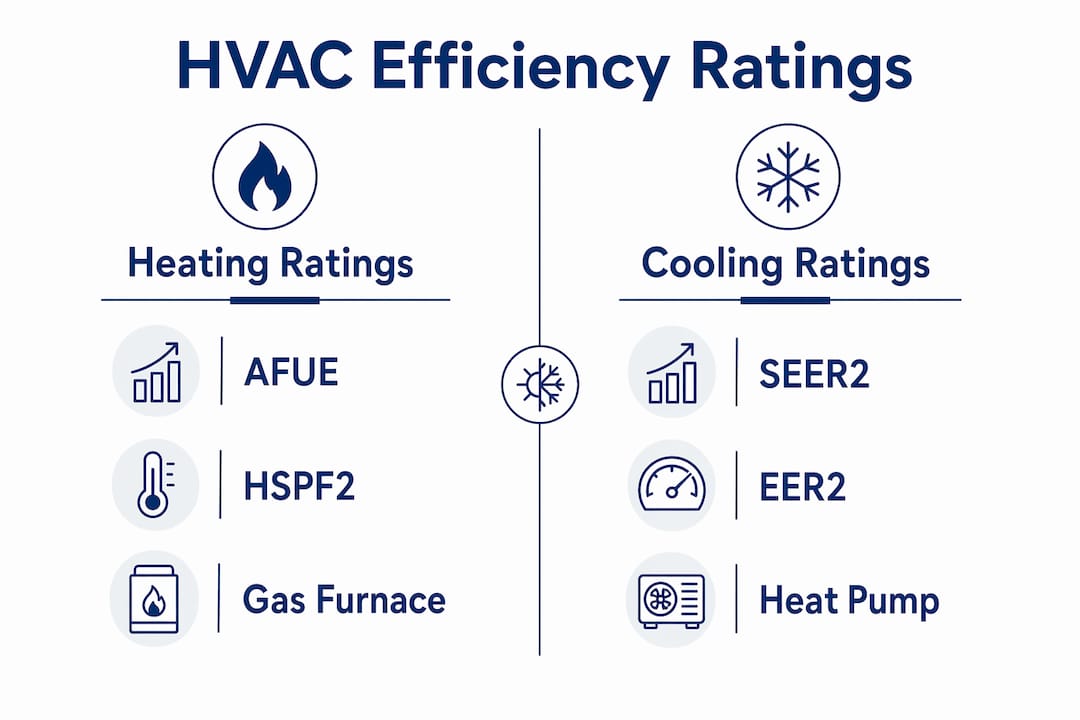
HVAC system efficiency ratings are a standardized measurement that shows how effectively your heating or cooling equipment converts energy into indoor comfort. The four core metrics you need to know are SEER2, EER2, HSPF2, and AFUE. Each one applies to a different type of equipment and climate condition.
Understanding what is hvac system efficiency rating means knowing which number applies to your system, what federal minimums apply in your region, and how those numbers translate into real monthly savings. The role of your air handler and duct design also shape how well any rated system performs in practice.
What is an HVAC efficiency rating and how is it calculated?
An HVAC efficiency rating quantifies how much useful heating or cooling a system delivers per unit of energy consumed. The higher the number, the less energy the system wastes. Four ratings cover the full range of residential HVAC equipment.
SEER2 (Seasonal Energy Efficiency Ratio 2) measures cooling efficiency across an entire season. It is the standard rating for central air conditioners and heat pumps in cooling mode. SEER2 and HSPF2 use the DOE’s updated M1 test standard, which simulates real duct resistance at 0.50 in.w.c. external static pressure. That is a much more realistic test than the old 0.10 in.w.c. standard, so the numbers better reflect what you actually experience at home.
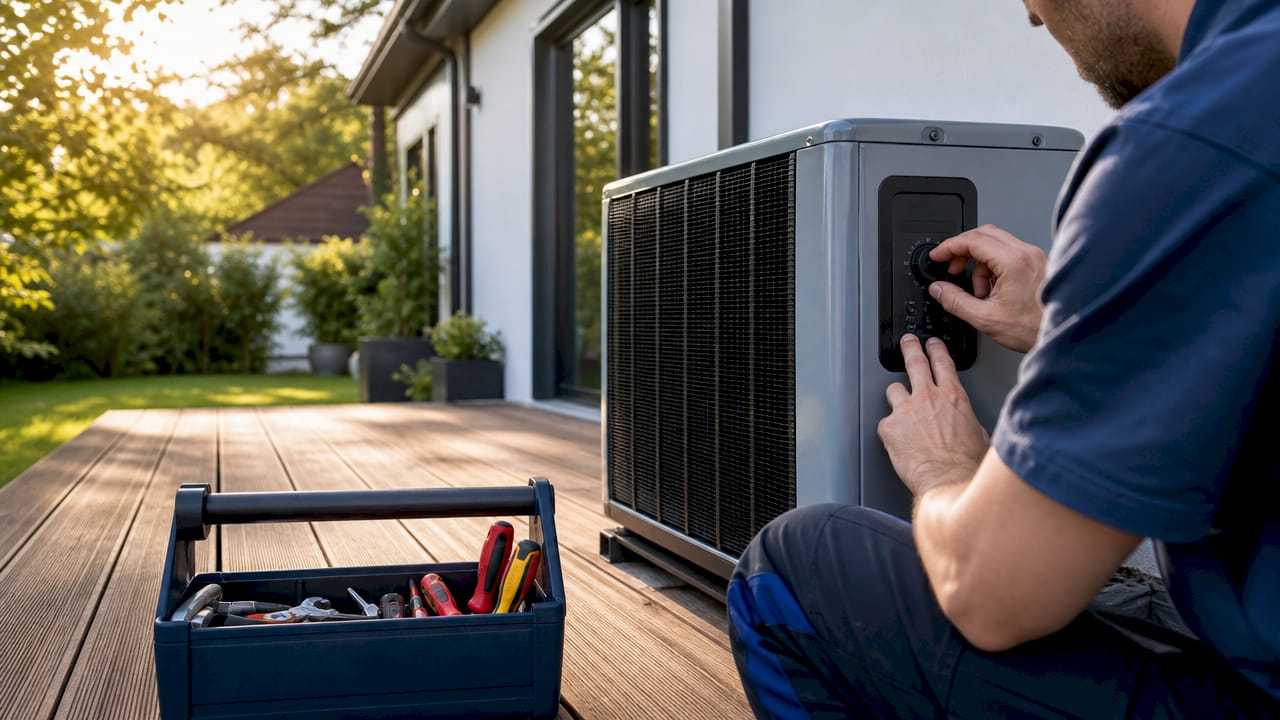
EER2 (Energy Efficiency Ratio 2) measures cooling efficiency at a single peak condition: 95°F outdoor temperature. EER2 is more relevant than SEER2 in climates with extended periods of extreme heat because it captures how the system performs under maximum stress. SEER2 is a seasonal average; EER2 is a snapshot at the worst moment.
HSPF2 (Heating Seasonal Performance Factor 2) measures heat pump heating efficiency across a full heating season. Like SEER2, it uses the M1 test standard. A higher HSPF2 means the heat pump pulls more heat from outdoor air per unit of electricity consumed.
AFUE (Annual Fuel Utilization Efficiency) applies to gas furnaces. AFUE indicates the percentage of fuel that converts to usable heat. An 80% AFUE furnace sends 20% of its fuel energy up the flue as exhaust. A 96% AFUE furnace loses only 4%.
| Rating | Equipment | What It Measures |
|---|---|---|
| SEER2 | Central AC, heat pumps | Seasonal cooling efficiency |
| EER2 | Central AC, heat pumps | Peak cooling efficiency at 95°F |
| HSPF2 | Heat pumps | Seasonal heating efficiency |
| AFUE | Gas furnaces | Annual fuel-to-heat conversion |
Pro Tip: When you get a quote for a new system, confirm the rating shown uses the “2” suffix. SEER2 and HSPF2 are the current DOE standard. A quote showing only “SEER” or “HSPF” may reference older, less accurate numbers.
How do federal minimum efficiency standards vary by region?
Federal minimum standards set a floor, not a ceiling. The Department of Energy sets different minimums based on climate zone because a system that works fine in Minnesota faces much harder conditions in Texas.
For central air conditioners and heat pumps in cooling mode, federal minimums are 14.0 SEER2 in the South and Southwest and 13.4 SEER2 in the North. The South/Southwest minimum is higher because those systems run far more hours per year under greater heat loads. A system that just meets the northern minimum would be undersized for a Phoenix summer.
For heat pumps in heating mode, the federal minimum is 7.5 HSPF2 for split systems. Gas furnaces must meet at least 80% AFUE. High-efficiency gas furnaces typically reach 95–98.5% AFUE. That gap between 80% and 96% AFUE represents a significant difference in wasted fuel over a heating season.
| Equipment Type | Region | Federal Minimum (2026) |
|---|---|---|
| Central AC / Heat Pump (cooling) | South/Southwest | 14.0 SEER2 |
| Central AC / Heat Pump (cooling) | North | 13.4 SEER2 |
| Split-system heat pump (heating) | All regions | 7.5 HSPF2 |
| Gas furnace | All regions | 80% AFUE |
Matching efficiency ratings to your local weather is the most direct way to meet compliance requirements and get real savings. Homeowners in Northern Virginia sit in a mixed climate zone, which means both heating and cooling ratings matter equally.
What is the practical impact of HVAC ratings on energy bills?
Efficiency ratings translate directly into operating costs. The math is straightforward once you understand what each percentage or ratio represents.
A 96% AFUE furnace loses only 4% of its fuel energy as exhaust, compared to 20% loss in an 80% AFUE model. Over a full heating season, that 16-point gap adds up to a meaningful reduction in your gas bill. The exact dollar amount depends on local gas rates and how cold your winters get.
Higher SEER2 ratings reduce electricity consumption during cooling season. Premium systems with SEER2 ratings above 20 also offer better part-load performance. That means the system runs efficiently even when outdoor temperatures are moderate, not just at peak demand. Most homes spend more hours in moderate conditions than at peak heat, so part-load efficiency matters more than the rating alone suggests.
Variable capacity systems improve comfort by running longer at lower capacity rather than cycling on and off repeatedly. This approach controls humidity more effectively and keeps indoor temperatures more stable. The tradeoff is a higher purchase price and more specialized maintenance requirements.
Key factors that affect your real-world savings:
- Local energy rates. Energy savings from higher efficiency depend heavily on what you pay per kilowatt-hour or per therm. Higher local rates make premium systems pay off faster.
- Climate zone. A high SEER2 system delivers more savings in a hot climate with long cooling seasons than in a mild northern climate.
- Usage patterns. A home occupied all day benefits more from high efficiency than a home that sits empty for eight hours.
- Duct condition. Leaky or poorly insulated ducts reduce real-world efficiency regardless of the equipment rating.
- Home insulation. A well-insulated home puts less demand on the system, which amplifies the benefit of a high-efficiency rating.
Pro Tip: Get a Manual J load calculation before choosing a system. An oversized high-efficiency unit will short-cycle and underperform, wasting the premium you paid for the rating.
How should homeowners compare HVAC efficiency ratings when shopping?
Comparing quotes accurately requires knowing whether the ratings on each proposal use the same test standard. The 2023 DOE M1 test standard changed how ratings are calculated, causing numbers to decrease while better reflecting real-world performance. A quote showing an 18 SEER unit and a quote showing a 17 SEER2 unit may describe the same physical performance level.
Use these steps when evaluating proposals:
- Confirm the rating suffix. Every quote should show SEER2, HSPF2, or EER2. If a contractor shows you a plain SEER or HSPF number, ask them to convert it.
- Convert old ratings if needed. Multiply old SEER by 0.95 to get the SEER2 equivalent. Multiply old HSPF by 0.85 to get HSPF2. These are the industry-standard conversion multipliers for valid comparisons.
- Check EER2 if you live in a hot climate. SEER2 is a seasonal average. In a region with sustained high temperatures, EER2 tells you how the system performs when you need it most.
- Calculate net cost after incentives. Federal tax credits and local rebates can reduce the installed cost of high-efficiency systems significantly. A premium system may cost less than a mid-range model once you factor in available credits.
- Match the rating to your climate. The highest SEER2 rating on the market is not always the best choice. A homeowner in a mild northern climate may see a better return from a mid-range SEER2 system than from a top-tier model with a much higher purchase price.
Checking HVAC efficiency standards for 2026 before you shop gives you a baseline for evaluating whether a contractor’s recommendation actually meets current requirements. Knowing the federal floor prevents you from paying for a system that barely clears compliance.
What are common misconceptions about HVAC efficiency ratings?
The most common mistake homeowners make is treating a lower SEER2 number as a sign of a worse system compared to older SEER ratings. The updated M1 testing standard made ratings more accurate, not less. A 17 SEER2 system and an 18 SEER system under the old test represent nearly identical real-world performance.
Several other misunderstandings affect buying decisions:
- EER2 is often ignored. Homeowners in hot, humid climates focus on SEER2 and overlook EER2. Industry experts confirm that EER2 is crucial for areas with sustained extreme heat because it measures performance at the exact conditions that stress the system most.
- High ratings do not automatically mean high comfort. Comfort improvements in premium systems come from advanced compressor stages and system modulation, not from the rating number itself. A two-stage or variable-capacity compressor delivers more even temperatures and better humidity control than a single-stage unit with the same SEER2 rating.
- Variable-capacity systems cost more to maintain. Higher efficiency equipment often requires specialized servicing due to complex technology like variable-speed compressors. Factor that into your long-term cost analysis.
- Duct design and insulation matter as much as the rating. A high-efficiency system installed in a home with leaky ducts or poor insulation will underperform its rated efficiency. The rating assumes a properly designed installation.
“Ratings must be viewed in context with local climates. Choosing the right metric for your region is as important as choosing the right number.”
Key Takeaways
HVAC efficiency ratings are standardized metrics that directly determine your system’s energy consumption, operating costs, and comfort performance. Choosing the right rating for your climate and budget is the single most important factor in getting value from a new system.
| Point | Details |
|---|---|
| Four core ratings | SEER2, EER2, HSPF2, and AFUE each apply to specific equipment and conditions. |
| Federal minimums vary | South/Southwest requires 14.0 SEER2; the North requires 13.4 SEER2 as of 2026. |
| Convert old ratings | Multiply old SEER by 0.95 and old HSPF by 0.85 to compare quotes accurately. |
| Net cost after incentives | Federal tax credits and local rebates can flip the value equation for premium systems. |
| Climate shapes the right choice | EER2 matters most in hot climates; HSPF2 matters most where winters are long and cold. |
What 20 years in Northern Virginia HVAC taught me about efficiency ratings
After two decades of working on HVAC systems across Northern Virginia, the pattern I see most often is homeowners fixating on the highest SEER2 number without asking whether that number fits their home, their climate, or their budget. A 20 SEER2 system installed in a house with aging ductwork and poor attic insulation will not perform like a 20 SEER2 system. The rating is a ceiling, not a guarantee.
The 2023 DOE test standard update created real confusion in the market. Homeowners were seeing lower numbers on new quotes and thinking they were getting worse equipment. They were not. The new numbers are simply more honest. My advice: always ask for the SEER2 number, not the old SEER, and use the 0.95 conversion if a contractor shows you an older rating.
The other thing I tell every homeowner is to look at EER2 if you are in a hot climate. Northern Virginia summers get intense, and the efficiency of your system at peak outdoor temperatures matters more than the seasonal average during a heat wave. Most contractors lead with SEER2 because it is the headline number. EER2 is where the real story lives for summer performance.
Finally, do not skip the incentive research. Federal tax credits and local utility rebates can make a premium system cost less out of pocket than a baseline model. I have seen homeowners leave significant money on the table by not asking about available credits before signing a contract. Check what is available before you commit to any system.
— Sam
Sam & Sons Services can help you choose the right HVAC system
Choosing the right HVAC system based on efficiency ratings, climate zone, and available incentives is exactly the kind of decision that benefits from a professional assessment. Sam & Sons Services has served homeowners throughout Northern Virginia for over 20 years, and our licensed technicians know how to match the right system to your home’s specific needs.

Whether you need a new AC installation in Northern VA or want to review your options for a full system upgrade, our team walks you through current SEER2, HSPF2, and AFUE ratings and explains which federal incentives apply to your situation. We also help you understand how your duct system and insulation affect real-world performance. Visit our HVAC services page or contact Sam & Sons Services directly to schedule a consultation and get a clear, honest recommendation for your home.
FAQ
What does SEER2 mean for a homeowner?
SEER2 measures how efficiently your central air conditioner or heat pump cools your home across an entire season. A higher SEER2 number means lower electricity consumption and lower cooling bills.
How is SEER2 different from the old SEER rating?
SEER2 uses the DOE’s updated M1 test standard, which simulates realistic duct resistance. To compare an old SEER rating to a new SEER2 rating, multiply the old number by 0.95.
What AFUE rating should I look for in a gas furnace?
The federal minimum is 80% AFUE, but high-efficiency models reach 95–98.5% AFUE. A 96% AFUE furnace wastes only 4% of its fuel, compared to 20% waste in an 80% AFUE model.
Does a higher efficiency rating always mean lower bills?
Not automatically. Energy savings depend heavily on local energy rates, climate zone, usage patterns, and the condition of your ductwork and insulation. A high rating in a poorly sealed home will underperform its potential.
What HVAC efficiency questions can Sam & Sons Services answer?
Sam & Sons Services helps homeowners across Northern Virginia understand current ratings, federal minimums, and available incentives. Visit the HVAC FAQs page or contact the team directly for personalized guidance on your specific system and home.


You must be logged in to post a comment.