 Skip to content


Minor electrical handyman work is defined as small-scale electrical repairs or replacements that use existing wiring and do not require a licensed electrician or a permit. These are the everyday fixes most homeowners face: a dead outlet, a worn light switch, a ceiling fan that needs swapping out. Knowing what is minor electrical handyman work, and where its legal limits sit, protects you from safety risks and unnecessary costs. The line between a safe handyman task and a job that requires a licensed professional is clearer than most homeowners expect.
What tasks qualify as minor electrical handyman work?
Minor electrical handyman work covers like-for-like surface replacements on existing circuits. The defining test is simple: does the task touch the electrical panel or add new electrical load? If the answer is no, it falls within handyman scope.
Common tasks that qualify include:
- Replacing a single-pole light switch with an identical switch at the same location
- Swapping a standard outlet for a new outlet of the same amperage and type
- Installing a ceiling fan on an existing, fan-rated junction box
- Replacing a light fixture at an existing junction box
- Resetting a tripped circuit breaker or a GFCI outlet
- Swapping out outlet covers, switch plates, and faceplates
- Replacing a doorbell button or a thermostat on existing low-voltage wiring
Tasks that fall outside handyman scope include panel upgrades, adding new circuits, running wire inside walls, installing subpanels, and any service upgrade work. These require a licensed electrician and, in most jurisdictions, a permit.
The critical distinction is “like-for-like.” Replacing a 15-amp outlet with another 15-amp outlet is handyman work. Upgrading that outlet to a 20-amp outlet on a 15-amp circuit is not. Matching the amperage and function exactly keeps the job within safe, legal boundaries.
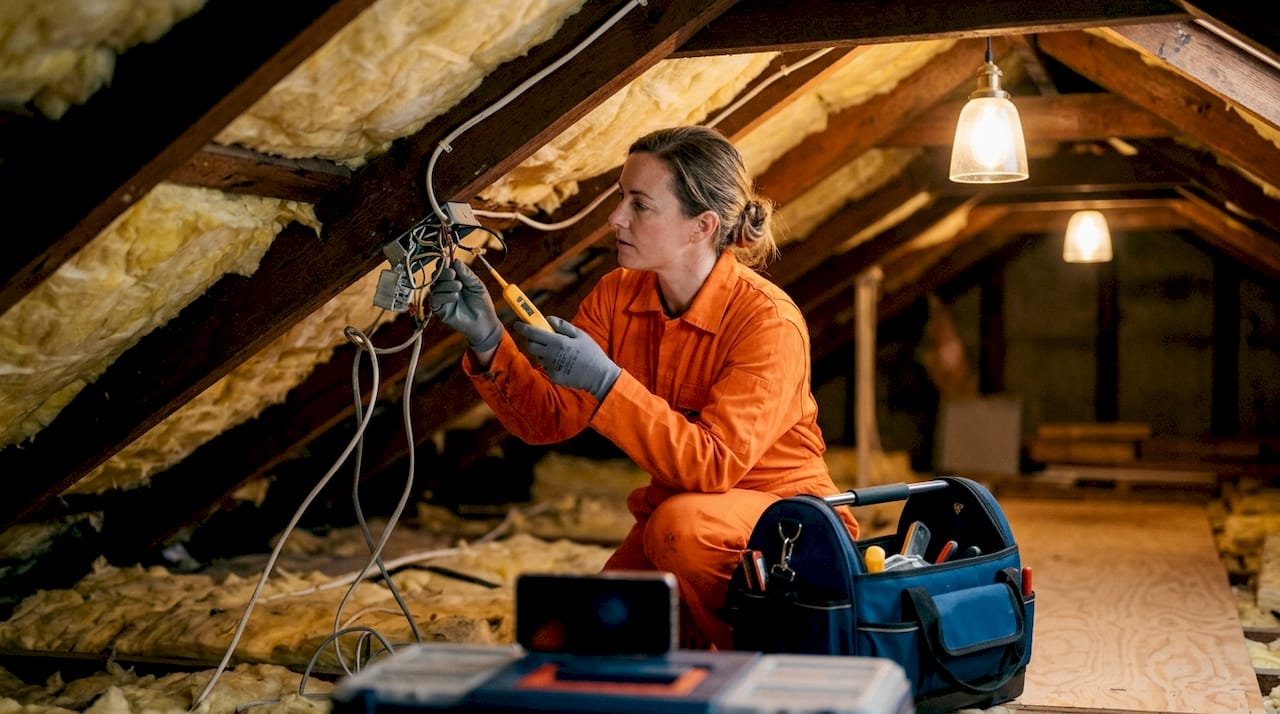
Pro Tip: When replacing an outlet, always use the side-screw terminals rather than the backstab connections on the back of the device. Backstabbed connections loosen over time and create heat buildup, which is a leading cause of outlet failures.
Warning signs like a burning smell, scorch marks around a device, or lights that flicker without explanation move a job out of handyman territory immediately. Those symptoms point to hidden faults that require professional diagnosis.
What legal and safety boundaries limit minor electrical handyman work?
The legal framework for minor electrical repairs varies by jurisdiction, but most states and localities share a consistent core standard. Understanding these boundaries keeps you and your home safe.
- Like-for-like replacements only. Local codes generally permit handymen to replace devices in kind, meaning same type, same amperage, same location. Any modification to the circuit itself requires a permit and a licensed electrician.
- No panel work, ever. Work inside the main electrical panel, including breaker replacement, is restricted to licensed electricians in virtually every U.S. jurisdiction. This includes service upgrades and adding new breakers.
- No new circuits or behind-wall wiring. Running new wire through walls, ceilings, or floors requires a permit and inspection. Handymen are limited to surface-level device swaps at existing boxes.
- Verify the box is rated for the device. A ceiling fan requires a fan-rated box, not a standard light fixture box. Installing a fan on an unrated box is a code violation, regardless of who does the work.
- Power must be verified off, not just assumed off. Breaker labels alone are unreliable. Always confirm power is off at the device with a non-contact voltage tester before touching any wiring.
Insurance is a separate concern that homeowners often overlook. Handyman general liability insurance typically excludes electrical work. That means if an electrical fire starts after a handyman replaces an outlet, the homeowner may bear the financial risk. Licensed electricians carry specialized insurance and bonding that covers exactly this scenario.
Pro Tip: Before hiring any handyman for electrical tasks, ask directly whether their insurance policy covers electrical work. A reputable professional will answer clearly. If they hesitate or cannot confirm coverage, call a licensed electrician instead.
Jurisdiction matters. Some states allow homeowners to perform their own electrical work under a homeowner permit. Others restrict even basic outlet swaps to licensed tradespeople. Check with your local building department before starting any electrical project.
How do costs compare between handymen and electricians for minor work?
Handymen typically charge $50–$100 per hour for minor electrical repairs, while licensed electricians charge $75–$150 per hour. For straightforward like-for-like replacements, that difference translates to 30–50% in savings.
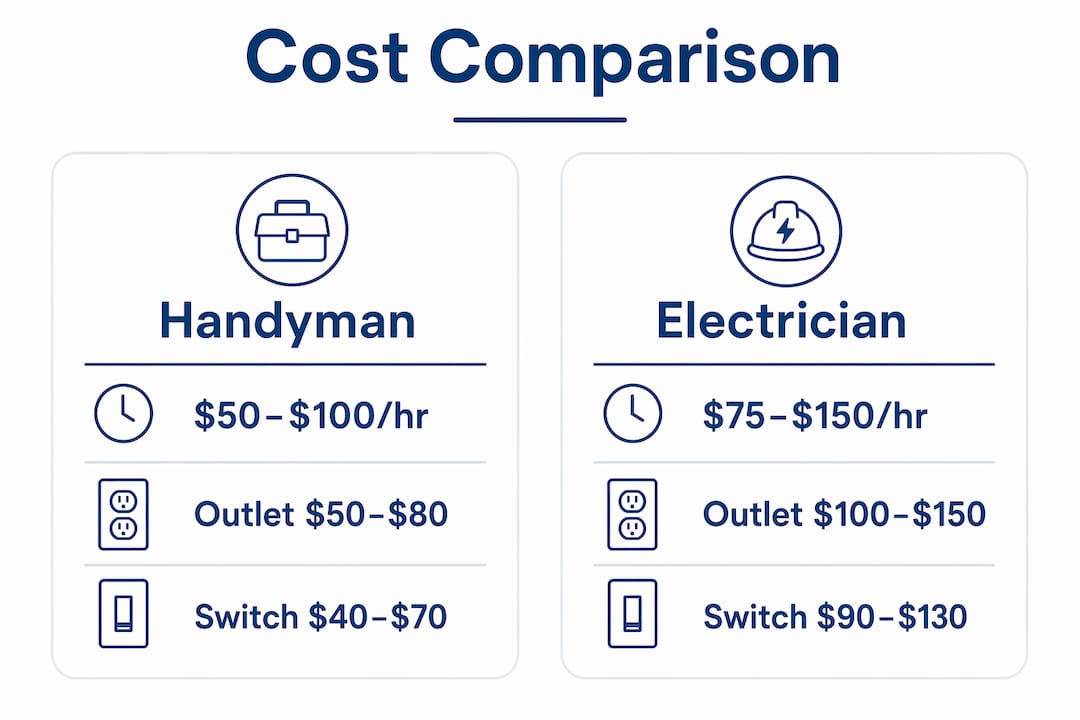
| Task | Handyman Estimate | Electrician Estimate |
|---|---|---|
| Outlet replacement | $50–$80 | $100–$150 |
| Light switch swap | $50–$75 | $85–$130 |
| Ceiling fan installation | $75–$120 | $120–$200 |
| GFCI outlet replacement | $60–$90 | $100–$160 |
| Light fixture swap | $60–$100 | $100–$175 |
The cost difference does not reflect a difference in quality for surface-level work. Handymen charge less because they carry lower overhead, not because they do inferior work on eligible tasks. A properly executed outlet swap looks and performs the same whether a handyman or an electrician does it.
The electrician’s higher rate reflects training, licensing fees, specialized insurance, and the ability to handle hidden problems. Licensed electricians can identify improper grounding, aluminum wiring, and other concealed faults that a handyman cannot safely address. If your home is older or has a history of electrical issues, the electrician’s diagnostic ability is worth the extra cost.
The practical rule: use a handyman for confirmed like-for-like replacements on modern wiring in good condition. Call a licensed electrician when the scope is unclear, the wiring looks old, or any warning sign is present.
What practical steps should homeowners take before any minor electrical job?
A clear process before starting any small electrical job prevents the most common mistakes homeowners make.
Before touching anything:
- Turn off the correct breaker at the panel and confirm the circuit is dead
- Use a non-contact voltage tester at the actual outlet or switch, not just at the panel
- Test the tester on a known live outlet first to confirm it is working
- Remove the faceplate and inspect the wiring for scorch marks, melted insulation, or unusual colors
- Stop immediately if anything looks damaged or unfamiliar
Confirming the job is handyman scope:
- Verify the replacement device matches the existing one in amperage, type, and function
- Confirm the junction box is the correct type for the device (fan-rated for ceiling fans)
- Check that no new wiring, new circuits, or panel access is required
When to call a licensed electrician instead:
- Any burning smell, scorch marks, or warm outlet covers
- Wiring that looks old, cloth-wrapped, or aluminum
- A breaker that trips repeatedly after being reset
- Any job that requires opening the panel or running new wire
Pro Tip: When communicating scope to a handyman, describe exactly what you want replaced and what the current device is. Say “I need this 15-amp duplex outlet replaced with an identical 15-amp duplex outlet.” Vague requests lead to scope creep and unexpected costs.
Homeowners who want to understand the full range of handyman electrical tasks available to them benefit from reviewing what a qualified local service covers before making a hiring decision.
Key Takeaways
Minor electrical handyman work is safe and cost-effective only when it stays within like-for-like surface replacements on existing circuits, with power verified off and no panel or new-circuit work involved.
| Point | Details |
|---|---|
| Like-for-like rule | Only replace devices with identical amperage and type to stay within handyman scope. |
| Panel work is off-limits | Any task touching the electrical panel requires a licensed electrician, no exceptions. |
| Verify power with a tester | Never rely on breaker labels alone; use a non-contact voltage tester at the device. |
| Insurance gap matters | Handyman liability insurance often excludes electrical work; confirm coverage before hiring. |
| Cost savings are real | Handymen cost 30–50% less than electricians for eligible like-for-like replacements. |
What 20 years of electrical calls taught me about knowing the line
After two decades of home service work across Northern Virginia, the most expensive mistakes I have seen homeowners make share one pattern: they assumed a job was simple until it was not.
A homeowner replaces an outlet themselves, skips the voltage tester, and gets a shock. A handyman swaps a ceiling fan on an unrated box, and the fan pulls loose from the ceiling six months later. These are not rare stories. They are the calls we get regularly.
My honest view is that the like-for-like rule is not a bureaucratic limit. It exists because electrical systems are interconnected. A device that looks identical on the surface may be wired differently, connected to a circuit with a history, or sitting in a box that was never rated for the load. Surface-level work is genuinely safe when done correctly. The risk comes from assuming you know the full picture when you can only see the surface.
The homeowners who get the best outcomes are the ones who take 60 seconds to verify power is off with a tester, look at the wiring before touching it, and call a professional the moment something looks wrong. That habit costs nothing and prevents the jobs that turn into emergencies.
Balancing DIY, handyman, and electrician roles is a practical skill. Use each one for what it does well. A handyman is the right call for a confirmed like-for-like swap. A licensed electrician is the right call for anything with complexity, age, or warning signs. Knowing the difference is the most useful thing a homeowner can learn.
— Sam
Sam & Sons Services handles minor electrical work the right way
Sam & Sons Services has served homeowners throughout Northern Virginia and the Washington, DC area for over 20 years. Our licensed and insured professionals handle the full range of minor electrical repairs safely and at competitive rates, from outlet and switch replacements to ceiling fan installations on existing circuits.

When you are not sure whether a job needs a handyman or a licensed electrician, our team gives you a straight answer before any work begins. We carry proper insurance, verify scope before starting, and never push a job beyond safe handyman limits. For homeowners in Northern Virginia and DC, our handyman FAQs cover the most common questions about what we handle and what requires a licensed electrician. Contact Sam & Sons Services to schedule a visit or get a fast estimate.
FAQ
What is minor electrical handyman work exactly?
Minor electrical handyman work refers to like-for-like surface replacements on existing circuits, such as swapping outlets, switches, light fixtures, or ceiling fans, without touching the panel or adding new wiring.
Can a handyman legally replace outlets and switches?
In most U.S. jurisdictions, a handyman can legally replace outlets and switches with identical devices on existing circuits. Local laws vary, so confirm with your building department before starting.
What electrical jobs always require a licensed electrician?
Panel work, new circuit installation, service upgrades, and any wiring inside walls always require a licensed electrician and typically a permit, regardless of the homeowner’s skill level.
How much cheaper is a handyman than an electrician for small electrical jobs?
Handymen typically charge $50–$100 per hour compared to $75–$150 per hour for licensed electricians, representing 30–50% savings on eligible like-for-like replacements.
How do I verify power is off before replacing an outlet or switch?
Turn off the breaker, then use a non-contact voltage tester directly at the outlet or switch to confirm no power is present. Breaker labels alone are not reliable and should never be your only check.


You must be logged in to post a comment.