 Skip to content


Plumbing rough-in is defined as the installation of all hidden water supply, drain, and vent pipes before walls and floors are closed up. The role of plumbing rough-in in a bathroom remodel is foundational. Every fixture location, code inspection, and long-term drainage performance depends on decisions made during this phase. Get it right and the rest of the remodel flows smoothly. Get it wrong and you face torn-out drywall, failed inspections, and repair bills that dwarf the original project cost.
What does plumbing rough-in include in a bathroom remodel?
Rough-in plumbing sets the foundation for all water flow and drainage, distinct from finish plumbing, which installs visible fixtures later. During a bathroom remodel, the rough-in phase covers every pipe that will eventually disappear behind walls and under floors. Understanding what gets installed at this stage helps you make smarter decisions before a single tile goes up.
The rough-in phase covers four main systems:
- Water supply lines. Hot and cold supply pipes run from the main lines to each fixture location. Stub-outs, which are short pipe sections that protrude from the wall or floor, mark exactly where each fixture will connect.
- Drain-waste-vent (DWV) network. This is the largest part of the rough-in. Drain pipes carry wastewater away, waste pipes connect fixtures to the main stack, and vent pipes allow air into the system so drains flow freely without siphoning trap seals.
- Fixture connection points. Each toilet, sink, shower, and tub gets a dedicated set of stub-outs positioned according to manufacturer specs and local code clearances.
- Integration with existing plumbing. In a remodel, new pipes must tie into the home’s existing supply and drain lines. This often requires cutting into walls or floors to access the main stack or supply trunk lines.
Pro Tip: Photograph every pipe run before insulation or drywall goes up. Detailed photo documentation of pipe routes during rough-in helps with future repairs and warranty claims once walls are closed.
Coordinating fixture placement with your plumber before rough-in begins saves significant time. The plumber needs to know the exact model of every toilet, sink, and shower valve to position stub-outs correctly.
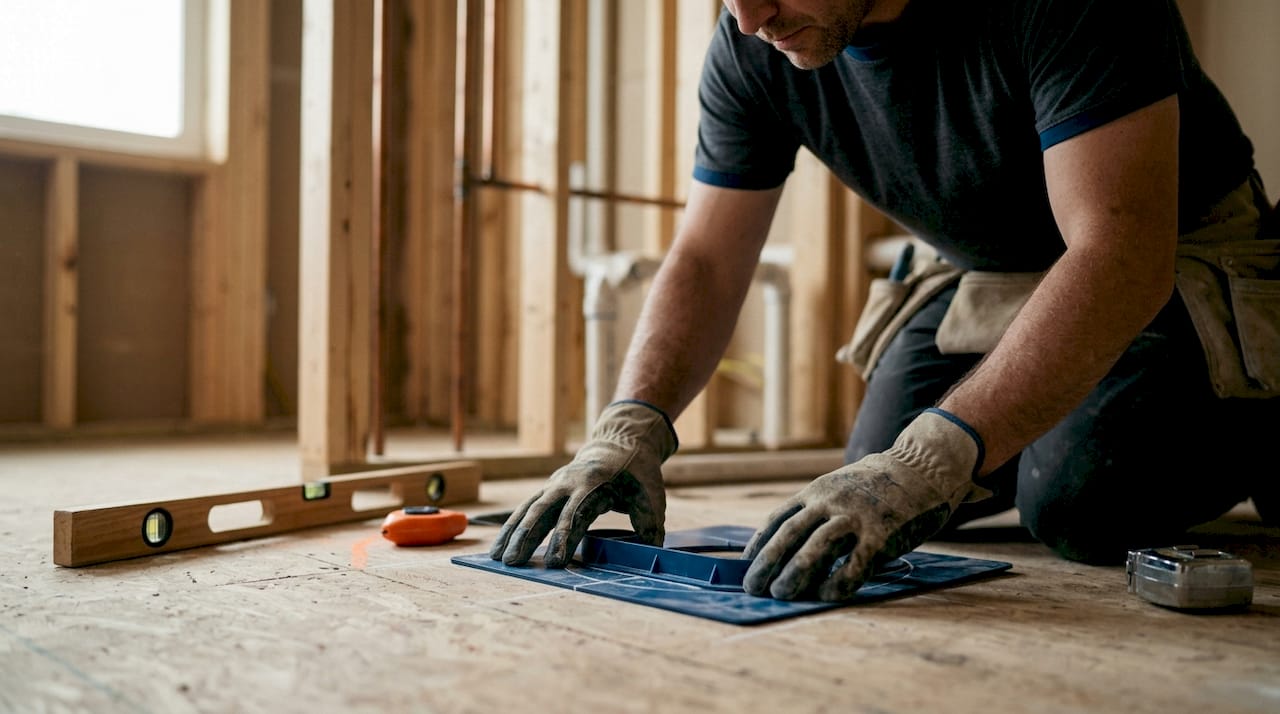
How do rough-in plumbing codes and inspections shape the bathroom remodel?
Plumbing codes are not suggestions. They are the legal minimum standards your rough-in must meet before walls close. In most of Northern Virginia and across the country, jurisdictions follow the International Residential Code (IRC 2024) or a locally amended version. Understanding what inspectors check protects you from costly surprises.
A rough-in inspection happens after all pipes are installed but before any concealment. Here is what inspectors verify:
- Drain slope. Horizontal drain pipes must maintain a consistent slope, typically 1/4 inch per foot, so waste flows toward the stack without pooling.
- Vent locations and distances. The toilet trap-to-vent distance cannot exceed 6 feet on a 3-inch pipe. Exceeding this limit causes trap siphoning, which lets sewer gases into the bathroom.
- Drain pipe sizing. Water closets must connect to at least 3-inch drain pipes regardless of fixture load calculations. Undersized pipes are one of the most common reasons rough-in designs get revised after inspection.
- Pressure testing. Water supply lines must hold 50 psi for 15 minutes per IRC 2024 P2503.7 before concealment. This test catches leaks that would otherwise hide inside finished walls for years.
- Pipe support and clearances. Inspectors check that pipes are properly strapped, protected from fastener damage, and clear of structural members.
Local codes can differ significantly from the national IRC baseline. Verifying your local code regime before rough-in begins helps you avoid approval problems during inspection. Some jurisdictions follow the Uniform Plumbing Code (UPC) instead of the IRC, and the two differ on vent sizing and trap arm lengths.
Skipping or failing a rough-in inspection is one of the most expensive mistakes a homeowner can make. The rough-in inspection is the last affordable time to correct hidden plumbing mistakes before drywall and tile are finished. Failing inspection after walls are closed forces demolition, which wastes both money and weeks of schedule.
Why is precise rough-in measurement critical for fixture installation?
Rough-in measurements determine whether your chosen fixtures actually fit. A toilet, sink, or shower valve that does not align with its stub-outs requires rework that can cost more than the fixture itself. Precision at this stage is non-negotiable.
The IRC 2024 sets clear minimums for toilet placement. The toilet centerline must sit at least 15 inches from side walls and have 21 inches of clear floor space in front, measured from finished surfaces. Most standard toilets use a 12-inch rough-in distance from the back wall to the drain flange center, but some models use 10-inch or 14-inch rough-ins. Choosing the toilet model before rough-in begins is not optional.
| Fixture | Key rough-in measurement | Common code minimum |
|---|---|---|
| Toilet | 12 in. from back wall to flange center | 15 in. side clearance, 21 in. front clearance |
| Bathroom sink | Drain centered, supply lines 21 in. apart | Varies by fixture; confirm with manufacturer |
| Shower valve | Valve centered on shower wall | Height per manufacturer; drain centered in pan |
| Bathtub | Drain and overflow per tub model | Confirm rough-in dimensions before ordering |
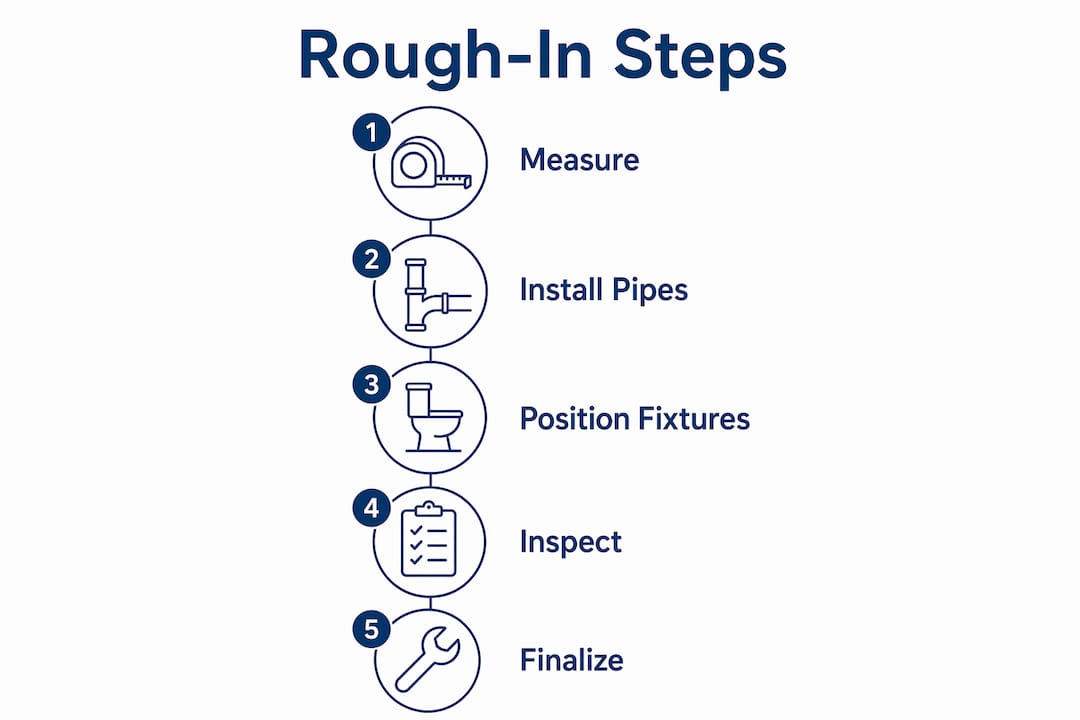
Sink supply and drain lines must match the sink cabinet and basin dimensions exactly. A pedestal sink has very different stub-out requirements than an undermount sink in a vanity. Shower valve placement affects both the rough-in height and the finished tile layout, so the valve model must be selected before framing is complete.
Pro Tip: Always pull the manufacturer’s rough-in sheet for every fixture before your plumber starts. These sheets show exact stub-out heights, drain center locations, and supply line spacing specific to that model.
Changing fixture choices after rough-in is difficult and may require modifications because rough-in dimensions are set based on selected fixtures. Finalizing every fixture decision before rough-in begins is the single most effective way to avoid costly adjustments.
Common mistakes during rough-in and how to avoid them
Most bathroom remodel failures trace back to the rough-in stage. Rushing this phase or poor communication with your plumber creates problems that only surface after walls are finished. Knowing the common pitfalls helps you stay ahead of them.
- Incorrect vent layout. Vent pipe placement is the most technically complex part of rough-in. Improper vent location relative to traps causes trap seal failure and inspection rejections. Every trap needs a vent within the code-specified distance, and that vent must connect to the main stack correctly.
- Connecting to deteriorated existing pipes. In older homes, the existing drain stack or supply lines may be corroded cast iron or galvanized steel. Connecting new PVC or PEX to failing old pipes without addressing the underlying condition creates a weak link in the system.
- No documentation of pipe routes. Once drywall goes up, the pipe locations are invisible. Homeowners who skip photo documentation struggle to locate pipes during future repairs or renovations.
- Rushing before inspection. Closing walls before the inspection passes is a serious mistake. Inspectors require visible, uncovered pipes to verify slope, venting, and pressure test results. Covering pipes prematurely means tearing out finished work.
- Skipping a step-by-step renovation checklist. A written checklist reviewed with your plumber before drywall installation catches gaps in the rough-in before they become expensive problems.
Before your plumber leaves the job site and before any wall covering goes up, walk through the space yourself. Confirm that every stub-out is capped, that you can see the pressure test results, and that you have photos of every pipe run from multiple angles.
How does rough-in affect your remodel timeline and budget?
The rough-in phase sits between demolition and finish work, and its duration directly controls when the rest of the project can proceed. A smooth rough-in keeps the entire remodel on schedule. A failed inspection or a rework adds days or weeks to the timeline and real dollars to the budget.
- Demolition comes first. Walls and floors must be open before rough-in begins. Any surprises found during demolition, such as mold, structural damage, or outdated pipes, must be resolved before rough-in starts.
- Rough-in plumbing is installed. This typically takes one to three days for a standard bathroom, depending on complexity and the extent of changes to the existing layout.
- Inspection is scheduled and passed. Scheduling delays with the local building department are common. Budget extra time in your project schedule for inspection availability.
- Walls and floors close. Only after passing inspection can drywall, cement board, and subfloor materials go in. Finish plumbing, tile, and fixtures follow.
Investing in an experienced, licensed plumber for the rough-in phase pays off in avoided rework. Many issues found during remodeling trace back to rough-in work, so rushing or skipping inspections risks future functional problems like slow drains or leaks. A licensed plumber who knows local code requirements reduces the risk of inspection failures and keeps your project moving.
Key Takeaways
Plumbing rough-in is the most consequential phase of a bathroom remodel because every fixture location, code inspection, and long-term drainage outcome is determined before a single wall closes.
| Point | Details |
|---|---|
| Rough-in defines fixture placement | Finalize every fixture model before rough-in begins to avoid costly stub-out adjustments. |
| Inspections are non-negotiable | Pass rough-in inspection before closing walls; failure means demolition and rework. |
| Code minimums are specific | IRC 2024 requires 50 psi pressure tests and strict vent distances to protect drain performance. |
| Documentation protects you | Photograph all pipe routes before drywall to support future repairs and warranty claims. |
| Experienced plumbers save money | Licensed plumbers familiar with local codes reduce inspection failures and project delays. |
What 20 years of rough-in work has taught us
After two decades of bathroom remodeling in Northern Virginia, the pattern is consistent. Homeowners who struggle with their remodels almost always made one of two mistakes: they picked fixtures after rough-in was done, or they let someone rush the inspection stage.
The fixture selection issue surprises people. Most homeowners assume they can finalize their toilet or shower valve choice while the walls are open. They cannot. The rough-in dimensions are set to match a specific model. Swapping to a different toilet with a 10-inch rough-in when the flange is set for 12 inches means cutting concrete or adding an offset flange. Neither option is cheap or clean.
The inspection pressure is the other consistent problem. General contractors sometimes push plumbers to close walls before the inspection is scheduled, especially when the project is running behind. That decision almost always costs more time than it saves. A failed inspection on a closed wall means cutting drywall, fixing the issue, re-inspecting, and patching. The original inspection delay was a few days. The rework is weeks.
My honest advice: treat the rough-in inspection as a hard stop in your project schedule, not a formality. Build buffer time around it. And photograph every pipe run before anything gets covered. Those photos have saved our clients thousands of dollars in diagnostic costs during later repairs.
— Sam
Sam and Sons Services is ready to handle your rough-in plumbing
Bathroom remodels in Northern Virginia require a licensed plumber who knows local code requirements and inspection procedures inside and out. Sam and Sons Services has handled rough-in plumbing for homeowners across Fairfax, Alexandria, Arlington, and the surrounding area for over 20 years.

Our licensed plumbers manage every stage of the rough-in process, from coordinating fixture measurements to scheduling and passing inspections. We work around your remodel timeline and communicate clearly at every step so there are no surprises when walls close. Whether you need plumbing services in Fairfax or a full bathroom remodel in Alexandria, Sam & Sons Services delivers quality workmanship backed by real experience. Call us or schedule online to get your rough-in done right the first time.
FAQ
What is a plumbing rough-in in a bathroom remodel?
A plumbing rough-in is the installation of all water supply, drain, waste, and vent pipes inside walls and floors before finish materials are applied. It sets every fixture location and must pass a building inspection before walls close.
How long does rough-in plumbing take for a bathroom?
A standard bathroom rough-in typically takes one to three days, depending on the complexity of the layout and how much of the existing plumbing system needs to be modified or replaced.
What happens if rough-in plumbing fails inspection?
A failed rough-in inspection requires correcting the identified code violations before walls can be closed. If walls were covered prematurely, drywall must be removed to expose the pipes for re-inspection.
Do I need to choose fixtures before rough-in begins?
Yes. Fixture selection timing critically affects rough-in measurements, and deviations after rough-in require rework and possible delays. Confirm the exact model of every toilet, sink, and shower valve before your plumber starts.
What is the toilet rough-in distance standard?
Most toilets use a 12-inch rough-in distance from the finished back wall to the center of the drain flange. The IRC 2024 also requires the toilet centerline to sit at least 15 inches from any side wall and 21 inches of clear floor space in front.


You must be logged in to post a comment.