
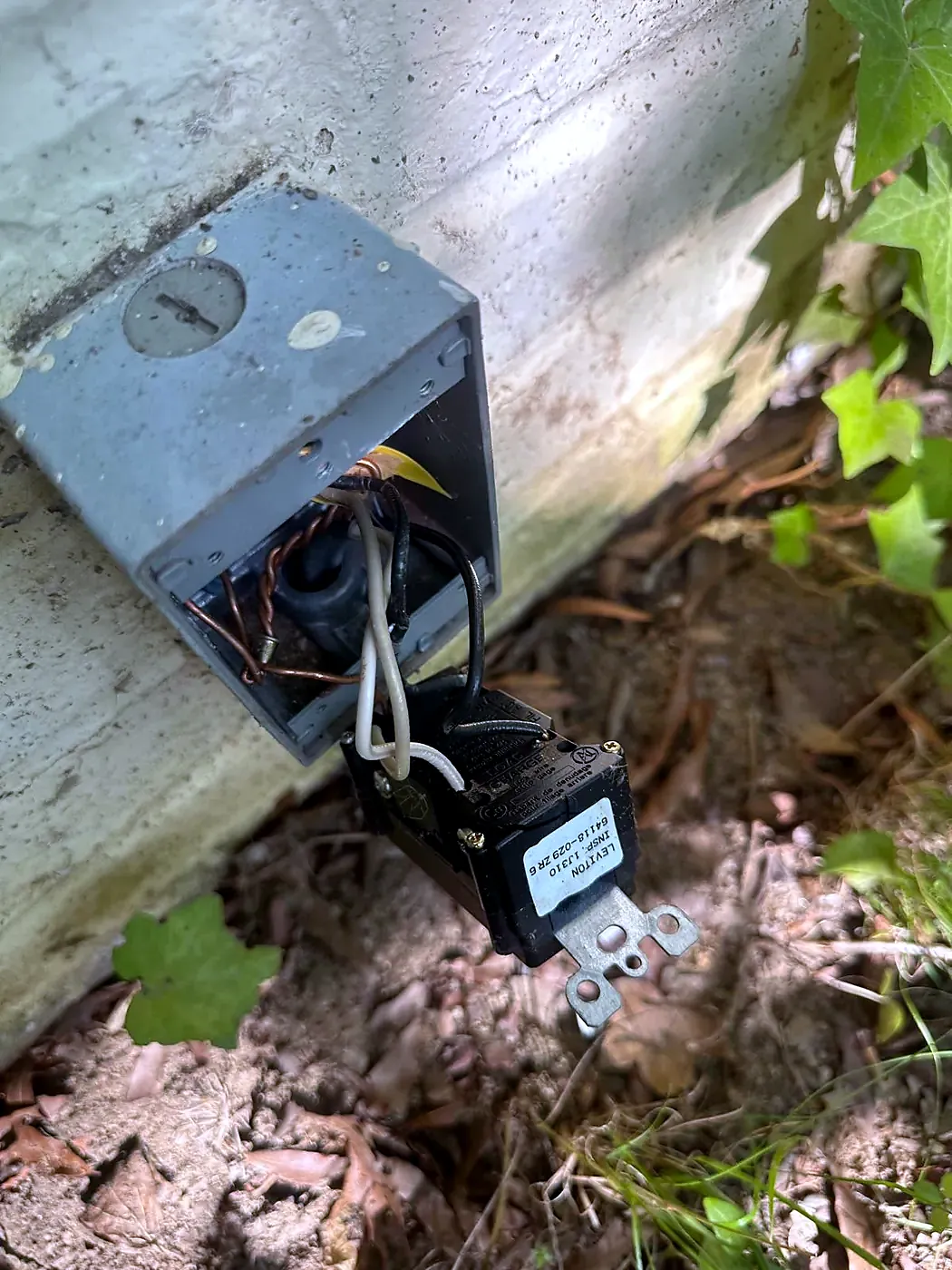
A breaker that trips repeatedly is reporting one of four things: too much load on the circuit, a short between conductors, a ground fault, or a breaker that has failed. A dead circuit is usually a connection rather than a cable — a loose termination in a box, a burned conductor, or a splice somewhere it should never have been made. Both are traced before anything is replaced, because the fix for each is completely different and a larger breaker is not one of them.
Why a circuit breaker keeps tripping
A breaker doing its job is not a fault. A breaker doing it every evening is telling you something specific, and there are only a few things it can be:
- Overload. The most common by far. Several heavy loads on one circuit, tripping whenever they coincide. We have found a house on a 100 amp panel where the refrigerator and the kitchen countertop receptacles were overloading each other and needed separating onto their own dedicated circuits.
- A short circuit. Conductors touching, usually at a device, a damaged cable or a fitting. Trips instantly and repeatably rather than after a few minutes of load.
- A ground fault. Current leaking to earth, often through moisture or a failing appliance. On a GFCI-protected circuit the device trips first and tells you where to look.
- A failed breaker. Breakers wear. One that trips at well under its rating, or feels hot at the panel, is a component at the end of its life.
- An arc fault. A damaged conductor or a loose termination arcing inside a wall, which an AFCI breaker is designed to catch.
What we will not do is put a larger breaker on the existing conductor. It stops the tripping by removing the protection the circuit was built around, and the wire is then the only thing left to fail.
How we trace a dead circuit or an intermittent fault
Intermittent faults are the ones that cost people money elsewhere, because they are easy to guess at. Guessing means replacing parts until the symptom moves. We work back from the panel instead.
- Map what is actually on the circuit. Not what the panel directory says — what responds when the breaker is off. Half the panel labels we find are wrong or blank.
- Identify the last device that still works and the first that does not. The fault is between them, and that shortens the search enormously.
- Open and inspect the terminations at devices and boxes in that stretch: loose screws, back-stabbed connections, burned insulation, a neutral shared between circuits.
- Check the junctions. Splices belong in accessible boxes. Ones that are not in a box are exactly where intermittent faults live.
- Test under load, because a connection that reads fine cold can fail when current goes through it.
- Report what was found and what it needs, before the repair is made — the same way our technicians open a wall, inspect and advise the homeowner before work continues.
Sometimes the answer is that a section is beyond repair. On one basement the existing wiring down one side of the room had to come out and be replaced rather than patched, and that was the honest recommendation rather than the cheap one.
Dedicated circuits: which appliances need their own wiring
A dedicated circuit serves one appliance and nothing else. It is the single most effective repair for a house that trips breakers, and it is a large share of the branch work we do. From our job record:
- Laundry. Two dedicated circuits, one each for washer and dryer. On one basement we ran 10/3 from the main panel to the dryer, fitted a two-gang box and a four-prong dryer receptacle, and ran a separate dedicated 12/2 circuit to the washing machine terminating in a single gang box with a GFCI receptacle.
- Refrigeration. A dedicated 14/2 20 amp line run from the main panel to the refrigerator with its own single pole breaker, so a fridge is not sharing with a countertop full of appliances.
- Kitchen countertops. Separated from the refrigerator and from each other where the original wiring had them combined.
- Garages, basements and workshops. New dedicated circuits run alongside added lighting and receptacles in spaces that were built with almost none.
- Bathrooms. We have found fuse box houses with no dedicated circuit serving the upstairs bathroom at all.
- Car charging. A dedicated 240 volt circuit with its own double pole breaker — see EV charger installation.
If the panel has no positions left for the circuits a house needs, the panel is the next conversation rather than the wiring.
Junction boxes, buried splices and burned wiring
The rule is simple and constantly broken: every splice belongs in an accessible box with a cover. Connections made in a wall cavity, taped and buried behind drywall, are the origin of a large proportion of the intermittent faults we trace.
Damaged conductors get repaired properly rather than stretched. When we replace a panel and find branch wiring that is burned, or too short to land in the new panel once the old one is out, that circuit is extended through a junction box so it terminates correctly — it is written into our standard scope for panel work because it comes up so often.
Enclosures matter outdoors too. Replacing a failing exterior receptacle meant removing the old junction box and waterproof cover and installing a new junction box with a new waterproof cover, so the device sat in something that could actually keep water out.
And loose wiring gets secured whenever a ceiling is opened. On a basement drop-ceiling replacement, the ceiling above the old grid was inspected and loose wires secured before the new ceiling went up.
Older houses: what circuit repair can and cannot fix
Northern Virginia housing stock covers a wide range of ages, and the age of the branch wiring changes what repair means.
The condition we meet most often is a house still on its original fuse box, with ungrounded two-prong receptacles throughout and branch circuits that were never brought up to current code. Those two findings usually travel together, and the service equipment and the branch wiring get addressed as one permitted job rather than separately.
Beyond that, an assessment establishes what is actually in the walls before anything is quoted. Cloth-insulated conductors, knob-and-tube runs and aluminum branch wiring all need identifying, because each one changes the answer: some conditions can be repaired and extended safely with the correct methods and connectors, and some mean that a circuit is replaced rather than patched. This is not a judgement anyone can make over the phone, and it is not one to accept from someone who has not opened a box.
Where the finding is that most of the branch wiring has reached the end of its life, we say so — and rewiring is covered further down this page.
Grounding and bonding corrections on existing wiring
Grounding faults are the quiet ones. Nothing stops working, so nothing gets reported, and the protection you think you have is not there.
The correction we make most often is at the electrode itself. On one house the panel ground wire had been landed on the water heater pipe rather than the main water line — a branch of the plumbing, downstream of fittings and an appliance that can be removed at any time. It was re-landed correctly as part of that job.
A complete system, as we install it, is two eight-foot ground rods driven outside the house with a ground bridge, a grounding electrode conductor from the rods to the panel, and a separate conductor from the main water line to the panel. Panel surge protection goes in at the same time.
Bonding runs the other way too. Copper water piping forms part of the ground path in many houses here, so a bond has to be restored whenever it is cut — our plumbing work includes a bonding ground when a pressure reducing valve is replaced for exactly that reason. Ungrounded two-prong receptacles are the visible end of the same problem, dealt with under outlets, GFCIs and switches, and the panel end under electrical panel upgrades.
Smoke and carbon monoxide detector wiring
Detection is part of branch wiring work, not an afterthought, and it is one of the most common gaps we find. On a whole-house rewire the existing house was found to lack adequate smoke and carbon monoxide detection entirely; on repair punch lists, missing or dead smoke and CO detectors come up repeatedly.
What we install is hardwired, interconnected units with battery backup, so that every alarm in the house sounds when one detects — which is the entire point on a three-story house where the basement is the furthest thing from the bedrooms. On one basement rewire the scope included interconnected smoke and carbon monoxide alarms across three levels; on another job, hardwired interconnected smoke and CO detectors with battery backup were installed at stair landings.
If you are having any wiring work done that opens ceilings, it is the cheapest moment there will ever be to put proper detection in.
Whole-house rewiring: when circuit repair is not enough
Sometimes the honest answer is that repairing circuits one at a time is spending money on a system that has to be replaced. Two jobs from our record show what that looks like in full.
On the first, the house needed a complete electrical demolition and rewire to bring everything up to code. The existing wiring, main panel, sub-panels, wiring trough, meter box and exterior service cable were all found not to code and removed, then new circuits were run throughout the house for the kitchen, the basement, the heat pump and air handler, a car charger, and the receptacles and switches.
On the second, the old wiring throughout the house was eliminated, the exterior disconnect box was replaced, the main panel was relocated out of a living room closet into the living room area, a service cable was run from the disconnect to the panel, a grounding system was installed, twenty dedicated lines were run, and every receptacle, switch and light was rewired.
That is the far end of this work. It is permitted, inspected in stages, and it is usually done alongside other disruption — a basement finish or a remodel — because the walls are open anyway.
Do you need a permit for electrical wiring repair in Virginia?
Repairing an existing circuit — a failed device, a burned termination, a bad connection — is maintenance and does not normally require a permit. New circuits, new outlets and switches, rewiring and service work do, and on our contracts the permit and its processing are included where the county requires them.
All of it is performed according to the Virginia building code, in Northern Virginia and in Washington DC. On larger jobs there is a rough-in inspection stage before anything is closed up, with payment milestones tied to it, and a final inspection at the end.
One habit that tells you how a job was run: the panel is labeled at project completion. A house with new circuits and a blank panel directory is a bill the next electrician gets to write.
What wiring and circuit repair costs
We do not quote electrical faults by phone, and anyone who does is quoting the symptom rather than the cause. A tripping breaker can be a failed device replaced in twenty minutes or a circuit that needs to be run again from the panel, and the difference is found by looking.
What a diagnostic visit gives you is a finding: what the fault is, where it is, what it takes to repair, and whether any of the surrounding wiring is in a condition you should know about. You get that in writing before the repair is authorized.
An estimator prices the repair at the property, in writing, before work begins. Where the finding is that a circuit — or a house — has reached the end of its wiring life, we will tell you that plainly rather than sell you a sequence of repairs that never resolves anything.