An air conditioner that runs but blows warm air is usually one of four things: a failed run capacitor, a compressor that has weakened or stopped, a system that has lost its refrigerant charge through a leak, or a coil so dirty or iced that heat cannot move across it. A system that does not run at all is more often electrical — a tripped disconnect, a blown fuse, a condensate safety switch that has opened, or a control fault. A licensed technician separates these on site with gauges and meters, usually in one visit.
Why an air conditioner blows warm air
The outdoor unit and the indoor coil are two halves of one refrigerant loop. When the air at the registers is warm, one of those halves has stopped doing its job. These are the causes we find, in roughly that order:
- A failed or weak run capacitor
- The capacitor gets the compressor and the condenser fan motor turning and keeps them turning, and it is the part most likely to give out in a Northern Virginia summer. We have found burned and weak capacitors on systems where the homeowner had already been told the compressor was finished.
- A weak or failed compressor
- A compressor that draws current but will not pump is a different matter. We have documented systems where low refrigerant, a burned capacitor and a weak compressor were all present at once — the end of the equipment rather than a repair, and we will say so.
- Low refrigerant, which means a leak
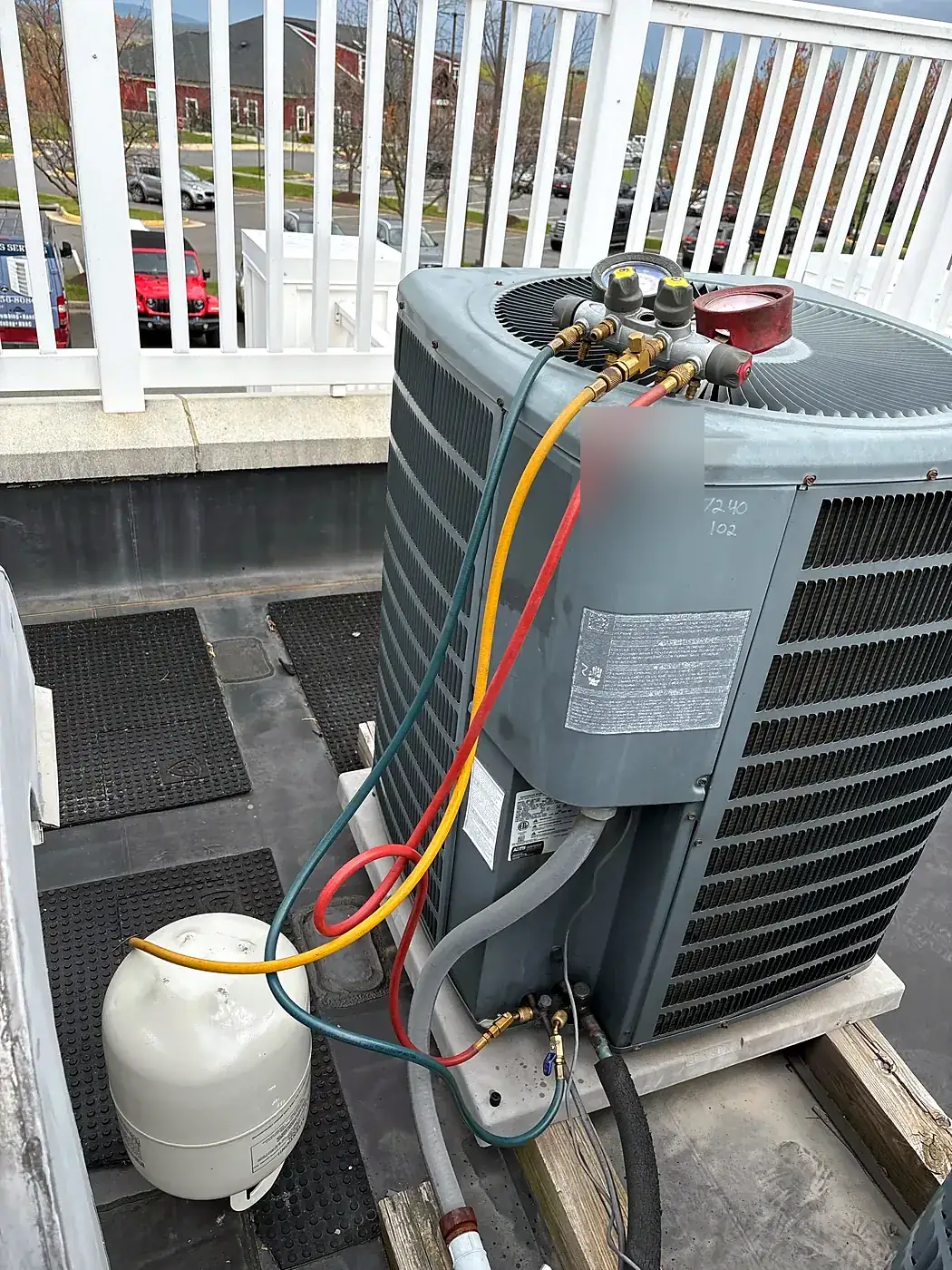
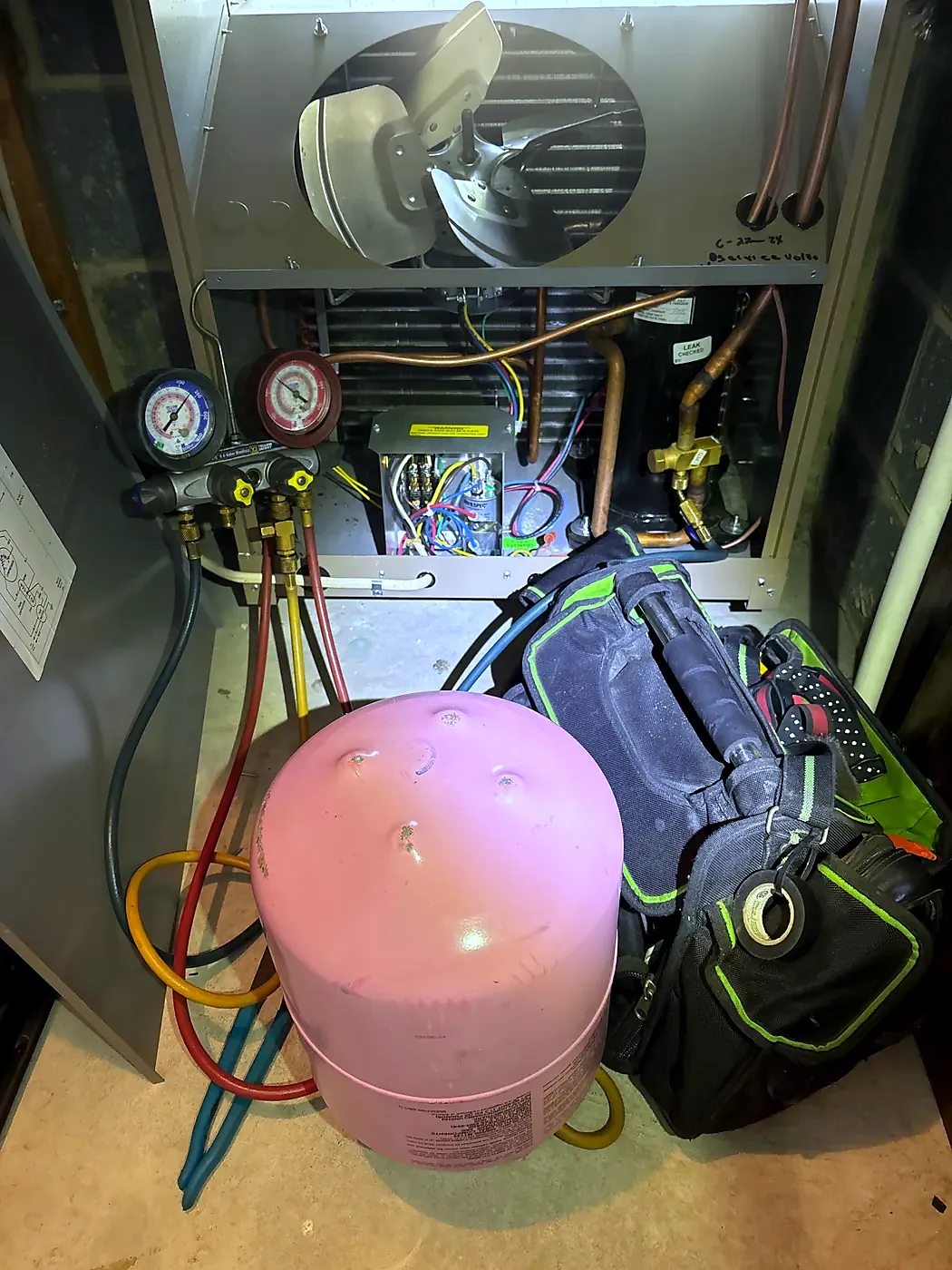
- Refrigerant is not consumed the way fuel is. If the charge is low, it leaked out. We have opened attic systems with no refrigerant left in them at all and traced the leak to the evaporator coil inside the air handler. Topping a system up without finding the leak puts the problem straight back on your calendar.
- A fouled condenser or evaporator coil
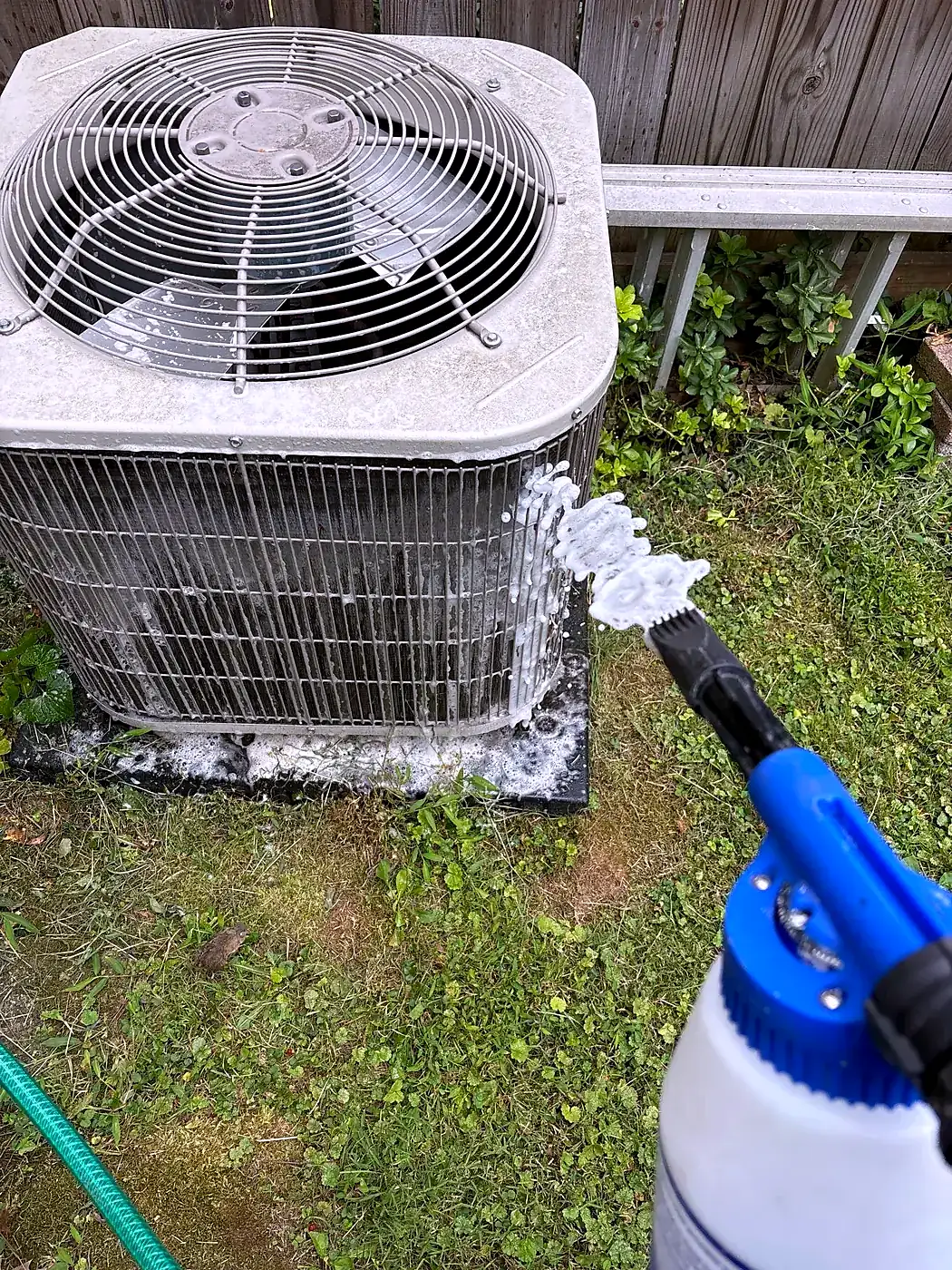
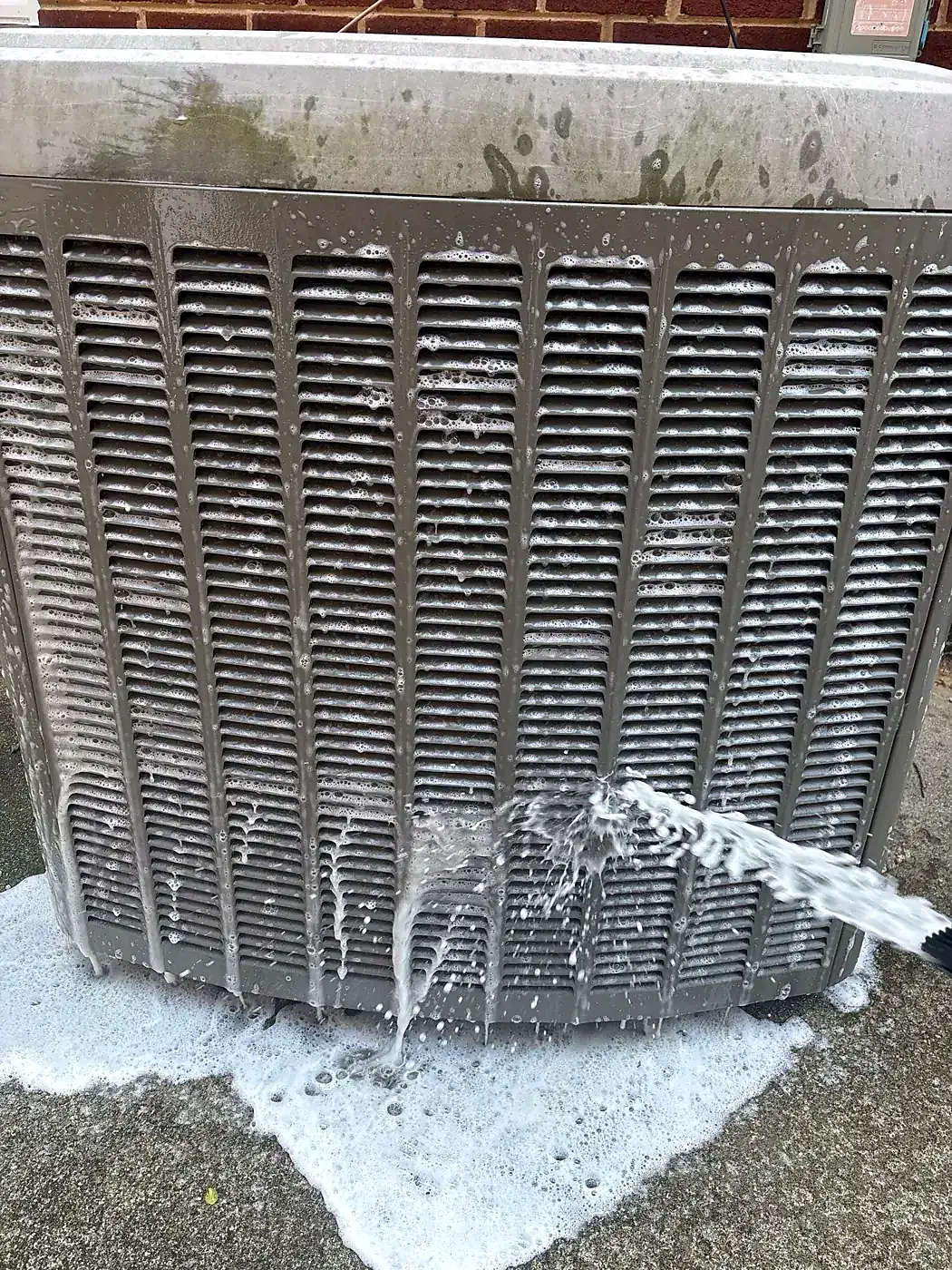
- Heat has to leave the refrigerant at the outdoor coil and enter it at the indoor coil, so a dirty coil at either end destroys capacity. Chemically cleaning both coils is routine work, and on more than one call it was the entire repair.
- Restricted airflow from a clogged filter
- A blocked filter starves the evaporator, the coil falls below freezing, and the system ices over. What the homeowner sees is warm air; the cause is airflow. We have found clogged filters behind no-cool calls in houses and no-heat calls in commercial buildings.
- Mold or moisture inside the equipment
- We have found mold inside attic systems and standing moisture inside basement air handlers. Both have to come out before a charge reading means anything.
Why an air conditioning system will not turn on at all
Nothing at the vents and nothing outside usually points to an electrical or safety fault rather than a mechanical one — frequently the cheapest faults on the list to put right.
- The disconnect at the outdoor unit. Every condenser and heat pump we install gets its own outdoor disconnect box with fuses, sized to the equipment; 30 amp and 60 amp boxes are what we stock. A blown fuse stops the outdoor unit dead while the indoor blower keeps running.
- A condensate safety switch that has done its job. We fit an EZ trap and a safety switch on the primary drain, and on attic equipment a secondary drain pan with a float switch. When the drain blocks, the switch shuts the system down deliberately to keep water out of your ceiling. The system is not broken — the drain is.
- Low-voltage control problems. A failed control transformer, a damaged control board or brittle thermostat wiring will stop a healthy system. We have replaced a control board where the reported symptom was simply that nothing answered the thermostat. Where wiring is at fault we run new wire rather than splice it.
- The thermostat itself. Settings, batteries, calibration and wiring get checked before anything expensive is touched — see thermostat installation.
Why an air conditioning system leaks water indoors
A cooling system makes water. On a humid day an evaporator coil pulls a great deal of it out of the air, and all of it has to be carried away. When it is not, the water shows up on a floor or a ceiling.
- A blocked primary drain. Biological growth in the line is the usual culprit. We flush drain lines and fit an EZ trap so the line can be cleared in future without being cut apart.
- A failed condensate pump. Where the equipment sits below the drain, a small pump lifts the water out. We have been called to water on a basement floor that traced to a dead condensate pump.
- No secondary protection. Attic equipment should sit in a drain pan with a float or flow switch that shuts the system off on overflow. We fit that as standard and add it to systems that never had it.
- A drain tied into the wrong thing. On one job an open wall exposed a three-way cross fitting where the condensate line discharged into one side, the washing machine into the other and a kitchen sink fed the center run, with the original floor drain apparently covered over by an earlier contractor. On another, condensate backing up over a trap into a sump pit was the first hard evidence of a main line blockage.
A water complaint is therefore sometimes a drain problem in disguise. Where the drain is the fault, see drain cleaning.
What an air conditioning repair visit includes
Our technicians work from a standing inspection checklist rather than poking at whatever part the symptom points to. It covers the compressor, condenser coil, refrigerant charge, fan and motor, evaporator coil, condensate areas, air filters, heating assembly, blower assembly, electrical components and thermostat.
- Confirm the complaint. We measure the actual temperature split across the coil rather than trusting the number on the wall.
- Check airflow first. Filter, return, blower, coil. A charge reading taken on a starved system is a misleading number, and acting on it makes things worse.
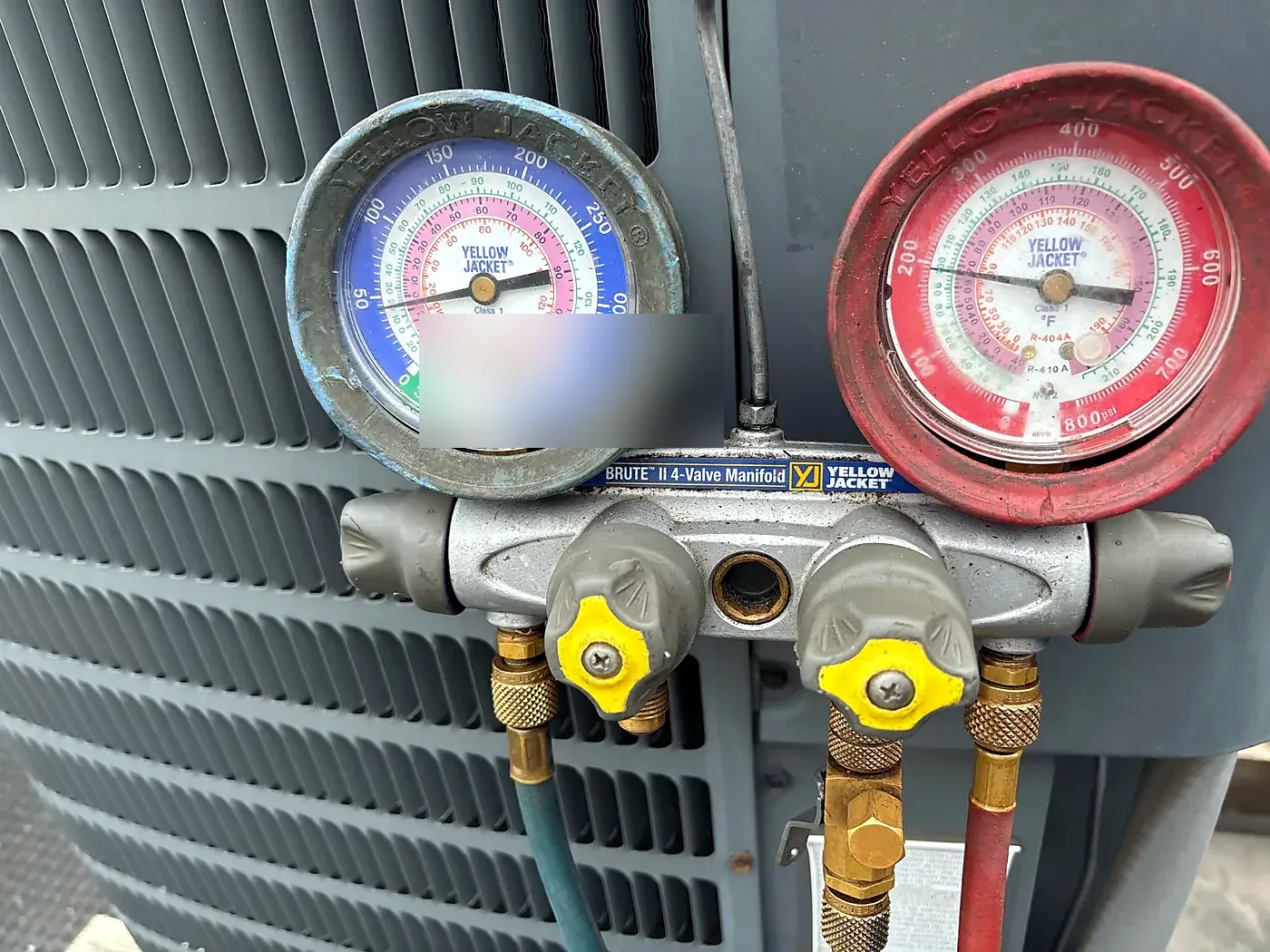
- Read the system with gauges. Pressures and subcooling tell us whether the charge is correct, whether there is a restriction, and whether the compressor is pumping.
- Search for the leak if the charge is low, and where we find and repair one, pull a vacuum before recharging so no moisture or air is sealed inside.
- Inspect the condensate path — trap, drain line, pan, float switch and pump — and test the electrical components: capacitor, contactor, disconnect and fuses, transformer, board and thermostat wiring.
- Show you the fault and the options, including leaving a marginal component alone for now when that is the honest advice.
Households on our annual service agreement get two tune-ups a year against a 24-point inspection: adjust the blower assembly, test refrigerant, tune the burners, inspect the evaporator coil, clean the ignition assembly, clean and inspect filters, calibrate the thermostat.
R-22, R-410A and R-454B: what refrigerant means for a repair
The refrigerant in your system changes what a repair is worth, and it is the biggest single reason two identical-looking failures get two different recommendations.
| Refrigerant | What it means for your system | What it means for a repair |
|---|---|---|
| R-22 | Obsolete. We still find it in older condensers and attic air handlers, and we recover it legally before any equipment comes out. | A real leak on R-22 is usually a replacement conversation rather than a repair one. Charging it back up is not a plan. |
| R-410A, sold as Puron | What we have installed for many years. It cannot be mixed with R-22, which is why a changeout means flushing the existing lines. | Leaks are repairable and the system recharges normally. Parts are available. |
| R-454B | What current equipment ships with, including the newer heat pumps and air handlers we install. | Repairable the same way. We have carried out leak seal treatments and measured recharges on R-454B systems. |
When old equipment comes out and new goes in, the existing copper line set is not simply reconnected. We flush it with RX11 and nitrogen to drive out oil and moisture, pressure-test it, and pull a deep vacuum before any refrigerant goes in — the sequence described in full on air conditioning installation.
Air conditioning repair or replacement: how to decide
We would rather repair a system. A repair is faster and it does not involve a permit. There are four conditions where repairing is the wrong answer, and we will tell you plainly when you are in one of them:
- The compressor is weak or dead, especially where it arrives together with low refrigerant and a burned capacitor, which is a pattern we see repeatedly. That is a failed system, not a failed part.
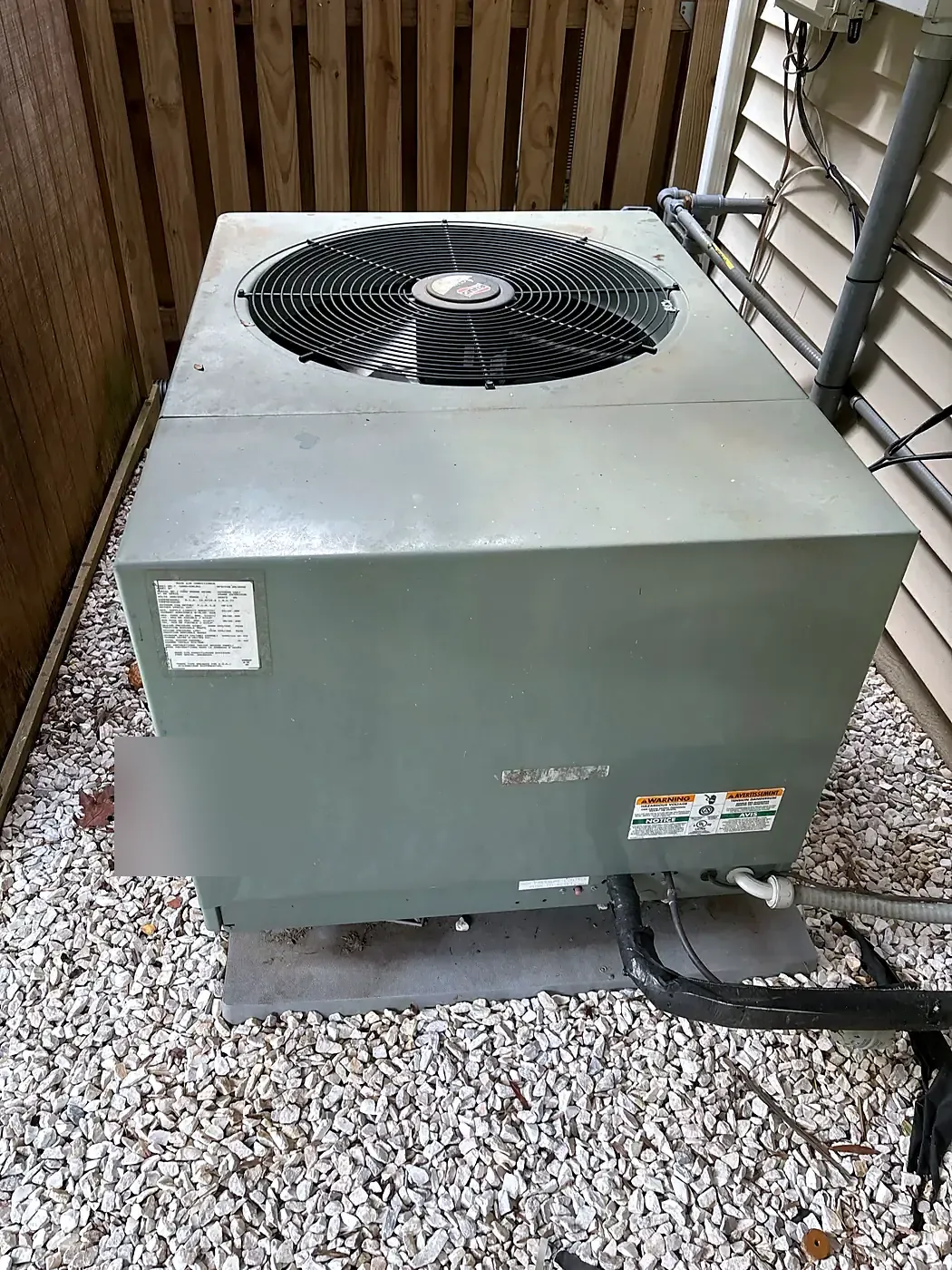
- The system runs R-22 and has a real leak. The refrigerant is obsolete and the equipment using it is old by definition.
- The evaporator coil is leaking and the outdoor unit is also aged. A coil and a condenser are a matched pair; replacing one half onto a tired other half is money badly spent.
- The heat exchanger on the attached furnace is rusted or cracked. The cooling side may be fine, but the box it lives in is not safe to run, and the work should be planned together.
We check the warranty before recommending anything. Equipment registration is mandatory for the extended parts coverage manufacturers offer, and we have replaced failed parts under a distributor warranty claim — filed with the install date, service date, model and serial number — on units the homeowner assumed were out of coverage.
How long does an air conditioner last in Northern Virginia?
Twelve to fifteen years is typical for a condenser and coil here, and several conditions in this market shorten it:
- Attic installations. An air handler and coil in an unconditioned attic run hotter and are far less forgiving of a blocked drain. Attic equipment is why we insist on a secondary pan and a float switch.
- Deteriorated line set insulation. We have pulled attic equipment and found the refrigerant line insulation broken down along its length, which means lost capacity and sweating pipe.
- Poor clearance around the outdoor unit. On one job the condenser sat two feet from the gas meter and had to be relocated to gain the required clearance. On another, an outdoor unit hung on a wall bracket was moved down to a proper ground pad, which meant extending the electrical and thermostat wiring to reach it.
- Ductwork that cannot deliver the air. A system fighting undersized, leaking or disconnected duct will never reach its rated performance. We have found a basement unit with no return at all — see ductwork repair, sealing and venting.
We also fit UV air purification and have replaced fouled humidifier panels and drain lines found during cooling calls; see humidifiers and indoor air quality.
Emergency air conditioning repair: what to do before we arrive
- Check the filter. If it is gray and matted, change it before anything else.
- Check the breaker and the outdoor disconnect. If a breaker has tripped, reset it once; if it trips again, leave it and tell us.
- If the indoor coil or the copper line is covered in ice, switch cooling off and leave the fan running so the coil can thaw. Running a frozen system risks the compressor.
- Look for water in the pan or around the air handler, and tell us if you find it.
- Call us with the equipment type — furnace and condenser, or heat pump and air handler — and where it sits.
If the outdoor unit is a heat pump rather than a straight condenser, the fault list is different and the page you want is heat pump repair and installation.
What air conditioning repair costs, and how we price it
We do not quote cooling repairs by phone and we do not publish rates. Two systems that look the same from the driveway can differ by refrigerant type, by whether the coil sits in an attic or a basement, by whether the leak can be reached, and by what the previous installer left behind.
An estimator comes to the property, inspects the actual installation, and gives you a written price for the work in front of him before anything begins. Our work is performed according to the Virginia building code, and where a job requires a permit we pull and process it ourselves.