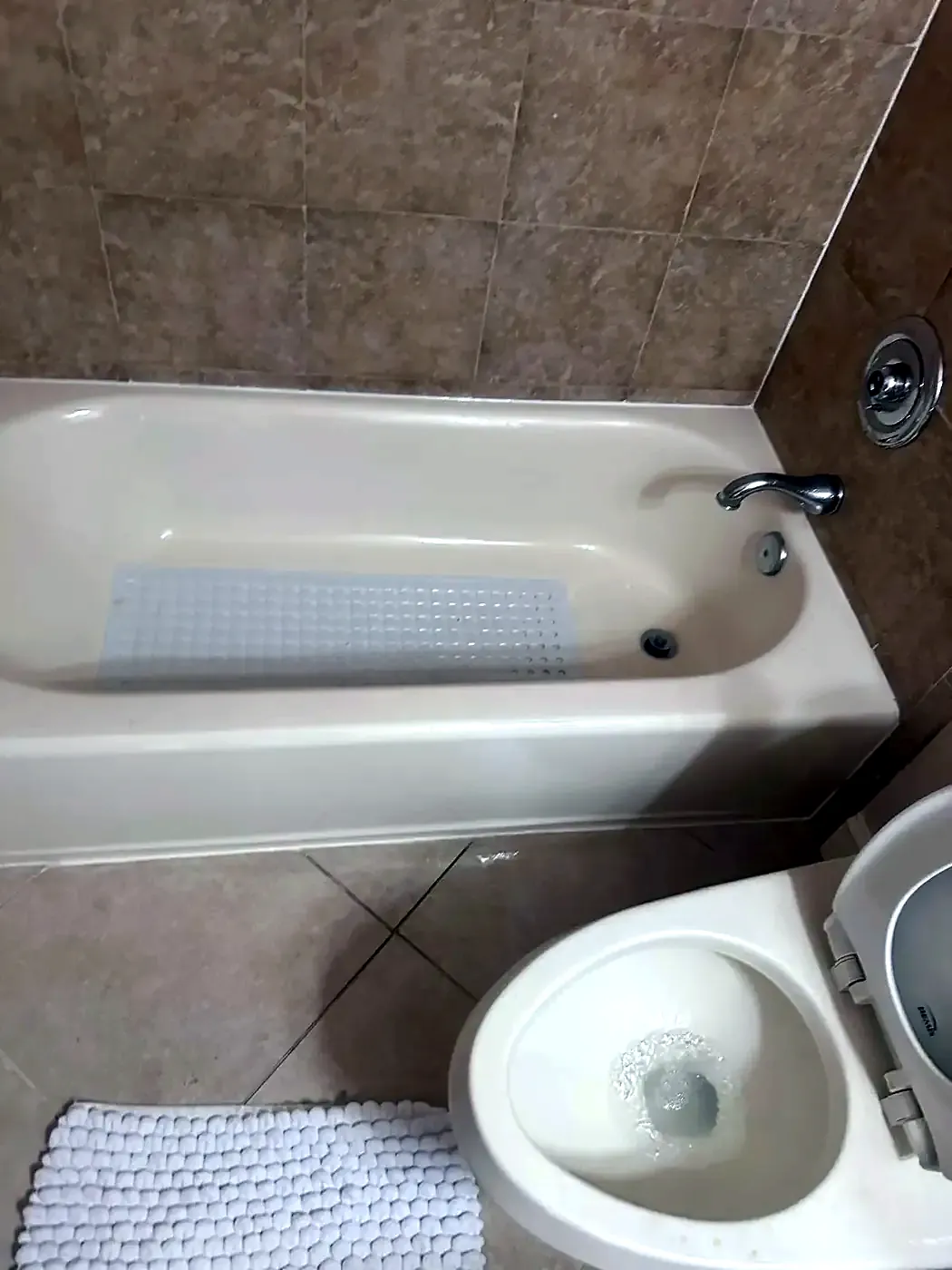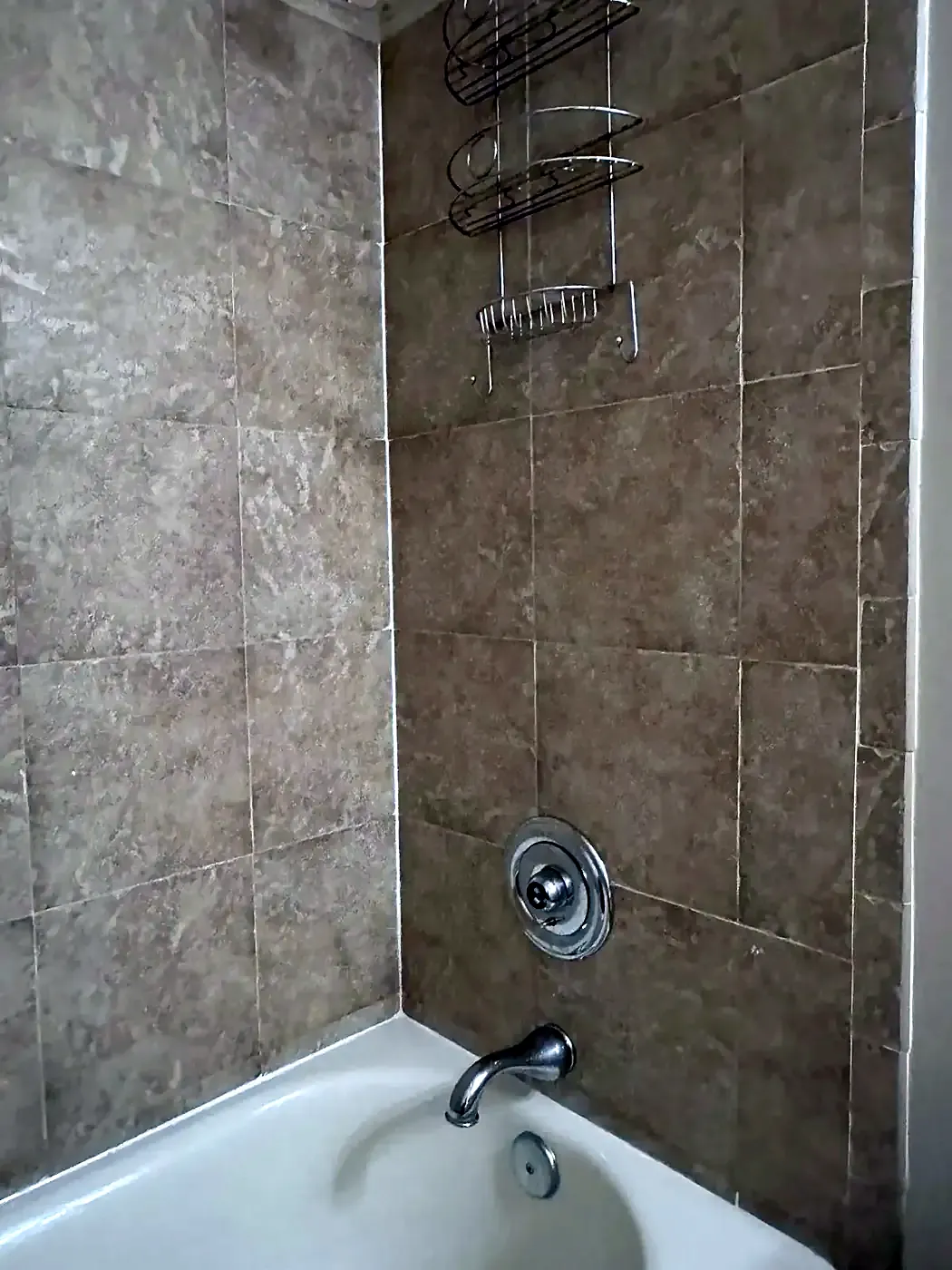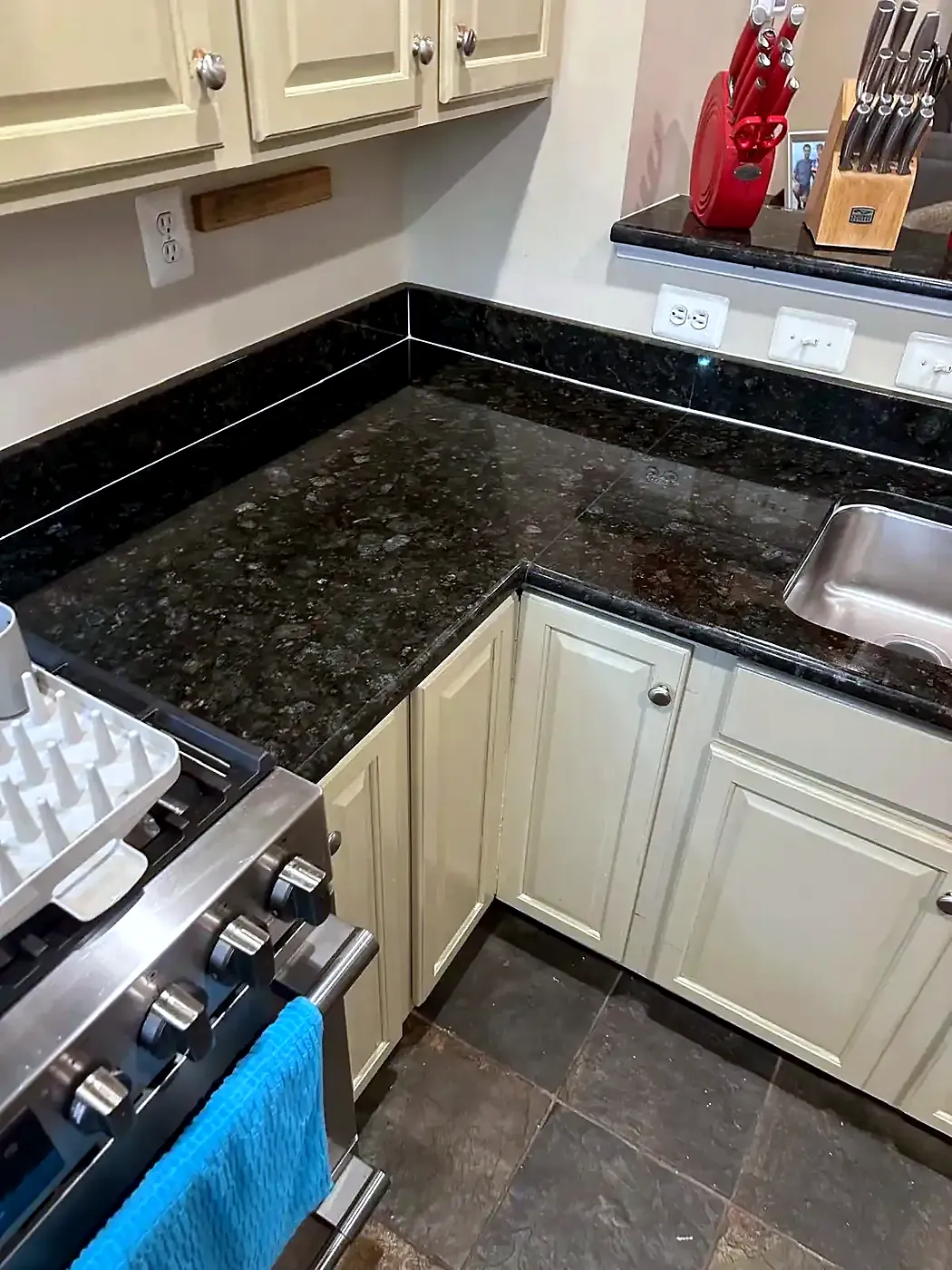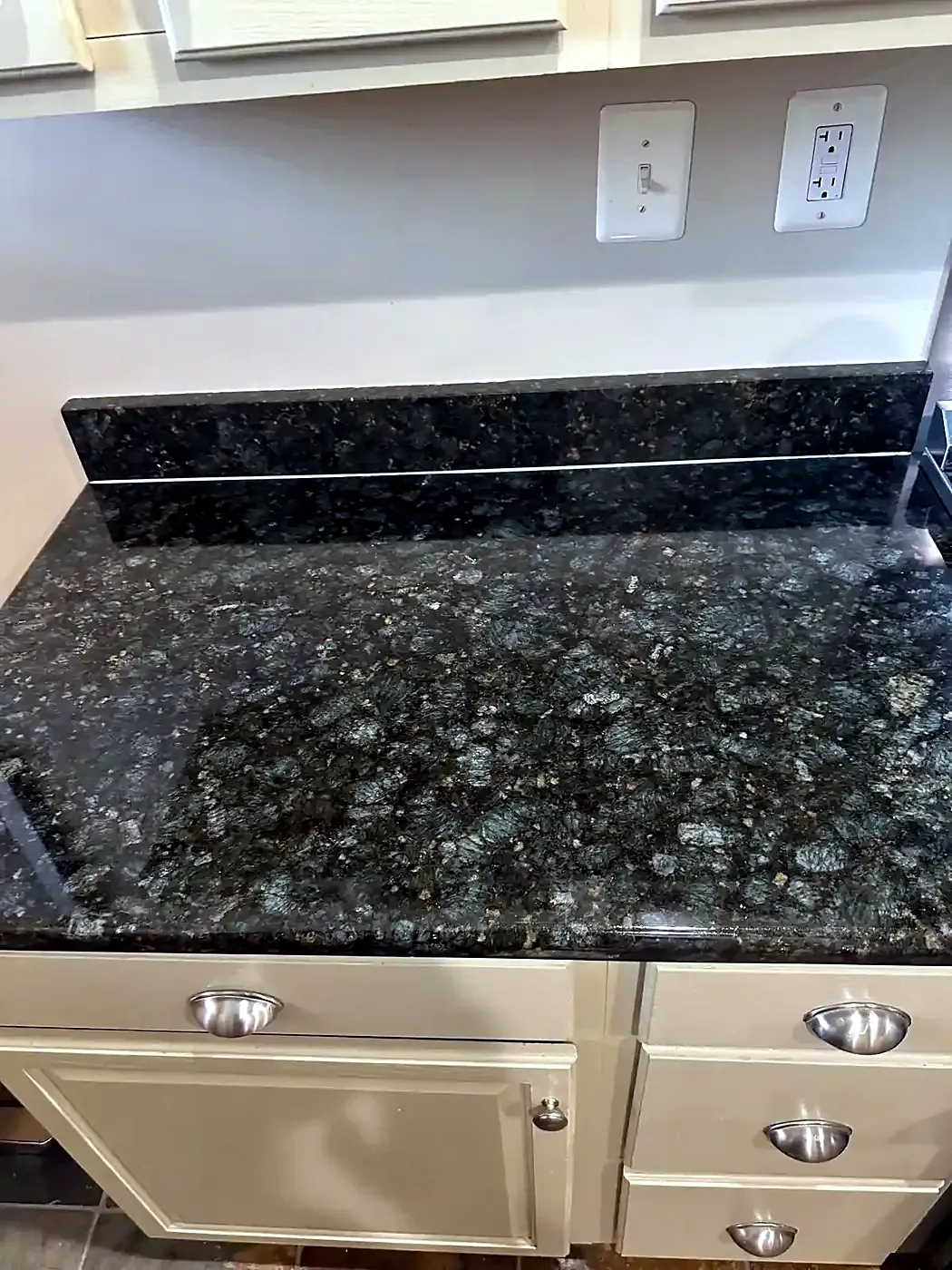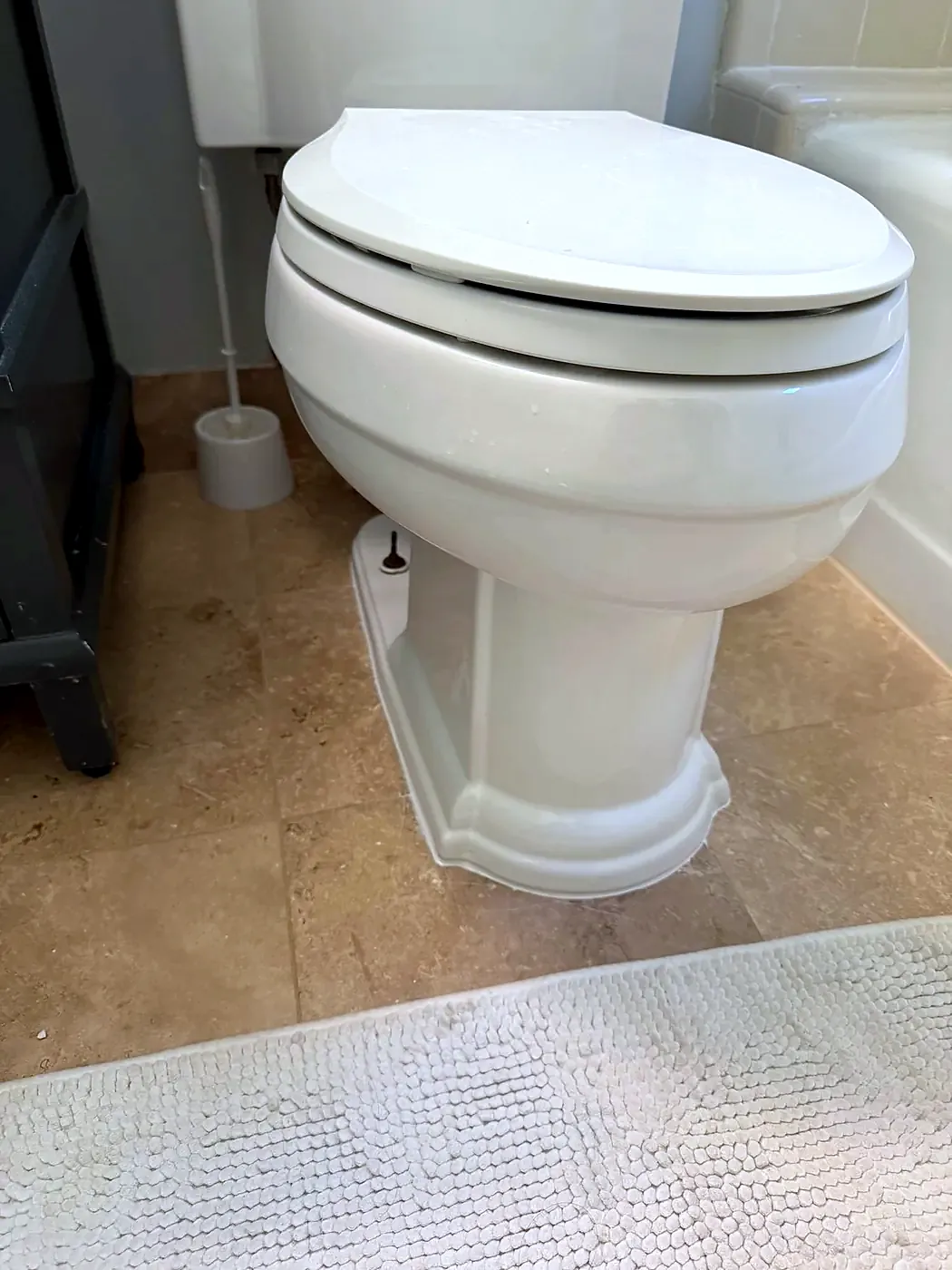
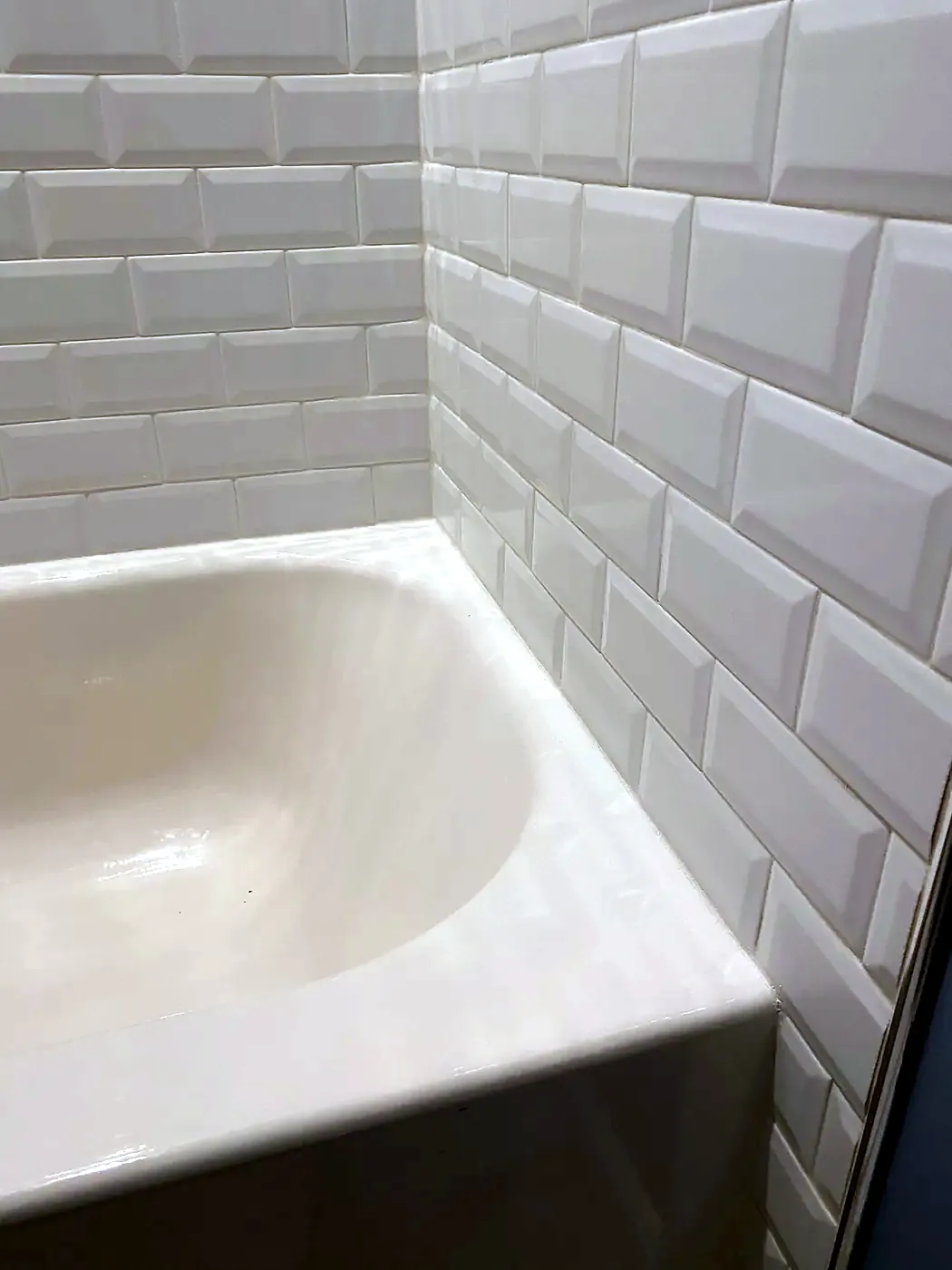
Caulk seals the joints that move: tub to tile, wall to floor, internal corners, around a toilet base and along a vanity. It is not grout and it is not permanent. When it splits, shrinks off the tub lip or goes black, water is getting behind the tile rather than running down it. Re-caulking means cutting the old material out completely, inspecting the wallboard behind the tile, treating anything damp, and resealing in silicone.
Why bathroom caulk fails
Caulk is a consumable. It has a service life, and in a family bathroom that life is shorter than most people expect. These are the reasons it lets go, in the order we see them:
- The joint moves and the material has stopped moving with it
- A tub deflects measurably when it is filled and a person gets in. A shower pan does the same. Sealant is designed to stretch across that gap; once it has cured hard and lost its elasticity it splits rather than flexes, usually along the tub lip first.
- It was grouted instead of caulked
- The single most common fault we find. Grout is rigid and it will crack out of a moving joint within a season. Every change of plane in a tiled bathroom is a movement joint, not a grout joint.
- The old caulk was left in and new caulk run over it
- Silicone does not bond reliably to old, soiled, mildewed silicone. A bead run over a failed bead lifts as one strip, often within months, and it traps whatever was underneath.
- The wrong product was used
- Painter's acrylic in a shower joint has no business being there. So does the polyurethane we use outdoors on door thresholds — right product, wrong room.
- The surface was wet or dirty when it went on
- Soap film, cleaning residue and a damp substrate all stop a seal bonding. A joint has to be cut out, cleaned and dry before new material goes in.
- The bathroom has no working ventilation
- Where a bathroom has a light fitting where an extractor should be — and we have replaced exactly that on more than one property, taking out the light and fitting an exhaust fan in its place — moisture has nowhere to go, and it sits on every joint in the room.
Caulk or grout: which one belongs in a bathroom joint?
This is the distinction that decides whether a bathroom stays dry, and it is worth being precise about. The rule we work to is simple: sanded grout in the field, silicone at every change of plane.
| Joint | What belongs there | Why |
|---|---|---|
| Between two tiles on the same flat surface | Grout | Nothing moves relative to anything else. Grout fills the tile joint, supports the tile edges and takes the same rigid load as the tile does. |
| Internal corner where two walls meet | Silicone | Two planes, two directions of movement. Grout in that corner cracks and falls out. |
| Where the tiled wall meets the tub or shower pan | Silicone | The tub or pan moves under load and the wall does not. This is the joint that fails first and leaks worst. |
| Where the tiled wall meets the bathroom floor | Silicone | A change of plane, and the place water sits after a shower. |
| Around the base of the toilet and along a vanity | Silicone | Both are fixtures set against a finished floor or wall, and both get wet from above. |
The two jobs are related but they are not the same job. Replacing the material in the tile joints across a shower wall is a regrout — see bathroom regrouting — and it is frequently carried out at the same visit, because the grout and the sealant in a tired bathroom usually fail together. Our contracts regularly read as re-grout and re-caulk, in that order: the field first, the moving joints last.
What mildew behind bathroom caulking means
Black speckling on the surface of a bead is a cosmetic problem. Black staining that is inside the material, or that reappears within days of cleaning, is telling you something different — that moisture is sitting behind the seal, in the joint, where no cleaner can reach it.
That is why we do not resurface caulk. The old material comes out entirely, and once it is out we look at what is behind it:
- The wallboard behind the tile is inspected for water damage, and what we find is reported to the homeowner. This is a standing item in our contracts on every re-caulk and regrout, because failed caulk and damaged board travel together.
- Anything damp gets treated. We apply Concrobium Mold Control to eliminate and prevent mold, mildew and musty odors. On one job where the ceiling below a shower had been wetted from the shower above, the mold control went onto the back of the shower wall as well as the ceiling.
- Loose tiles are checked. Mildewed caulk beside a tile that clicks when you press it is usually a wet substrate rather than a surface problem — see tile repair and installation.
- The ceiling below gets a look. Where there is a room underneath, a stain there says the water has already been getting past the joint for a while — see drywall and ceiling repair.
Most of the time the board behind is sound, the joint is cut out and resealed, and that is the end of it. But we would rather find the other case at the start of a small job than have you find it at the start of a large one.
How often should bathroom caulk be replaced?
There is no fixed interval, and anyone quoting you one has not seen your bathroom. What is reliable is the list of symptoms that mean the time has come, and it is short enough to check yourself in two minutes:
- The bead has split, cracked or parted from the tub, pan or tile on one side.
- You can push a fingernail behind it, or lift a corner of it.
- It has shrunk back so the joint is open at the ends of the tub.
- It is stained black through the material rather than on it, and cleaning does nothing.
- It has gone hard and chalky instead of rubbery.
- There is a tide mark, a soft patch of flooring or a stain on the ceiling below.
- Someone has run new sealant over the old, and the whole strip is now lifting together.
A heavily used family shower will need it sooner than a guest bathroom that is used twice a year. A bathroom with no working exhaust fan will need it sooner than one that vents properly. The practical answer: check it once a year, and act on the first split rather than the third.
What a bathroom re-caulking job includes
This is the scope our contracts describe for a re-caulk, and it is the same whether it is one tub or every bathroom in the house:
- Protect the room. Floors and furniture are covered with drop cloths and plastic sheets before anything is cut out.
- Remove a glass shower door where one is in the way, and reinstall it when the work is done. Trying to seal a joint around a fixed screen is how bad beads happen.
- Cut out all the old material. All tile caulking in the shower walls and corners, at the bathroom floor corners, around the toilet and around the vanity and tub. Out completely, not trimmed back.
- Inspect the wallboard behind the tile for water damage and advise the homeowner of anything found.
- Apply mold control where there has been moisture, and let it do its work before anything is sealed in.
- Re-grout first where the field joints have also failed, using sanded grout, or acrylic-fortified tile grout on shower walls.
- Re-caulk every joint in mildew-resistant silicone, tooled to a clean line, with white the usual choice against white fixtures.
- Leave it to cure before the shower is used. A joint used too early is a joint that fails early.
Re-caulking is often one line on a longer list. In our job files it sits alongside a failing disposal, a binding door, ceiling holes to patch and a light fitting to change — the kind of list a homeowner has been putting off. It is sensible to have it all done in one visit.
Why silicone is used for bathroom caulking
There is more than one sealant in the van, and they are not interchangeable. What goes into a bathroom joint is a mildew-resistant silicone, and there are three reasons for that:
- It stays flexible
- The joint between a tub and a tiled wall opens and closes every time the tub is used. Silicone stretches across that movement for years. Acrylic sealant hardens, and once hard it splits rather than stretches.
- It does not absorb water
- Silicone is unaffected by constant wetting. Acrylic takes water up, swells and then shrinks as it dries, which is what pulls a bead away from the tub lip.
- It resists mildew
- A mildew-resistant grade slows the black staining that makes people replace caulk long before it has failed mechanically.
By contrast, when we seal an exterior door threshold against water getting into the framing, the product is a polyurethane, not a silicone. Same idea — a flexible joint that keeps water out — but a completely different exposure and a completely different material. Knowing which belongs where is most of this trade.
What we inspect behind the tile during a re-caulking
A re-caulk is the cheapest inspection opportunity a bathroom ever gets, because the moment the old material is out you can see into the joint. We use it. These are the findings that change the conversation:
- Soft or crumbling board behind the tile. Paper-faced wallboard behind shower tile is a failure waiting to happen. Where a shower is being rebuilt we strip the walls to the framing and re-board in cement board rather than tiling over wallboard.
- A tub or pan joint that has been leaking for a long time. On one property the shower floor and lower wall tile had failed altogether and the leak had damaged ceiling drywall below. On that job the whole pan assembly — membrane, concrete pad and tile — had gone.
- A wet subfloor. Where there is any doubt the plywood under a tub or pan is inspected and treated with mold control before anything new goes on it. A pan that is leaking rather than simply unsealed is handled as shower leak repair.
- Tiles that have lost their bond. Five loose tiles alongside failed grout and caulk was one job in our files exactly as written.
- Nothing at all. Which is the usual outcome, and the reason to do this before it becomes the other four.
If what is behind the tile turns out to be a rebuild rather than a reseal, we tell you at that point, with the wall open, and you get a written price for the larger work before anyone commits to it. That may mean a bathroom remodel rather than a repair, and we would rather you heard that from us with the evidence in front of you.
What bathroom caulking and re-caulking costs
We do not price bathroom caulking by phone and we do not publish figures. A single tub joint in a sound bathroom and a three-bathroom re-grout and re-caulk with damaged board behind the tile are not the same job, and the difference is not something anyone can judge from a description over the telephone.
An estimator comes to the property, looks at the joints, the tile and the condition of the room, and gives you a written price before any work begins. Where the state of the wallboard cannot be known until the old material is out, the contract says so plainly, and anything found is reported to you and agreed before it is corrected.
Sam & Sons Services has sealed, regrouted and rebuilt bathrooms across Northern Virginia since 1999, and takes handyman work in Washington DC as well. Licensed in Virginia, DPOR #2705070610. Call (703) 256-8080.