
Sam & Sons Services is a licensed electrical contractor working across Northern Virginia and Washington DC, and has held a Virginia contractor license since 1999. Our electricians upgrade service panels, install EV chargers, replace outlets, GFCIs and switches, fit interior and exterior lighting, and trace circuits that trip or go dead. Electrical permits are pulled and processed by our own office where the jurisdiction requires them, and on permitted work the closing payment is held back until the inspection has passed.
Every electrical service, page by page
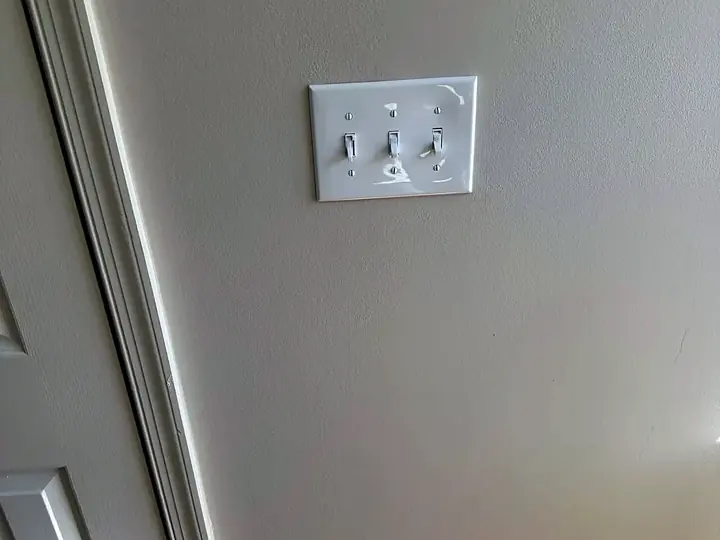
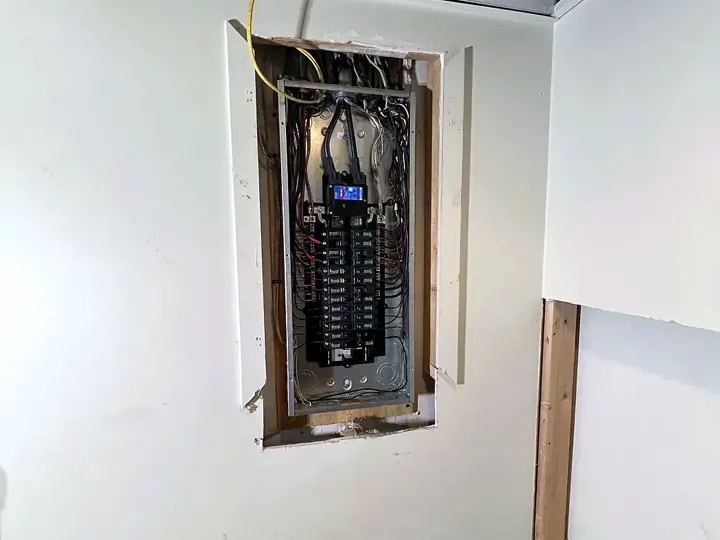
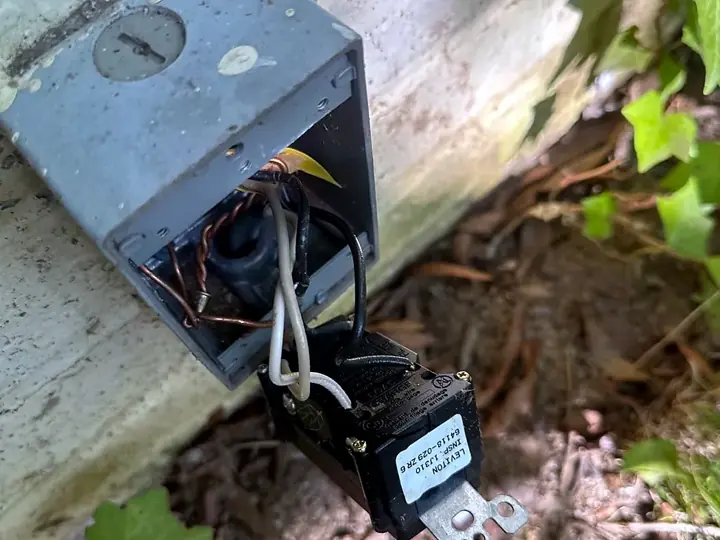
Electrical services we provide
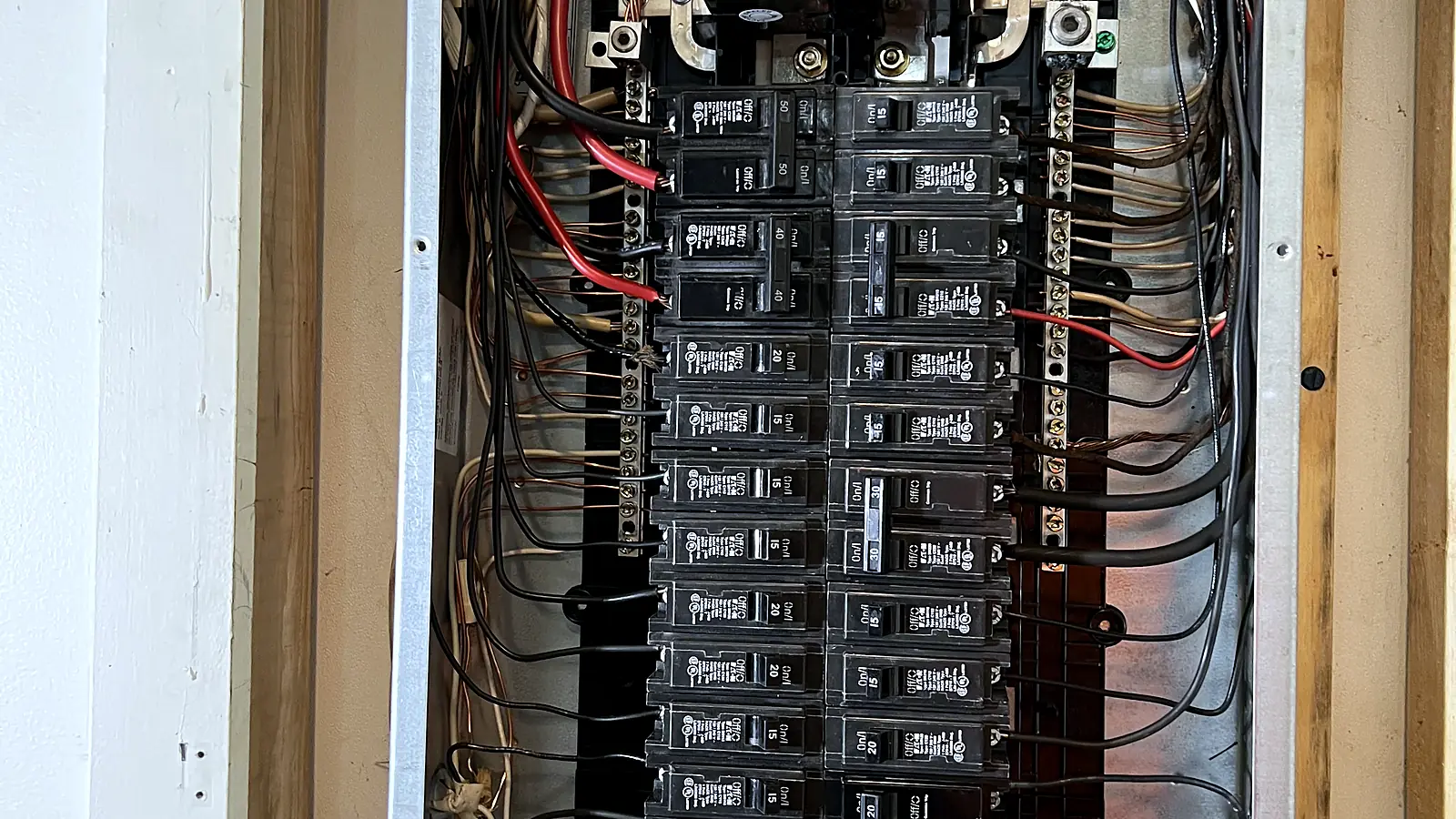
- Electrical panel upgrades and replacement
- Obsolete fuse boxes, undersized panels and main lug panels replaced with a modern breaker panel, with the service entrance, grounding electrode system and bonding brought up to current requirements.
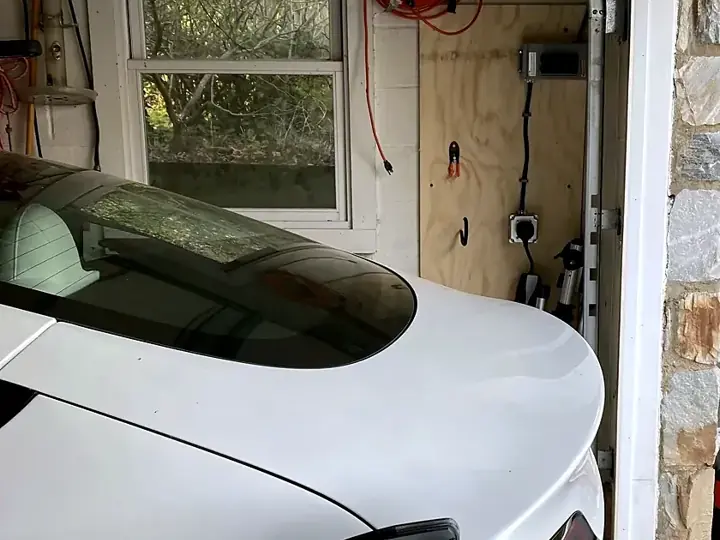
- EV charger installation
- A dedicated 240 volt circuit from the panel to the charger, sized to the unit and protected by the correct double pole breaker, with the load on the existing service calculated first.
- Outlets, GFCIs and switches
- Dead receptacles, two-prong outlets with no ground, GFCI and AFCI protection where code now calls for it, and switches that hum, spark or no longer hold.
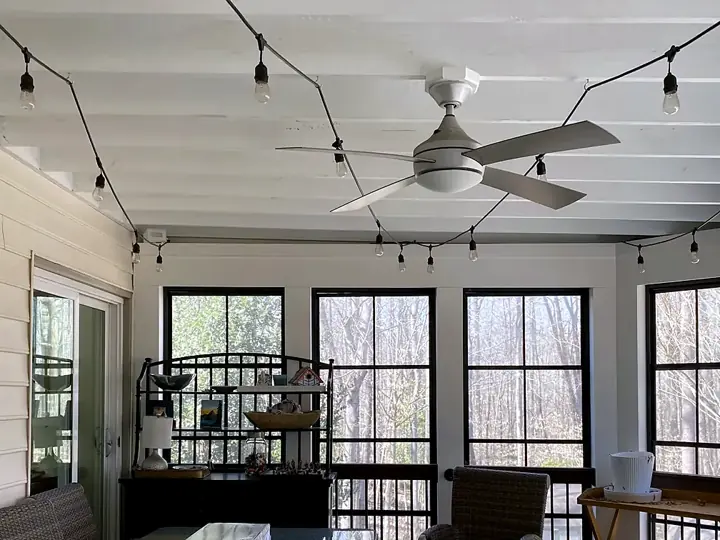
- Ceiling fan installation and repair
- Fan-rated boxes fixed to framing with bracing added where there is none, plus wobble, noise and switch faults on fans already hung.
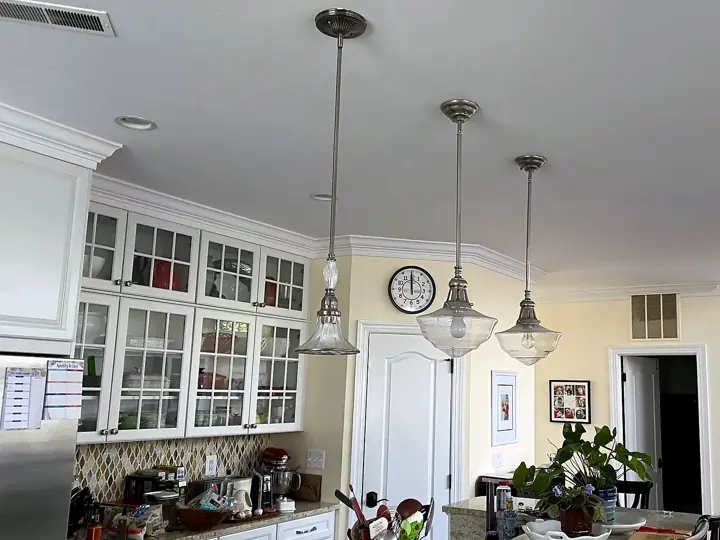
- Lighting installation
- Recessed lights in finished ceilings, fixture replacement, under-cabinet and exterior lighting, and the cable and switching each needs behind the drywall.
- Wiring, circuits and troubleshooting
- Breakers that trip repeatedly, circuits that have gone dead, aluminum branch wiring, damaged cable and junctions buried where they should never have been.
Electrical panel capacity: what your service can carry
Most electrical questions in an older house come back to one number: how much current the service can actually deliver. A house built around a fuse box or a 100 amp panel was wired for a different set of appliances than the one it now runs.
Before anything large is added, the existing load is calculated rather than estimated. That decides whether a new circuit can be added to the panel as it stands, whether the panel needs replacing, or whether the utility service itself has to be uprated. See electrical panel upgrades for what that work involves, including the grounding electrode system, the bonding of metallic water piping, and surge protection at the panel.
Bonding is the part most people never hear about. Copper water piping is part of the grounding path in many houses here, so whenever it is cut — including on one of our own plumbing jobs — it has to be re-bonded across the gap.
EV chargers and the electrical load they add
A Level 2 charger is the largest continuous load most houses have ever added. It is a dedicated circuit from the panel, run in cable or conduit sized for the distance, landed on a breaker matched to the charger, and mounted where the cable actually reaches the car.
- The load calculation comes first. A charger added to a service with no headroom will trip under load or, worse, sit undetected at the edge of capacity.
- The route decides the job. An attached garage on the same wall as the panel is a short run. A detached garage, a finished basement in between, or a panel at the opposite end of the house is not.
- Most jurisdictions require a permit and an inspection for the new circuit. We pull it, and the job closes out with the inspector, not before.
- Where the panel cannot take it, the charger and the panel upgrade are quoted together so there is no second surprise. Details are on EV charger installation.
Outlets, switches, fans and lighting electrical work
The small electrical jobs are the ones most often done badly, and they are the ones that start fires. A receptacle that has lost its ground, a backstabbed connection that has worked loose, a fixture hung from a box never rated to hold it, or recessed cans buried under insulation are all routine finds.
Outlets, GFCIs and switches covers the protection that code now requires at kitchens, bathrooms, garages, basements, crawl spaces and exterior locations — a GFCI protects people, an AFCI protects against arcing in the wiring, and they are not interchangeable. Ceiling fan installation covers the fan-rated box and bracing a moving load needs, and lighting installation covers fixtures, recessed cans, switching and the cable that feeds them.
Where a ceiling has to be opened to run cable, the same company patches and paints it afterwards — see handyman and home repair — instead of leaving you holding a hole.
Why a breaker trips: electrical troubleshooting
A breaker that trips again and again is reporting one of four conditions, and the point of a troubleshooting visit is to find out which.
- Overload — more current drawn on the circuit than it was built to carry. The fix is usually a new dedicated circuit rather than a bigger breaker, which would simply move the danger into the wall.
- A short circuit between conductors, often at a damaged cable, a crushed staple or a failing appliance.
- A ground fault, where current is finding a path it should not have. Damp locations and exterior circuits are the usual suspects.
- A failed breaker. Breakers wear out, and a weak one trips on load it should carry comfortably.
A dead circuit with no tripped breaker is a different search: an open neutral, a loose connection in a device, or a junction hidden behind finished surfaces. Wiring, circuits and troubleshooting sets out how that hunt is run.
Electrical permits, code and county inspection
Replacing a device usually needs no permit. Panel replacements, service changes, new circuits, EV chargers and rewiring do, on both sides of the river.
- The permit is pulled and processed by our office. The fee is written into the contract before the work begins, and it is not left with the homeowner.
- Work in Virginia is performed to the Virginia building code, and work in the District to the code that applies there. That is recorded on the contract, not left to be assumed.
- Inspection closes the job. On permitted electrical work the final portion of the payment is held until the inspector has passed it.
- Labor carries a one-year warranty on every electrical job we do.
Electricians serving Northern Virginia and Washington DC
Our electricians work throughout Northern Virginia and in Washington DC. The jobs in our record are mostly single-family homes, with condos, townhouses, apartment buildings and commercial units alongside them. A condo panel in a stacked riser, a townhouse with a shared wall, and a detached house with an outbuilding are three different jobs.
Every town we cover is listed on service areas.
One licensed company for electrical and the trades it touches
Electrical work almost never finishes at the device. A new circuit means drywall opened and closed. A panel relocation means framing. An air handler circuit is heating and cooling as much as electrical, and a kitchen rewire only makes sense inside a remodeling plan.
Sam & Sons Services LLC holds Virginia DPOR class A contractor license #2705070610 and takes responsibility for all five trades under that one license. One company signs the contract, pulls the permits, does the work and carries the warranty — and there is one phone number, answered 24 hours a day, if anything needs looking at again.
How electrical work is priced
We do not give electrical prices by phone and none are published. The cable route, the wall and ceiling finishes it has to cross, the age and capacity of the panel, and what a previous installer left in the boxes all change the job in ways no description captures. An estimator comes to the property, opens the panel, looks at the route, and gives you a written price before any work starts.