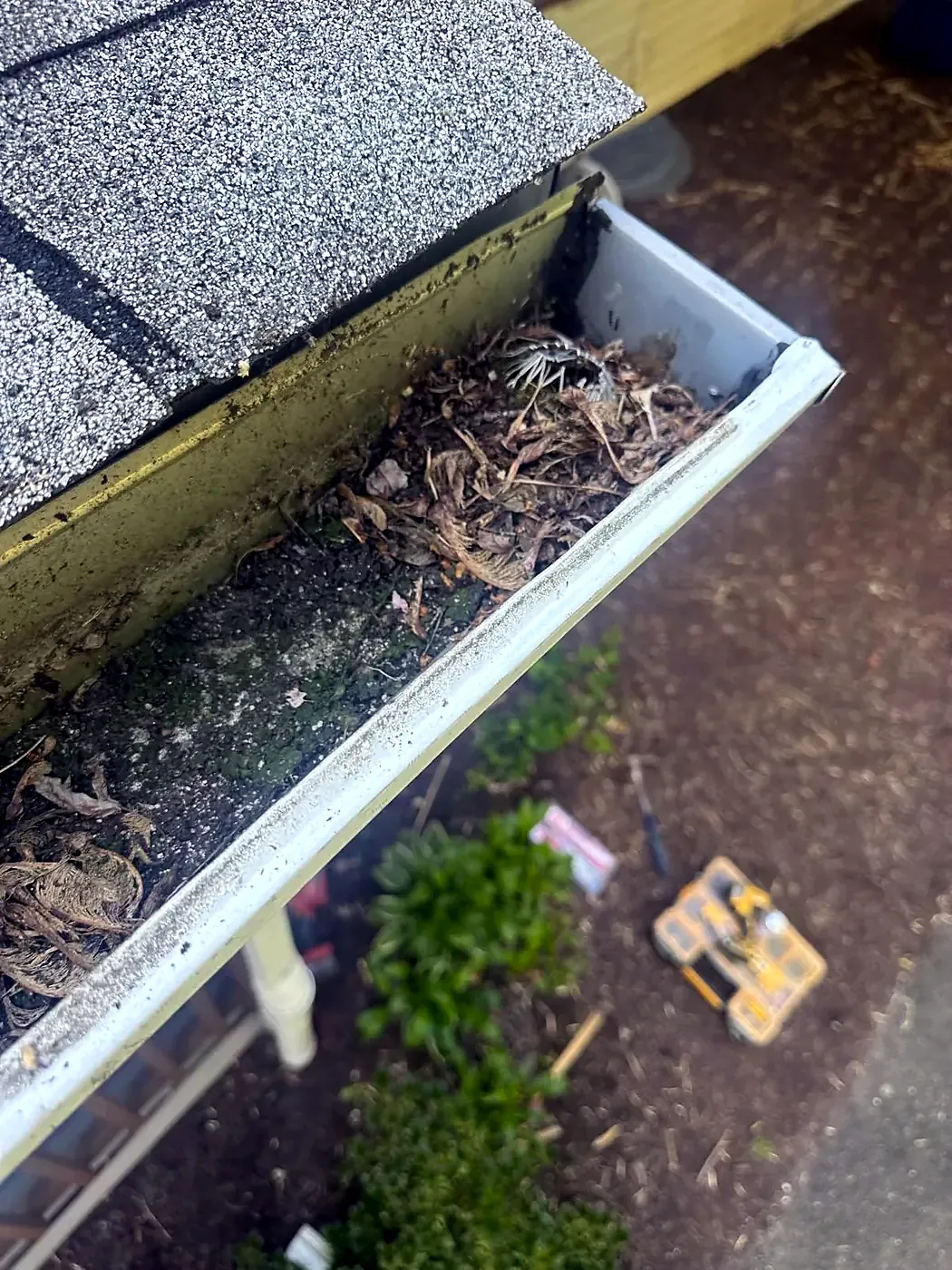
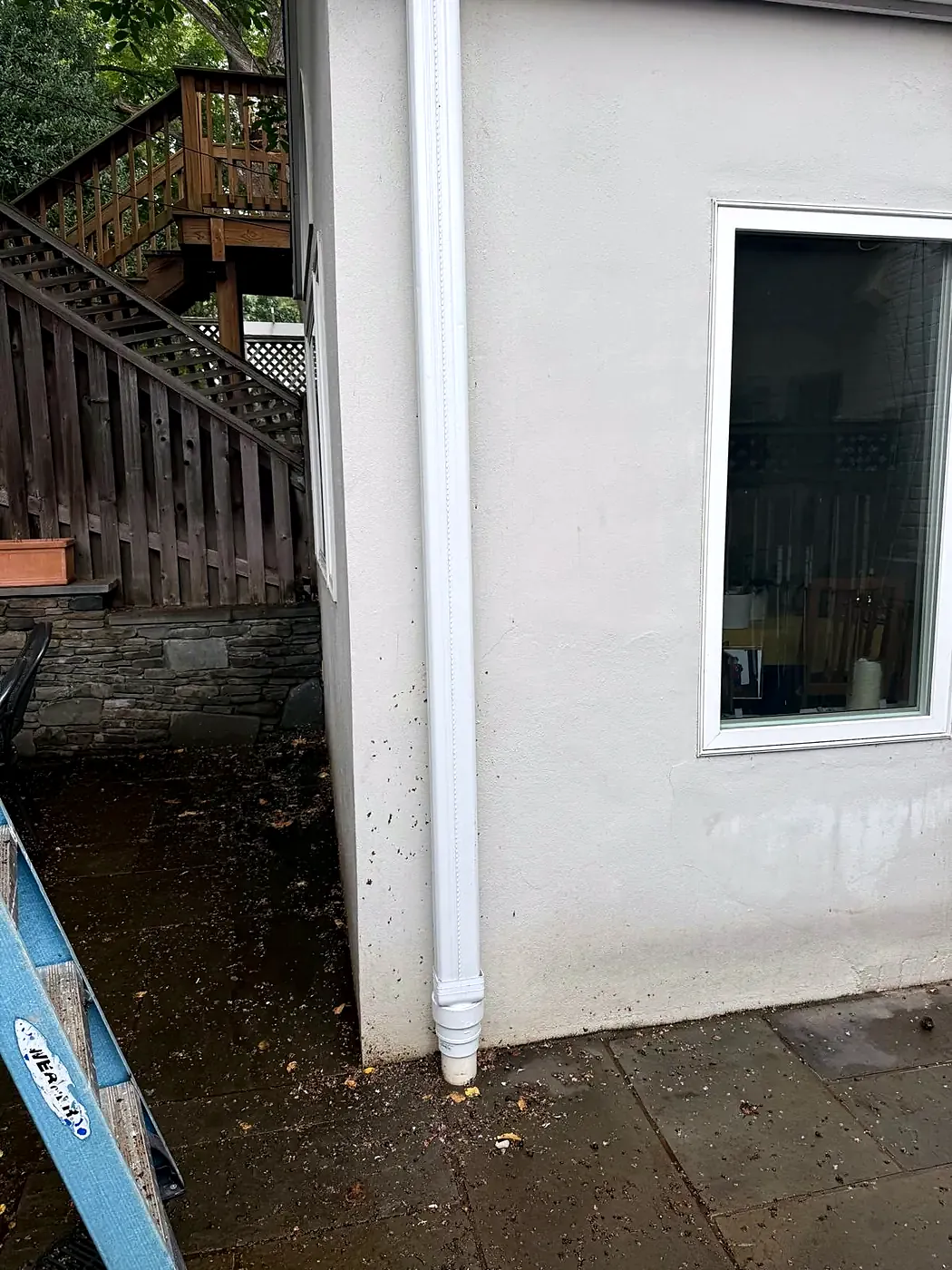
A gutter has one job: collect roof water and carry it far enough from the house that it cannot do any harm. It fails in three ways. It fills with debris and overflows. It loses its slope, so water stands in it and rots the fascia behind it. Or it discharges correctly into a downspout that then dumps everything at the foundation. The third is the expensive one, because the damage shows up as foundation cracks, settled slabs and wet basements rather than as anything you would call a gutter problem.
What a blocked or failing gutter does to a house
The damage we are called to repair rarely gets described as a gutter problem. It gets described as a ceiling stain, a crack, a wet basement or a sinking step. These are chains we have traced:
- Clogged gutters feeding a roof leak. On one property a damaged bathroom fan vent cap was letting water into a master bathroom ceiling. The fan duct was holding standing water and the gutters above the kitchen were clogged — three faults compounding into one stain.
- Standing water rotting the fascia. Gutters that are not sloped toward their downspouts hold water permanently against the board they are bolted to. Rotted fascia and a lack of flashing between gutter and roof at two corners was enough to put water into a ceiling below.
- No downspout at all on an elevation. Roof water falling straight to the ground eroded and moved the asphalt at the front of a garage until it had dropped two and a half to three inches below the concrete floor, putting pressure on the slab. Three hairline cracks were found and classified as foundation problems, though not structural ones.
- Downspouts discharging at the wall. Water repeatedly loaded into the same few feet of soil saturates it. An inspection report on one house attributed a ten to twelve foot horizontal crack in a basement wall to lateral soil pressure from wet soil, caused by improper grading and poor water management.
- Undermined porches, steps and slabs. Concentrated discharge washes out the bearing under concrete. We have underpinned front steps and a porch settled over voids, with a downspout discharging at the wall beside them.
- Open joints where a gutter meets masonry. We have traced interior drywall damage to the chimney-to-siding joints, the window perimeters and the gutter-to-brick joints on one house.
Signs your gutter system needs repair
- Water sheeting over the front edge in rain
- Either a blockage or a slope problem. Both are fixable, and which one it is decides whether you need cleaning or repair.
- Standing water in the trough after the rain stops
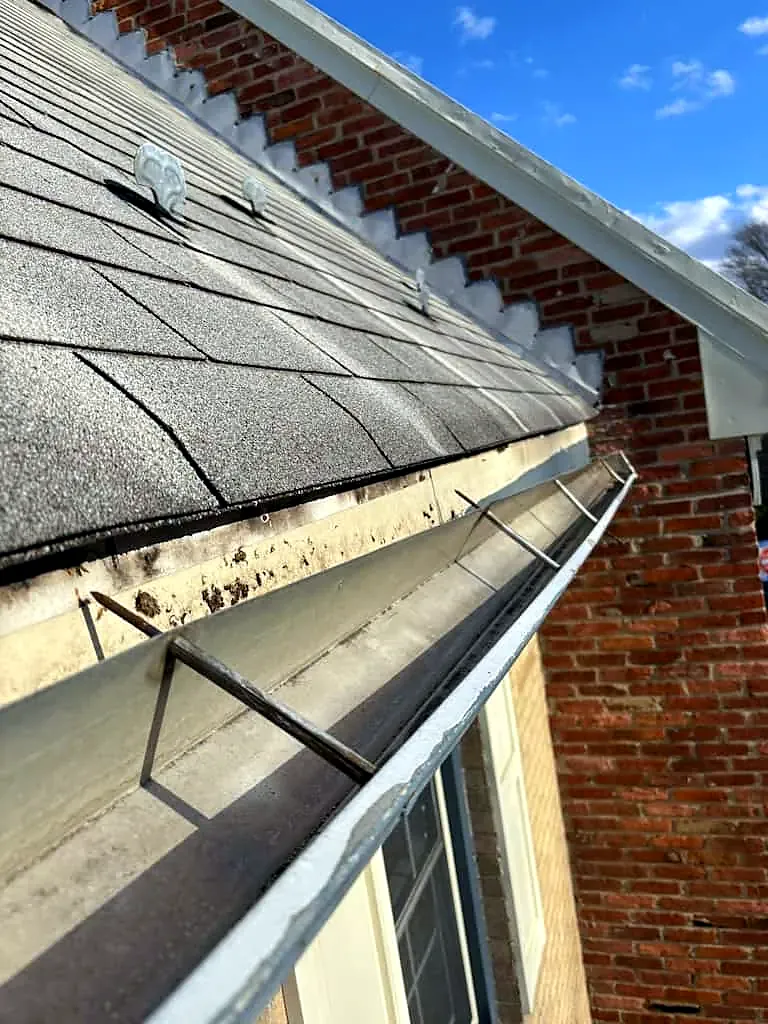
- The gutter is not falling toward its downspout. This is the condition that kills the fascia behind it, quietly, over years.
- Staining or streaking down the fascia and the wall below
- Water is escaping at the back of the gutter rather than the front, which usually means there is no drip edge throwing it clear.
- Gutters pulling away from the house
- The board they are fixed to has gone soft, the brackets have failed, or both. The fascia gets checked before anything is rehung.
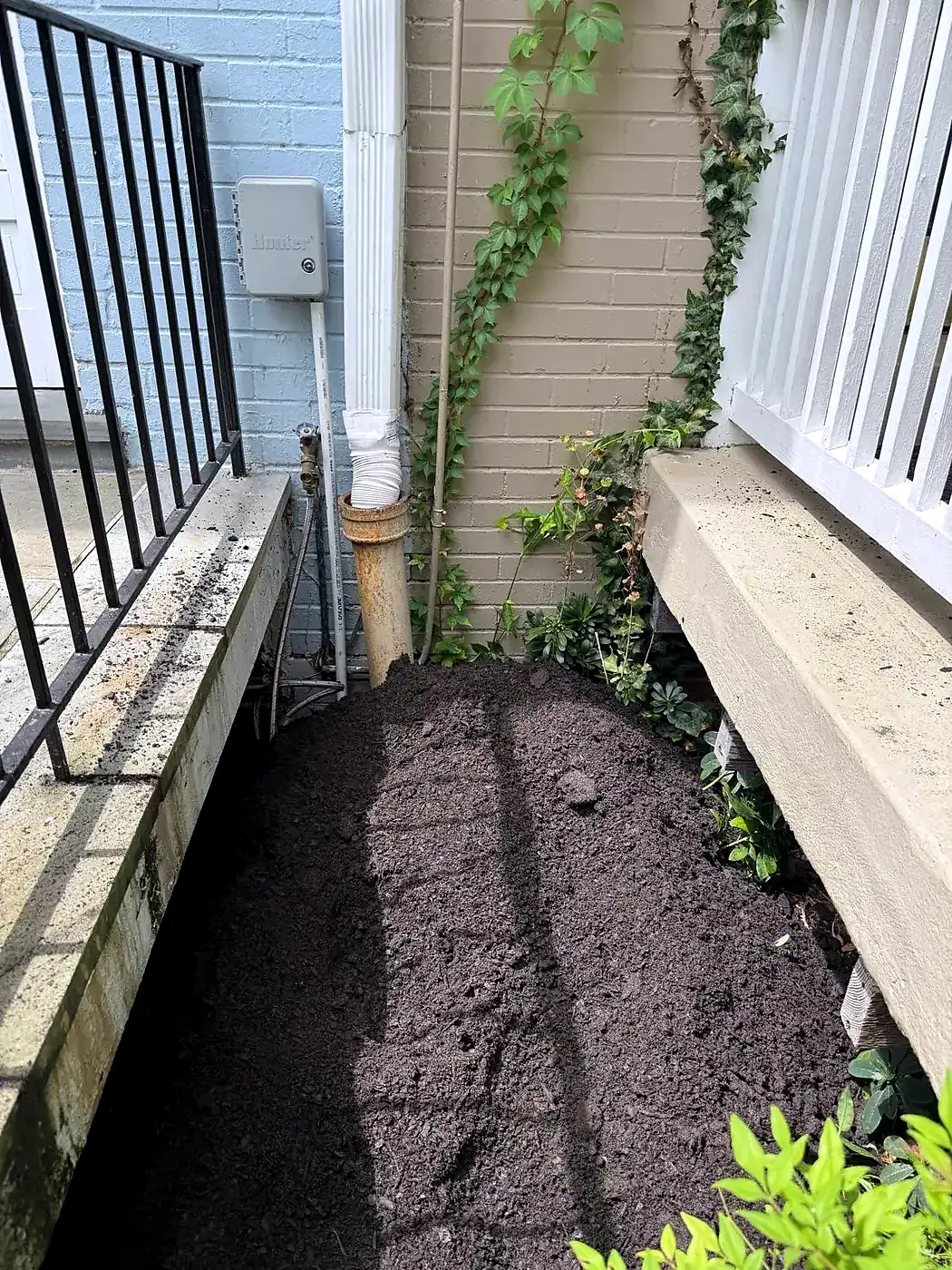
- A trench, a gully or bare washed soil under a downspout
- The discharge is landing at the house. That is drainage work, not gutter work, and it is the more urgent of the two.
- Damp in the basement after heavy rain, in the same corner every time
- Nearly always a grading and discharge problem on that elevation rather than a wall defect on its own.
- A loose or sagging gutter guard
- Guards fail too, and a lifted guard admits debris while making it harder to see.
Gutter cleaning: how often and what it involves
Twice a year is the practical answer for most houses here, and more often where the roof sits under mature trees. Gutter cleaning is not just scooping the trough:
- The gutters are cleared inside and out, not just emptied — the outside face streaks and stains and holds organic growth.
- Downspouts and leaders are checked for blockage through their whole run, including underground sections, because the trough can be spotless and the leader still packed solid at the elbow.
- The gutters are inspected while they are being cleaned and any repairs needed are reported to you, which is written into how we scope the work.
- Where mold, mildew and staining are present on the house, a moss, mold and mildew remover and a multi-surface cleaner are applied and the siding, trim and windows are power washed.
- The discharge point of each downspout is checked at ground level — the part most cleaning visits ignore entirely.
Cleaning is also diagnostic. A gutter you can see the bottom of will tell you immediately whether it is holding water, whether the fascia behind it is sound and whether the seams are leaking.
Downspouts, leaders and where roof water should go
This is the part of the system that decides whether your gutters protect the house or quietly attack it. A roof gathers an enormous volume of water and a downspout concentrates all of it into one spot.
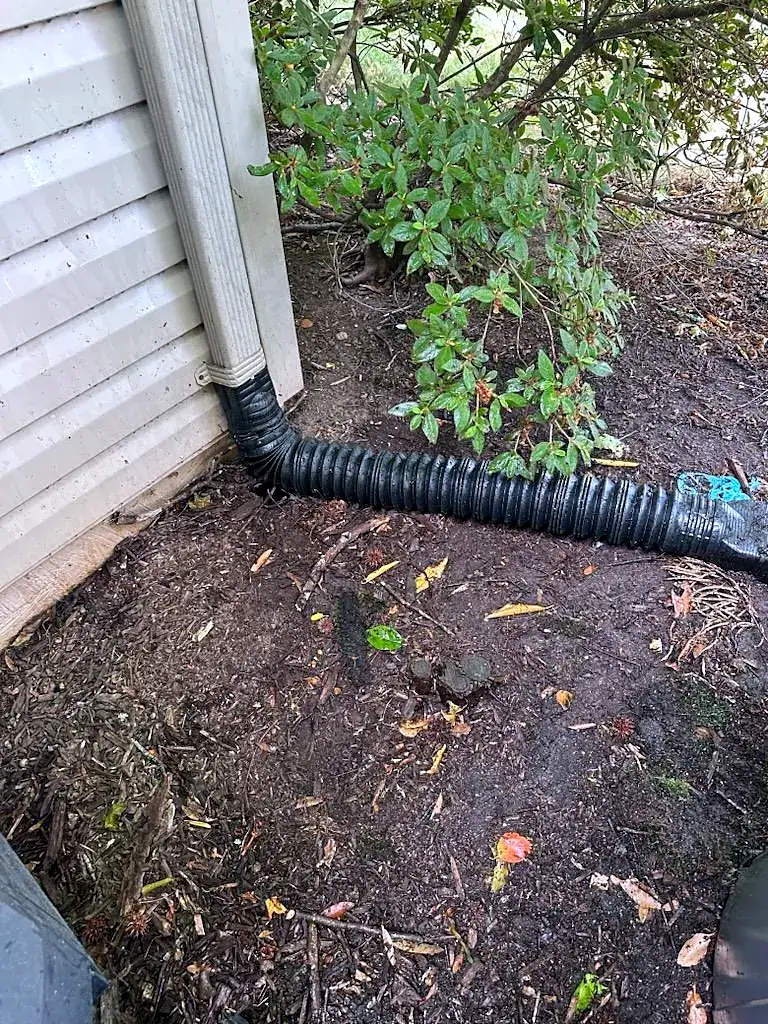
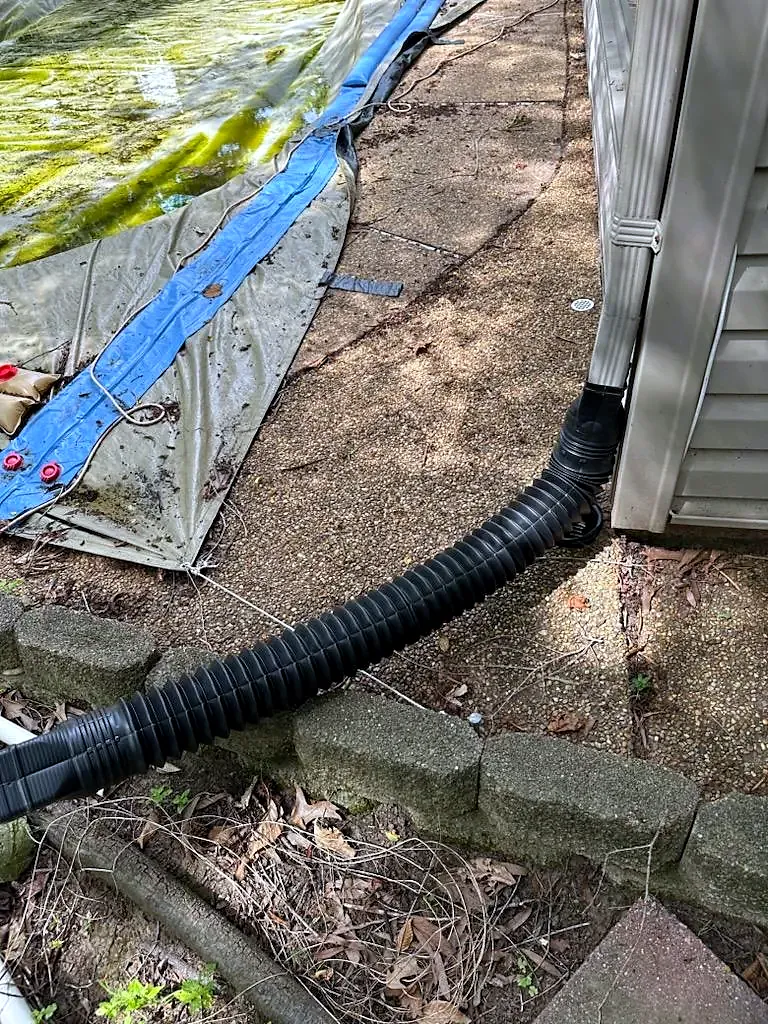
- Extend the discharge away from the house. We routinely extend downspouts six to ten feet from the foundation. A splash tray at the wall is not drainage; it just moves the impact point a foot.
- Take it underground where the run allows. Corrugated pipe buried and run eight to ten feet out, connected to the downspout, keeps the water out of the soil against the wall and out of the lawn.
- Give it somewhere to surface. A pop-up drain at the far end, fed by a proper fall, so the buried line is not a soakaway sitting against the house.
- Serve every elevation. An elevation with no downspout at all is not saving you anything — the water still lands, it just lands uncontrolled.
- Use a swale or a channel drain where the site demands it. Where the ground itself carries water toward the house, a swale set five to seven feet out with a proper drop, or a channel drain running across the frontage, moves it before it arrives.
- Manage water under a deck. Where a deck sits above living space or against a wall, an under-deck water management system collects and directs what falls through the boards.
Deck framing, ledger and post work is covered under deck, porch and railing repair, and a settled step, walkway or slab under a discharge point is concrete, walkway and step repair.
Why downspouts at the foundation cause cracks and wet basements
This is the most consequential thing on this page, so it is worth setting out plainly. Soil that is repeatedly saturated pushes. The pressure acts sideways against a basement or foundation wall, and walls that were adequate under dry soil begin to crack, bow and leak.
The code requirement is a minimum five per cent drop away from the house, and it is the first thing we measure on a water-intrusion call. We have found grading that did not meet it, landscaping that had raised a grade by roughly two feet so the ground sloped toward the house, and a neighboring retaining wall directing water back at a wall. In every case the downspouts were also discharging close to the foundation, and the two faults together did the damage.
The correction is a package rather than a single item: existing mulch, stone, weed barrier and downspout trays lifted out of the work area; above-ground cracks in the wall filled with mortar mix; a plastic moisture barrier installed against the house, typically a foot high and three to four feet out, sealed with clear silicone; soil removed and added so the grade falls at least five per cent away across seven or eight feet; the work area tamped; downspouts extended or taken underground; and window wells raised where they sit below grade.
Where a wall is already cracked, bowing or seeping, that is foundation, grading and crawl space repair — epoxy injection, mastic and sheeting, and in the worst cases steel column bracing tied to the basement joists. Correcting the gutter and the grade first is what stops it happening again.
Do gutter guards work?
They reduce how often a gutter needs clearing. They do not eliminate it, and we will not tell you otherwise.
- Fine debris still gets through. Shingle grit, seed and needle litter pass most guard designs and settle in the trough, where they gradually reduce the fall.
- A guard makes a blockage harder to see. An overflowing gutter with a guard on it looks fine from the ground until it does not.
- Guards fail mechanically. A loose or lifted guard admits more debris than no guard at all, and fixing it is a routine item on our repair lists.
- They do nothing for the downspout. The leader and its underground run still block, and that is where most of the genuine failures happen.
- They do nothing for slope. A guarded gutter that no longer falls toward its downspout still holds water against the fascia.
Guards are worth having on a house under heavy tree cover. They are not a reason to stop looking at the system.
Gutter repair or gutter replacement: how to decide
| Condition | Repair | Replace |
|---|---|---|
| Blocked but sound | Cleaning and a discharge check | No |
| Leaking at a seam or an end cap | Reseal the joint and check the fall | No |
| Pulling away from the fascia | Rehang on new brackets once the board behind is confirmed sound | Only if the run is also failing |
| No fall toward the downspout | Rehang the run to a proper fall | Where the run has deformed along its length |
| Fascia rotted behind the gutter | Gutter removed, fascia and metal wrap inspected and repaired, gutter rehung | Usually replaced at the same time, since it is already down |
| Corroded, deformed or undersized across the house | Not worth it | All gutters, downspouts and brackets removed and a new system installed |
On a full replacement the sequence matters. Everything comes off first — gutters, downspouts and brackets — and the fascia and metal wrap behind are inspected before a single new bracket goes up. Hanging new gutters on a rotted board is the commonest way this job gets done badly.
Where the roof is being replaced at the same time, ice guard membrane is installed against every gutter line, front and back, new drip edges are set and all flashings sealed. Doing both together is the cleanest way to get the roof edge right — see roof leak and roof repair.
Rotted fascia behind a gutter, and gutter-to-roof flashing
The board a gutter hangs on lives permanently in the splash zone, and it is the part of the assembly nobody inspects because a gutter is bolted over it.
What we find: fascia rotted behind the trough with no flashing at all between gutter and roof, so water entering at the back runs onto the board and into the soffit. Fascia rotted in three or four inch sections on a portico. Whole runs gone on a carport, along with the soffit, the vents and the gable trim, with the gutters disconnected and reconnected around the work.
The correction is a drip edge installed between the roofing and the new trim so water is directed away from the fascia rather than behind it, the rotted lengths cut out and replaced, and the joints sealed. Where the gutter meets brick, a clear sealant goes in that joint; where it meets a chimney, the flashing between gutter, chimney and shingles is sealed with a black polyurethane flashing sealant.
Rot in the fascia, soffit, band board or trim is handled as rotted wood and trim repair, and where the cladding has to come off to reach it, as siding repair and replacement.
What gutter repair and cleaning cost
We do not publish prices or give them over the phone. A gutter call can be a clearing, a rehang over a rotted fascia, or a drainage correction with regrading, buried pipe and a window well — and the homeowner describing it usually cannot tell which.
An estimator comes to the property, looks at the gutters, the fascia behind them, the discharge points and the grade, and gives you a written price before any work starts. Where the work extends into grading, drainage or foundation repair, permits and processing are written into the contract where the jurisdiction requires them, and the work is performed to the Virginia building code.