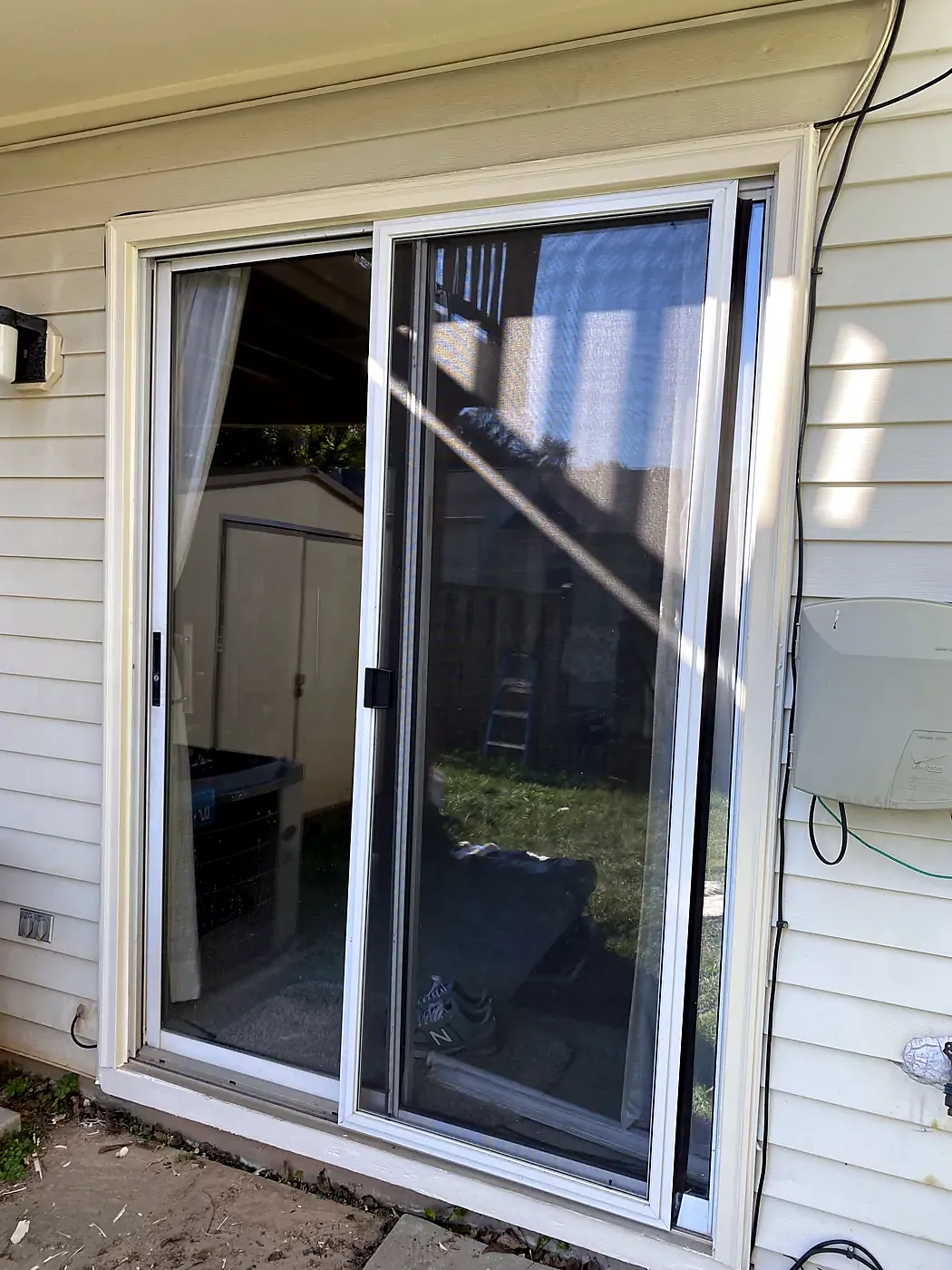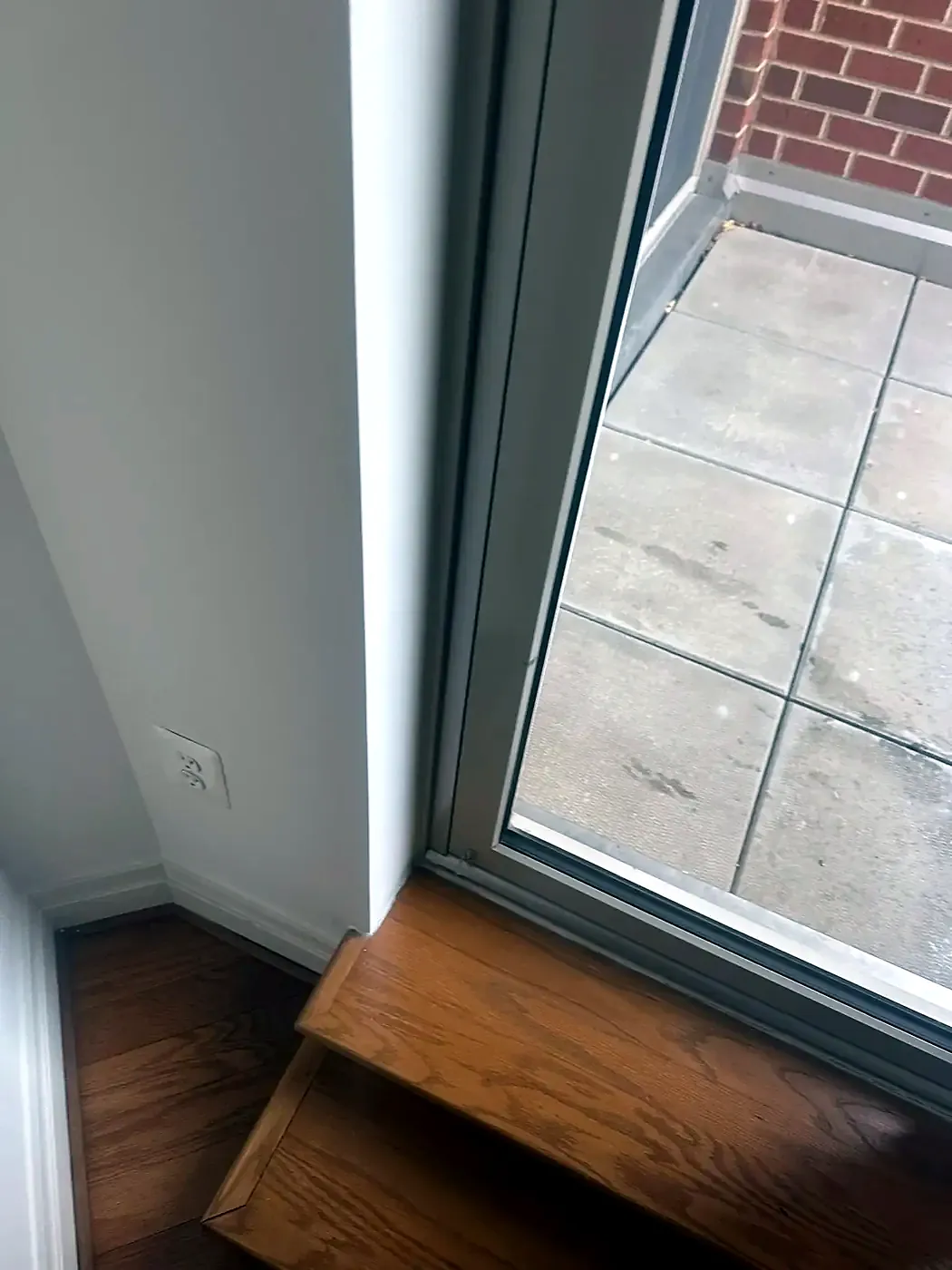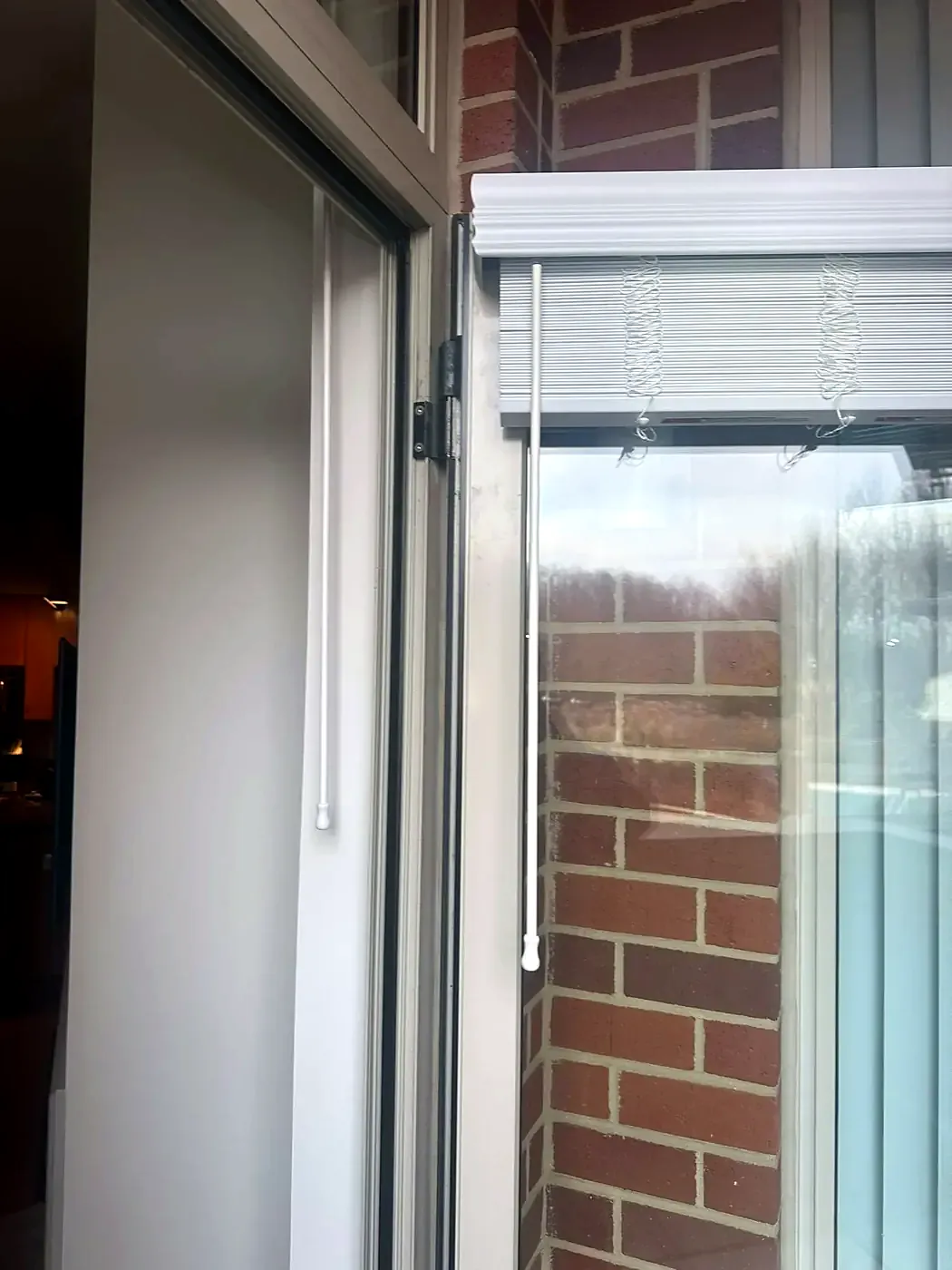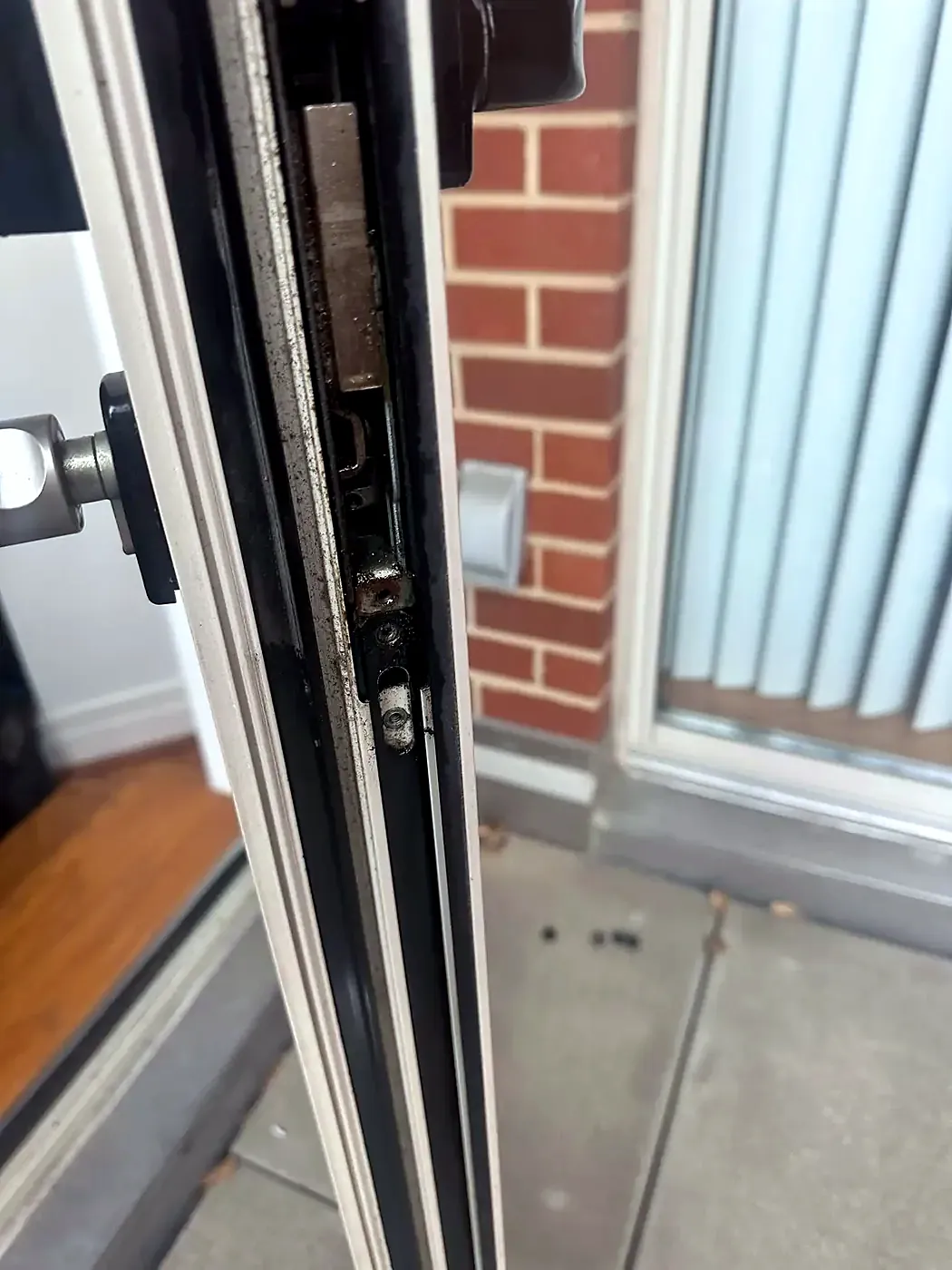
A sliding patio door that drags, needs two hands or jumps its track is almost always rollers, track wear or alignment — not the glass. Rollers flatten and seize, the track wears a groove, and the frame racks as the sill settles. All of that is repairable. Fogged sealed glass, a cracked frame, a rotted sill plate, or a leak that has already wet the framing usually means the unit is replaced instead. A technician can tell which one it is on site, in a single visit.
Why a sliding door is hard to open
These are the sliding and patio door calls we take, and what each symptom turns out to be once the panel is lifted out and the frame is checked:
- It takes two hands, or a shoulder
- Almost always the rollers. They flatten, the bearings seize, and the panel stops rolling and starts skidding along the track. A door that has been skidding for a season has usually grooved the track as well, which is the second half of the repair.
- The panel jumps the track or lifts at one end
- The roller adjustment has bottomed out, or the panel has been lifted over a bent section of track so often that the hangers no longer seat. On interior sliders the same symptom comes from a flattened floor track.
- A wedge-shaped gap at the lock stile
- The door is out of level with its frame. We have taken out units whose slabs sat out of level with uneven gaps all the way round the frame. On an exterior opening that is a sill and framing question, not a hardware one — which is why we inspect the wall frame and sill plate before anyone orders a part.
- Air moving past the door in winter
- Worn weatherstripping at the interlock and meeting stile, a flattened bottom sweep, or a racked frame. See door weatherstripping and draft sealing for that side of the work.
- Water on the floor inside after heavy rain
- The call worth making early. Sliding door leaks almost never start at the glass. They start at the threshold, the head flashing or the jamb, and by the time water shows on the floor the framing under the door is already wet.
- A screen that will not roll, or has torn
- Screen rollers and the screen track wear out well ahead of the door itself. A torn screen is a single line item that does not need the main door touched.
Sliding door rollers, tracks and alignment
A sliding patio door is a heavy panel of glass carried on four small wheels running in a thin metal track. Almost everything that goes wrong with the way it moves comes back to that. On a sticking door, this is what gets checked:
- The rollers and their adjustment. The adjusting screws sit behind plugs at the bottom of the stile. If the wheel no longer turns, adjustment only jams the panel harder into the track.
- The track — worn, bent, packed with grit, or grooved by a panel that has been skidding. A bad track defeats new rollers.
- Whether the panel is level, and whether the frame is square. A door out of level in a square frame is a hardware fix. A level door in a frame gone out of square is a framing fix.
- The interlock and meeting stile, where two panels seal against each other and where most of the air you feel gets through.
- The head track and anti-lift blocks. A panel that lifts out of its head track is an operating and a security problem at once.
- The lock, keeper and handle. Locksets and deadbolts are standard on our door work, and a misaligned keeper is often the only reason a door will not latch.
- The sill and framing under the track, inspected for water and insect damage.
Where the opening is a standard size we work from in-stock units and hardware. Where it is not, the unit is custom-ordered to the existing dimensions rather than the opening being cut about to suit a stock door. For a hinged entry door, door repair covers that side.
Water coming in around a sliding patio door
Of everything a sliding door does wrong, a leak is the one that gets expensive while you wait. The patio door leaks we have traced fall into two patterns, and neither is the glass.
The first is the head. Water appearing inside above a double sliding door was traced to missing flashing above the sliding door head trim — nothing to stop rain running behind the trim into the wall. The second is the sill: a leak at the threshold and flashing that had already damaged the ceiling drywall below as well as the floor under the door. So a leak call is not a caulking call. It runs like this:
- Protect floors, furniture and finishes, and set dust control for the interior work.
- Remove the door unit, interior casing and exterior brick molding so the opening is genuinely open.
- Inspect the wall frame, plywood sheathing and sill plate for water, insect and other damage, and show you what is there.
- Treat wet framing with mold control and seal it with stain-killer primer.
- Install new threshold flashing — and top-rail flashing at the head where that is the entry point — before the unit goes back in.
- Seal the jamb and framing with polyurethane caulk, which is what stops them decaying next time.
- Pack the framing gaps with fiberglass insulation or expanding foam, reinstate casing, brick molding and trim, then repair, prime and paint the drywall the leak damaged.
Threshold flashing goes in before the new unit, every time. Where a leak has already taken out ceiling or wall board, see drywall and ceiling repair; where it reached the trim or framing, the rotted material is cut back to sound wood first.
Foggy or cracked glass in a sliding patio door
Glass in a patio door is not ordinary glass. These units are supplied with tempered glass because of where they sit, and the panels are sealed insulated units rather than single sheets. That has two consequences.
- Fogging cannot be cleaned or resealed. Moisture between the panes means the sealed unit has failed. The unit or the whole panel is replaced; nothing is polished out.
- Cracked patio glass is replaced like for like. Units we fit come as full-lite clear glass, or with grilles between the panes where the existing door had them, so the replacement matches the rest of the elevation.
When only the glass has failed and the frame, track and sill are sound, replacing the panel is the sensible repair. When the frame is cracked, the sill is soft or the unit has been leaking, glass on its own is money spent on a door that is going to be replaced anyway.
Repair or replace a sliding patio door: how we decide
We would rather repair. A repair is faster, less disruptive and does not involve opening the wall. There are four conditions where repairing is the wrong answer, and we say so plainly:
- The sill plate or wall framing under the door is damaged. If the inspection finds wet or insect-damaged framing beneath the unit, no adjustment of the panel fixes what is underneath it.
- The unit has leaked long enough to reach the interior. Drywall damaged below a patio door means water has been traveling for a while, and the door comes out so the assembly can be inspected properly.
- The opening is out of square or the wrong size. We have reframed a failed, oversized sliding door opening back to a standard six-foot opening with pressure-treated sill pieces, because the old opening was never going to hold a door in alignment.
- Both the glass and the hardware have failed on an old unit. Two major failures on one door is usually where a new door becomes the better use of your money.
What a sliding patio door replacement involves
- Floor and furniture protection goes down first to keep dust off the house.
- The existing door unit, interior casing and exterior brick molding come out, and the old door is hauled away and disposed of.
- The wall frame and sill plate are inspected for water, insect and other damage, and you are advised of anything found before it is covered up.
- New threshold flashing is installed and sealed with polyurethane caulk to prevent future decay of the jamb and framing.
- The new unit is set — six-foot by seventy-eight inch, sixty by eighty inch and seventy-two by eighty inch are the sizes we fit most often from in-stock supply.
- Framing gaps are packed with fiberglass insulation or expanding foam so the opening is sealed against drafts.
- Interior casing is installed to match the existing trim, rot-resistant composite brick molding goes on outside, and everything is caulked, primed and painted to match.
Where an opening is altered, siding and trim are matched back — one reframed opening was finished with fiber-cement plank siding to match the house. Work is performed according to the Virginia building code, and permit and permit processing are included where a permit applies.
Converting a sliding door to a French door, or a window to a patio door
A fair share of our patio door work is not a like-for-like swap. Conversions run in both directions, and all of them are openings rather than doors:
- Sliding door to French or hinged patio door
- A common basement and rear-elevation change. The old unit, casing and brick molding come out, the frame and sill plate are inspected, new threshold flashing goes in, and a double unit — sixty by eighty and seventy-two by eighty inches are the sizes we fit most — takes its place.
- French door to sliding patio door
- The reverse swap, usually because a swing door was eating usable space on a deck or patio. Same removal, same inspection, same flashing, with a smooth composite or primed steel sliding unit going back in.
- Window to patio door
- The biggest of the three. On one job a picture window became a French patio door: the glass panel and frame came out, the ten-inch knee wall below it and the surrounding trim were removed, the framing was prepared and secured, threshold flashing went in caulked with polyurethane, and a seventy-two by eighty inch unit was set in the new opening.
Where a window opening has to come down to floor level for a full-height door, that reframing is part of the job. Door installation covers new units, and window repair and replacement covers the other side of the wall.
Interior sliding, closet and bifold door repair
Not every sliding door is a patio door, and interior ones fail differently:
- Sliding closet doors that stick or come off track — usually the floor track, the top guides, or a slab badly resized by someone else. Removing worn floor tracks and repairing the floor with molding is part of the fix.
- Louvered sliding doors out of adjustment, reinstalled and adjusted to run properly. A short visit, not a replacement.
- Bifold doors that keep jumping their track. Sometimes the door is not the problem: on one job the bifold opening was oversized, so bifolds there were always going to come off, and we recommended double-opening doors instead.
- Interior sliders between rooms, replaced as full units — a double seventy-two by eighty inch prehung full-lite unit with casing to match the trim.
Hardware that lives inside a wall is a different job again — see pocket and barn door repair.
What sliding and patio door repair costs, and how it is priced
We do not quote sliding door prices by phone and we do not publish them. Two doors that look identical from the inside can differ by a missing head flashing, a sill plate gone soft, an opening that is not a standard size, or drywall damage below that nobody has yet connected to the door.
An estimator comes out, looks at the actual door, opening and sill, and gives you a written price before anything begins. Sam and Sons Services has done this work in Northern Virginia since 1999, and handyman carpentry is provided in Washington DC too. We hold Virginia DPOR license 2705070610; the number is (703) 256-8080.