A sump pump that will not shut off, will not start, or sets off its alarm is usually one of four things: a pump wedged against the side of an undersized pit so the float cannot travel, a failed or missing check valve letting the discharge fall straight back into the pit, a discharge line that is blocked, cracked or was never carried outside at all, or an electrical supply that has burned out. A licensed technician can tell which it is on site, normally in one visit.
Common sump pump problems and what they mean
A sump pump only proves itself on the worst day of the year. These are the calls we take, and what each one usually turns out to be once the lid comes off:
- The pump runs and will not shut off
- The cause is usually mechanical rather than electrical. On one call the battery backup pump was simply too wide for the pit, so it sat pressed against the side walls and the float could not drop. The other cause is a missing or failed check valve: every time the pump stops, the water standing in the discharge pipe falls back into the pit and starts it again.
- The pump does nothing at all
- Power, more often than the motor. We have pulled lids and found the pump’s dedicated outlet with no GFCI protection and visibly burnt up, and pumps that had failed as a result of repeated power outages and power surges rather than from wear.
- The alarm sounds and will not stop
- Treat it as a pump fault until someone proves otherwise. On one diagnostic the alarm sounded non-stop because the pump had broken and no check valve had ever been installed on the discharge. On two other calls the pump reset successfully and the real finding was that it had no dedicated outlet.
- The pump runs but the water level does not drop
- The discharge is restricted: corroded, corrugated black pipe needing to be cut back and cleaned out, a check valve stuck shut, or a crack in the line putting water straight back where it came from.
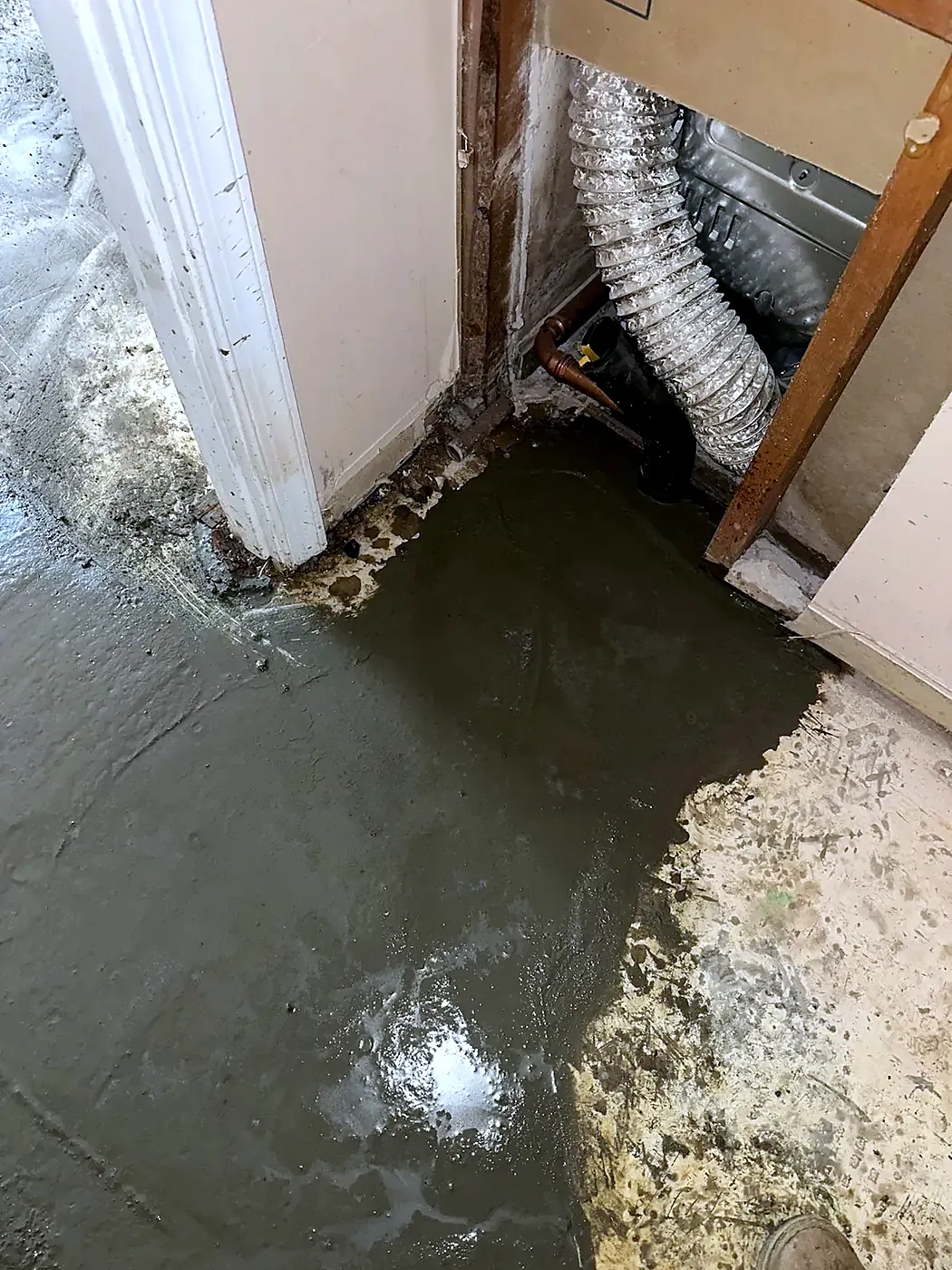
- The pit overflowed and the floor is damaged
- We have replaced pumps after a pit flooded and damaged hallway hardwood, and after a failure caused water damage in a partially finished crawl space. By then the pump, the discharge piping and the check valve are usually replaced together.
- Water in the basement while the pump is working normally
- Then the pump is not the fault. On one leak search nothing surfaced on the supply side; only when the drains were run did water bubble up between the sump pit and the sink area, pointing to a broken waste line beneath the concrete slab. On another call water was backing over into the pit from the air conditioning condensate trap because the main line was blocked.
Why a sump pump runs constantly
A pump that short-cycles is wearing itself out. Three things get checked before anyone talks about a new pump:
- Does the pump physically fit the pit? A pump too wide for the basin is held against the wall and the float never completes its travel. That is a fitment problem, not a motor problem, and a like-for-like replacement does not solve it.
- Is there a working check valve above the pump? Without one, the pump lifts the same water repeatedly. Every cycle is wasted work.
- Is the pit being fed water it should never have seen? Downspouts discharging against the foundation, ground falling toward the house, and window wells sitting too low all put surface water into a pit meant for groundwater.
The third is the one most contractors will not raise, because it is not a plumbing sale. We correct drainage outside so the pump inside has less to do — see gutter repair and downspouts and foundation, grading and crawl space repair.
Does a sump pump need a check valve?
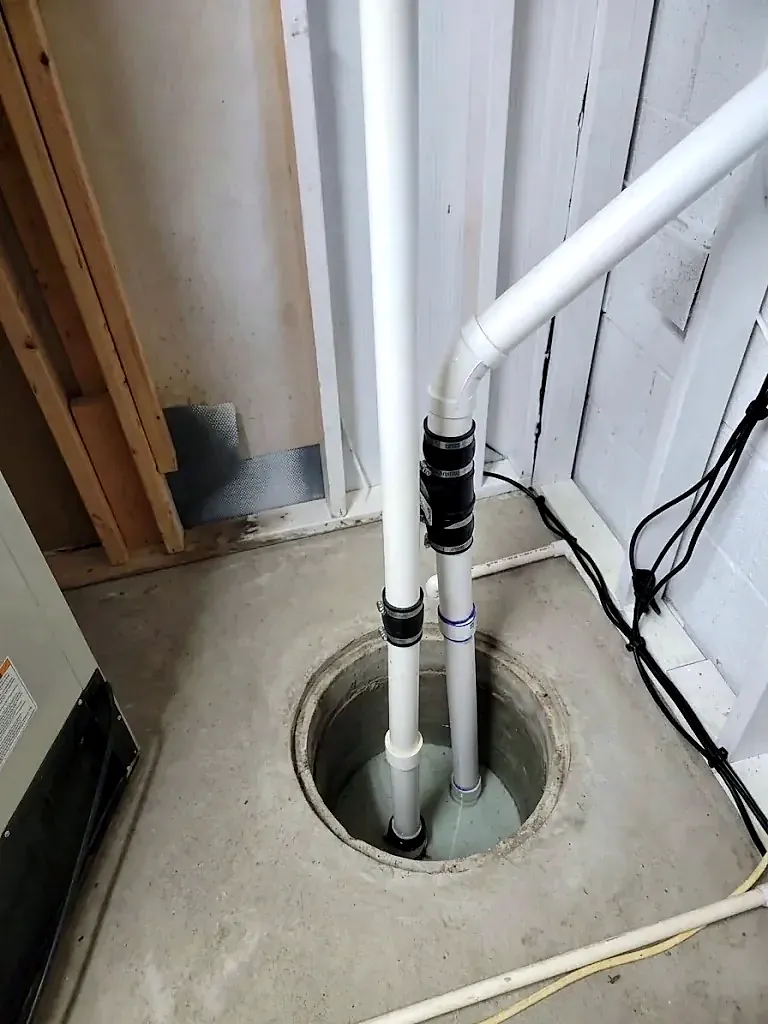
Yes, and it is the part we replace most often on this kind of call. It sits in the discharge line above the pump and stops the water just lifted from running back down when the pump shuts off.
- A pump with a built-in check valve is not automatically covered. On one replacement the correct configuration was a separate primary check valve in the discharge line in addition to the one built into the pump.
- A check valve can be positioned wrongly. On a job where the discharge line had cracked, the valve had to be reset above the crack so it was not holding water against a failure point.
- Some systems never had one. More than one pump we have been called to had no check valve on the discharge line at any point in its life.
Check valves, male adapters and new PVC discharge pipe are standard parts of a sump pump replacement here, not add-ons discovered halfway through.
Where a sump pump discharge line has to go
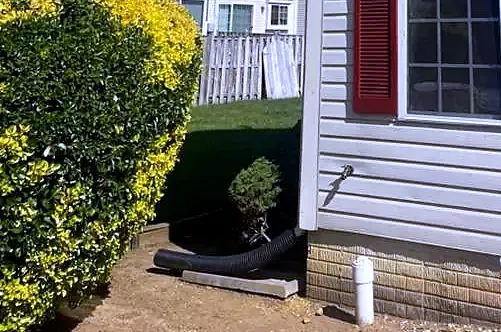
Outside the building and far enough from the foundation that the water does not simply find its way back to the pit. That sounds obvious. It is not always what is there.
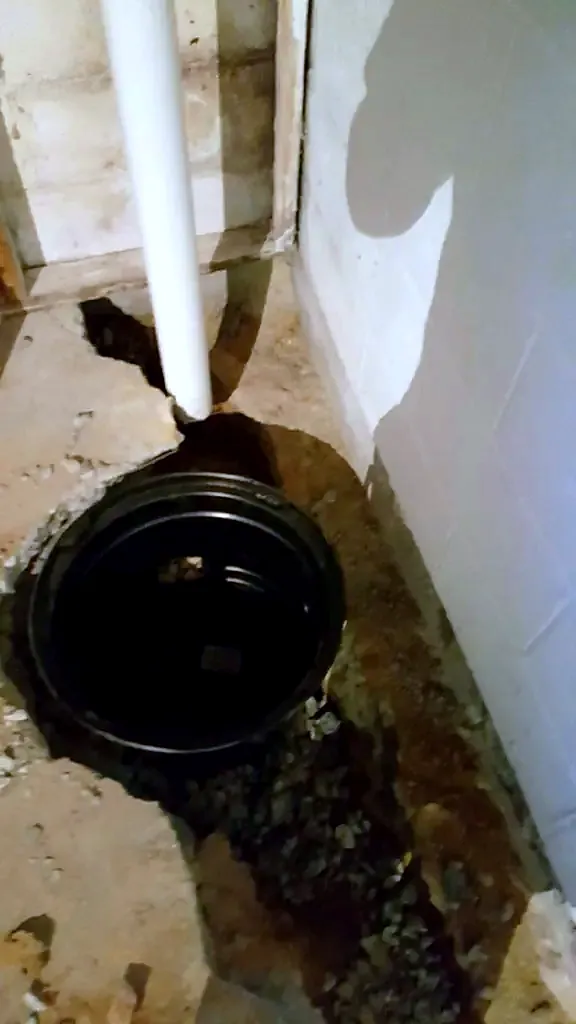
On one call for water in a basement, the technician found the existing pump installed improperly and not to code: it was not connected to a discharge line at all and was not discharging outside the home. The correction was a new pump, a check valve and a clean-out, a new section of 2-inch PVC discharge, a sleeve cut through the foundation wall, and the drain line carried outside.
Discharge work here is normally 1-1/2 inch or 2-inch PVC with a male adapter at the pump, a clean-out where the line can be accessed, and corroded or corrugated sections cut out rather than patched. Where a water heater pan drain has been routed into the sump pit — a common arrangement — that line gets checked too. See water heater installation and replacement.
Why a sump pump needs its own dedicated outlet
A pump sharing a circuit with whatever else lives in the utility room will be off exactly when you need it. Two findings come up repeatedly in our records:
- Burnt outlets with no GFCI protection. On separate calls the pump’s dedicated outlet was found with no GFCI and appeared burnt up; replacing the outlet was recommended and done as part of the pump work.
- Failures traced to the supply, not the pump. One pump failed as a direct result of multiple power outages and repeated power surges. Another job began as a sump pump and outlet installation and turned into replacing the wire running back to the panel box and the breaker serving it — which meant opening fifteen to twenty feet of drywall, then patching and painting it.
Where a dedicated circuit is the answer we run one: 12/2 wire on a 20 amp circuit from the main panel to the utility room, roughly thirty-five to forty-five feet, with a new 20 amp single pole breaker. That is licensed electrical work, performed to code — see outlets, GFCIs and switches.
Do you need a battery backup sump pump?
If the basement is finished, the honest answer is usually yes. The storms that put the most water into the ground here are the same ones that take the power out.
A battery backup sump pump is a second pump in the same pit with its own sealed gel battery, so it runs when the primary has no power or has failed outright. We fit them with a no-maintenance gel battery and, where you want to know before the water does, an alarm notification system — usually a special order, so it is worth deciding at the estimate rather than after.
Two cautions from the record. The backup pump has to be sized to the pit — we have replaced one that ran constantly purely because it was too wide for the basin it was dropped into. And a backup system may need its own dedicated circuit: on one job the sump pump backup battery and an air system each got a dedicated 12/2 run on a 20 amp circuit.
What a sump pump installation includes
- Pull the lid and inspect what is in the pit. The pump, the float travel, the fit of the pump in the basin, the discharge connection and the pit itself.
- Clean and seal the pit. Pits get cleaned out and vacuumed, then sealed and fitted with a proper cover — a 13-inch lid on one replacement — because an open or cut-away lid is an odor problem as well as a debris problem.
- Set the pump correctly, elevating it where the basin calls for it rather than letting it sit in silt.
- Fit a check valve — a primary check valve in the discharge line, in addition to any valve built into the pump.
- Renew the discharge. New PVC where the pipe is corroded or corrugated, a male adapter, a clean-out, and the line sleeved through the foundation wall and carried outside.
- Deal with the electrical supply. A dedicated, GFCI-protected outlet, and a new circuit back to the panel where the existing one is not fit for the job.
- Add battery backup and an alarm where wanted, with a sealed gel battery sized to the pit.
- Pull the permit, work to the Virginia building code, and close out on inspection.
If water is coming in now rather than next season, call and say so — see emergency plumber for how after-hours calls run.
Do you need a permit to replace a sump pump in Virginia?
On the sump pump replacements in our job files, a permit was pulled. That is our standing practice on this work: the permit is pulled and processed by us, the work is performed to the Virginia building code, and the job is not closed out until it has passed final inspection.
On permitted work we hold back the final portion of payment until that inspection passes, and permit and processing fees are written into the contract before anything starts. Where the job also touches the electrical supply — an outlet, a circuit, a breaker — that work is held to the same standard.
Why the basement still gets water with a working sump pump
A sump pump moves water that has already reached the pit, and nothing about water arriving somewhere else. When the pump is healthy and the basement is still wet, these are the conditions we find:
- Grade falling toward the house. The correction is to remove and add soil so the work area drains away from the foundation with a minimum 5 percent drop, which is what we specify and build to.
- Downspouts discharging at the wall. Extensions carried six to twelve feet out, or in one case the downspout discharge tied into a buried pit with a drain line run to the far end of the yard.
- Window wells set too low, which become catch basins in heavy rain. Wells get extended or rebuilt higher.
- Open cracks through the foundation wall. Above-grade cracks filled with mortar mix; below grade, the crack chiseled into a V groove and filled with concrete epoxy, then plastic barrier sheeting sealed against the house with clear silicone and the ground backfilled, tamped and regraded.
- A structural problem the pump was hiding. On one job a structural engineer specified steel column bracing of a bowing front foundation wall together with an interior drain tile and sump system — the pump was part of an engineered repair, not the repair itself.
- A drain fault rather than groundwater. Waste lines under the slab and blocked main lines both put water on a basement floor. See drain cleaning when the water appears only after fixtures run.
What sump pump repair costs, and how we price it
We do not quote sump pump work by phone or publish numbers online. Two pits that look the same from the top can differ by basin diameter, whether a discharge line exists at all, whether the foundation wall has to be sleeved, and the state of the outlet and circuit behind it. A figure given without seeing the pit is either padded or it is going to change.
An estimator comes out, opens the pit, looks at the discharge and the circuit, and gives you a written price before anything begins.