An outdoor faucet that drips at the stem, weeps from the backflow device on top, or will not shut off has usually reached the end of its service life and gets replaced rather than rebuilt. The replacement includes a vacuum breaker for backflow protection and, wherever possible, a dedicated quarter-turn shut-off valve with a bleeder inside the house so the line can be drained before winter. Reaching that feed valve often means opening a wall or ceiling, which is what shapes the job.
Why an outdoor faucet drips at the stem or the handle
Hose bibs live outside, get used hard for half the year and then sit through a freeze. They fail in a short list of ways, and the difference between them decides whether anything can be rebuilt.
- Dripping from the stem behind the handle
- The packing or stem washer has gone. On a bib in good condition this is sometimes repairable — on one call the technician succeeded in taking the top off a bib and changing the washer. On a bib over thirty years old, we said in advance that removal was being attempted with no guarantee, because the parts may simply not come apart.
- Dripping from the spout with the handle closed
- The seat washer is worn, or the seat itself is pitted.
- Weeping from the device on top of the bib
- That is the vacuum breaker, not the valve. One homeowner reported a bib leaking from what looked like an overflow; tightening it would not stop it and the assembly had to be replaced.
- Pouring water and will not shut off
- Treated as urgent. On one property the front bib would not shut off at all while the back bib had a hose seized onto it.
- The bib is sinking into the wall, or the stub is broken
- The copper behind it has failed or been damaged. One broken stub turned out to have been damaged the previous year by a pressure washing contractor.
- Water in the yard with nothing running
- That moves the investigation underground. We shut the house water off and document the meter reading to establish whether there is an underground leak before anyone digs. See water service line replacement.
Frozen and burst hose bibs, and what actually splits
The bib itself is rarely what bursts. What bursts is the copper behind it, inside the wall or the ceiling below, where the damage is not visible until it thaws.
- A hose left connected over winter is the single most common cause. The hose holds water against the valve, the water cannot drain back, and it freezes in the bib and the pipe behind it. We have been called out to do nothing more than disconnect a hose that had been left on through a winter — and to a bib found already frozen during an unrelated visit.
- Uninsulated feed lines are the second cause. On more than one job the exposed half-inch line running out to the bib was found uninsulated and at obvious freeze risk, and insulating it was part of the repair.
- When copper does split, the water goes where you cannot see it. One burst line flooded a lower level and damaged drywall, insulation, wall and floor before anyone knew, and the wall had to be opened four to five feet to reach the failed section.
- Frozen lines also run through unheated spaces. We have opened a garage wall to locate frozen copper, repaired it, and insulated before closing back up.
If a line has already burst, that is burst and frozen pipe repair, and out of hours it is an emergency plumber call.
Freeze-proof and frost-resistant hose bibs: which one you have
Spigot, sillcock, hose bib, outside tap: four names for the same fitting, and the one on your house is one of two designs. There are two kinds of outdoor faucet on houses here, and they behave completely differently in a cold snap.
| Type | How it works | What that means for you |
|---|---|---|
| Standard hose bib | The valve seat sits right at the wall, so water stands in the valve itself | Vulnerable in any hard freeze. Must be isolated and drained from inside before winter. |
| Freeze-proof / frost-resistant bib | A long stem carries the seat back inside the heated wall cavity, and the body drains outward when it is closed | Far more forgiving — but only if the bib is pitched correctly and no hose is attached. A hose defeats it completely. |
| Quarter-turn bib | A ball valve rather than a stem and washer | What we fit on replacements. Opens and closes cleanly and has less to wear out. |
| Any bib with no isolation valve indoors | Fed directly off a branch with no way to shut or drain it | The worst arrangement, and common. Correcting it is usually part of the job. |
A freeze-proof bib is a second line of defense, not a substitute for a shut-off and bleeder inside.
Vacuum breakers and backflow protection on an outdoor faucet
An outdoor faucet is the one fixture where water can be pulled backwards into the drinking supply. A hose sitting in a pool, a bucket of detergent or a fertiliser sprayer becomes a cross-connection the moment street pressure drops. The device that stops it is a vacuum breaker, fitted on every exterior bib we install.
- We fit a vacuum breaker on the front and the rear bib whenever both are being worked on, not just the one you called about.
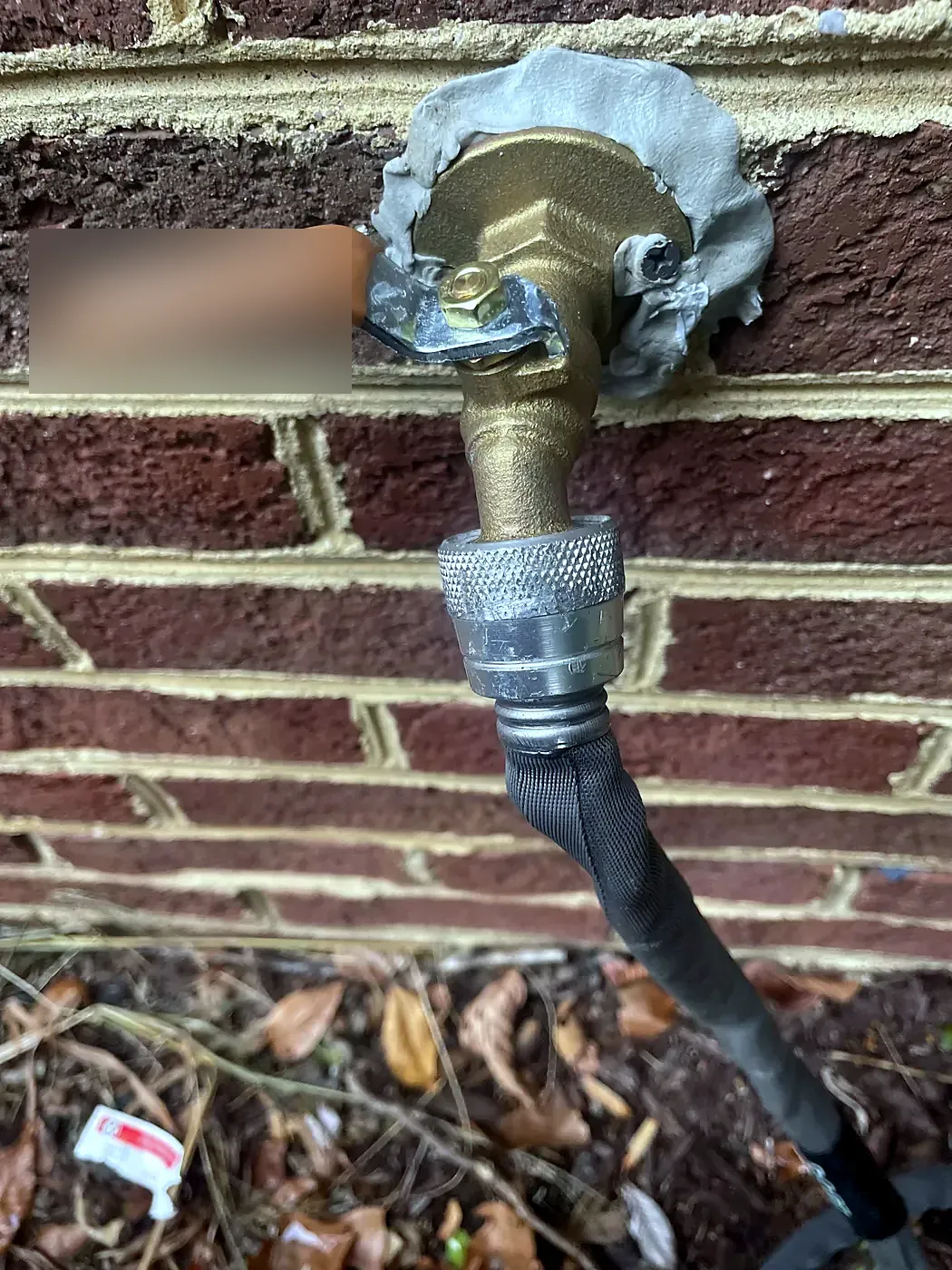
- They fail and they get broken off. On one job the vacuum breaker had been snapped off by a previous installer, and the bib beneath it was leaking from the stem as well.
- A weeping vacuum breaker is often mistaken for a failing faucet. It is a separate assembly, replaceable on its own.
- Backflow devices are a code item, not an accessory. On one job the permit pulled was specifically for the hose bib and its backflow device.
Why outdoor faucet replacement usually means opening a wall or ceiling
This is the part homeowners are not expecting, so we explain it before we start rather than after. A hose bib is soldered or threaded onto copper that runs back into the house. To replace the bib properly — and to fit or replace the valve that feeds it — that copper has to be reachable.
- From a basement or crawl ceiling. The usual route. We have opened a hole in a basement ceiling corner to reach a bib line, and another in a ceiling to get at the copper running out to a yard bib, where the tee and adjacent piping were also leaking and had to be replaced.
- Through the wall behind the bib. Where the line runs horizontally in the wall, the sheetrock has to be opened. One rear bib could only be reached that way; another front bib could only be reached by opening the drywall behind it.
- Through a cabinet. One side bib was fed off the line under the kitchen sink, which meant dropping the P-trap — itself due for replacement — to reach the copper behind.
- Around obstructions. One shut-off valve was buried in spray foam and simply inaccessible; on another call a hole was still open in a basement ceiling from a previous contractor's attempt at the same repair a year earlier.
Failed CPVC is a recurring finding at these transitions. Where a bib fed in CPVC has failed at the joint, we transition the feed back to copper with the correct fitting, and insulate the pipe before anything is closed up.
The shut-off valve feeding the hose bib matters as much as the bib
More of our outdoor faucet calls end up at the feed valve than at the bib itself, and this is the detail that separates a proper replacement from a swap.
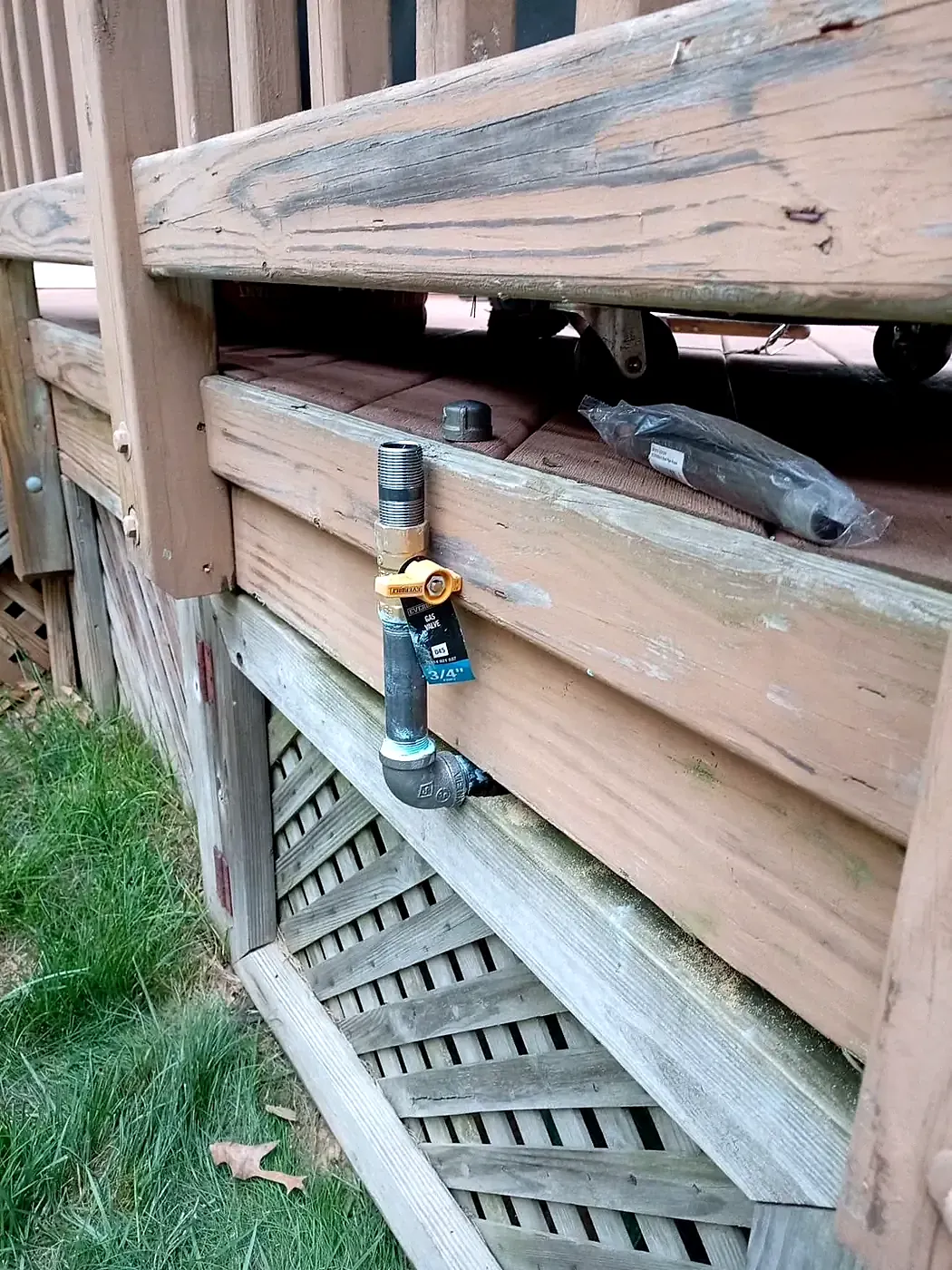
- Old multi-turn valves fail closed and fail open. We replace them with quarter-turn valves fitted with a bleeder, so the outside line can be shut and drained from inside before winter.
- They are often the wrong size. On one job the customer had a leaking three-quarter-inch shut-off where the branch only served the hose bib. The line was cut, reduced to half-inch, and a correctly sized ball valve with a bleeder fitted.
- They are often missing entirely. Where no isolation exists, we add one — tapping in at a sensible point, sometimes teeing in near the water heater, with a bleeder so the run can be drained.
- They fail alongside everything else. One call about a dripping outside valve found the interior isolation valve slowly pushing water past, and another found the main shut-off aged and due for replacement at the same time.
- Crowded piping complicates it. On one bib the feed valve sat so close to the main trunk valve and a second valve off the water heater that replacing it meant new copper on both sizes and three valves rather than one — and the homeowner was told plainly that a repair attempt on the existing valve carried no guarantee, because the stem would still weep and the nut might be seized anyway.
Copper work also disturbs the electrical bonding. Metal water piping is part of the grounding path in a lot of these houses, so the piping is re-bonded across any cut. See water pressure, PRVs and shut-off valves.
How to winterize an outdoor faucet before the first hard freeze
Northern Virginia gets enough hard nights each winter to split a bib, and almost every one we are called to was avoidable. This is the order to do it in.
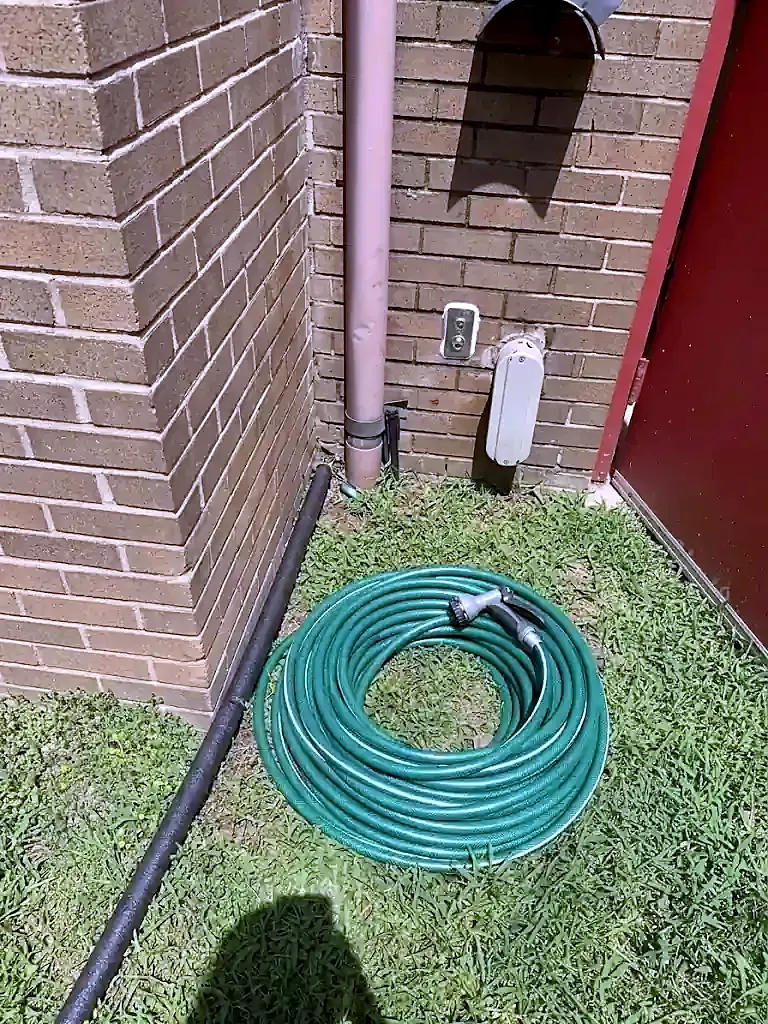
- Take the hose off. Every hose, every bib, before the first freeze. If one has seized on, do not force it — a stuck hose and fitting have destroyed the seals on bibs we then had to replace.
- Close the indoor shut-off valve serving that bib, if you have one.
- Open the bib outside and leave it open so the line drains.
- Open the bleeder on the indoor valve to let the rest of the water out of the run, then close it.
- Insulate anything exposed. An uninsulated line in a basement ceiling, a garage wall or a crawl space is the piece that splits, not the brass outside.
- Close the bib in spring before reopening the indoor valve.
Where there is no indoor valve, that is the first thing to correct — and it is the reason we will not install an exposed exterior line we cannot isolate. Asked to add a hose connection on a rooftop terrace, we advised against running exposed pipe out there because freezing could not be guaranteed against, and instead fed it from inside with a quarter-turn shut-off and a bleeder for winterizing, insulated the pipe and anchored it properly.
Do you need a permit to replace an outdoor faucet in Virginia?
Yes, in the normal case. An outdoor faucet replacement involves cutting into the water supply piping and installing a backflow prevention device, and that is permitted work in the jurisdictions we serve. We pull and process the permit ourselves — on one job the permit covered the outside faucet and the pressure reducing valve together, on another it was pulled specifically for the hose bib and its backflow device.
The work is performed to the Virginia building code and closed out with a county inspection after completion. Permit and processing fees are written into the contract, and on permitted work a portion of the payment is held back until the inspection passes. Sam & Sons Services has worked across Northern Virginia since 1999 under Virginia DPOR license number 2705070610. For the wider family of fixture work, see faucet repair and replacement.
What outdoor faucet and hose bib replacement costs
There is no phone price, and the reason is visible in every job above. One bib unthreads and a new quarter-turn unit with a vacuum breaker goes on. The next needs a ceiling opened, a leaking tee replaced, a failed CPVC transition converted back to copper, an isolation valve added where none existed, and the piping insulated and re-bonded.
An estimator comes to the property, traces the line, and gives you a written price for the work in front of him before anything starts. Where the visit turns up a leak somewhere else on the supply, that is pipe repair and leak detection and it is priced the same way — in writing, in person, in advance.