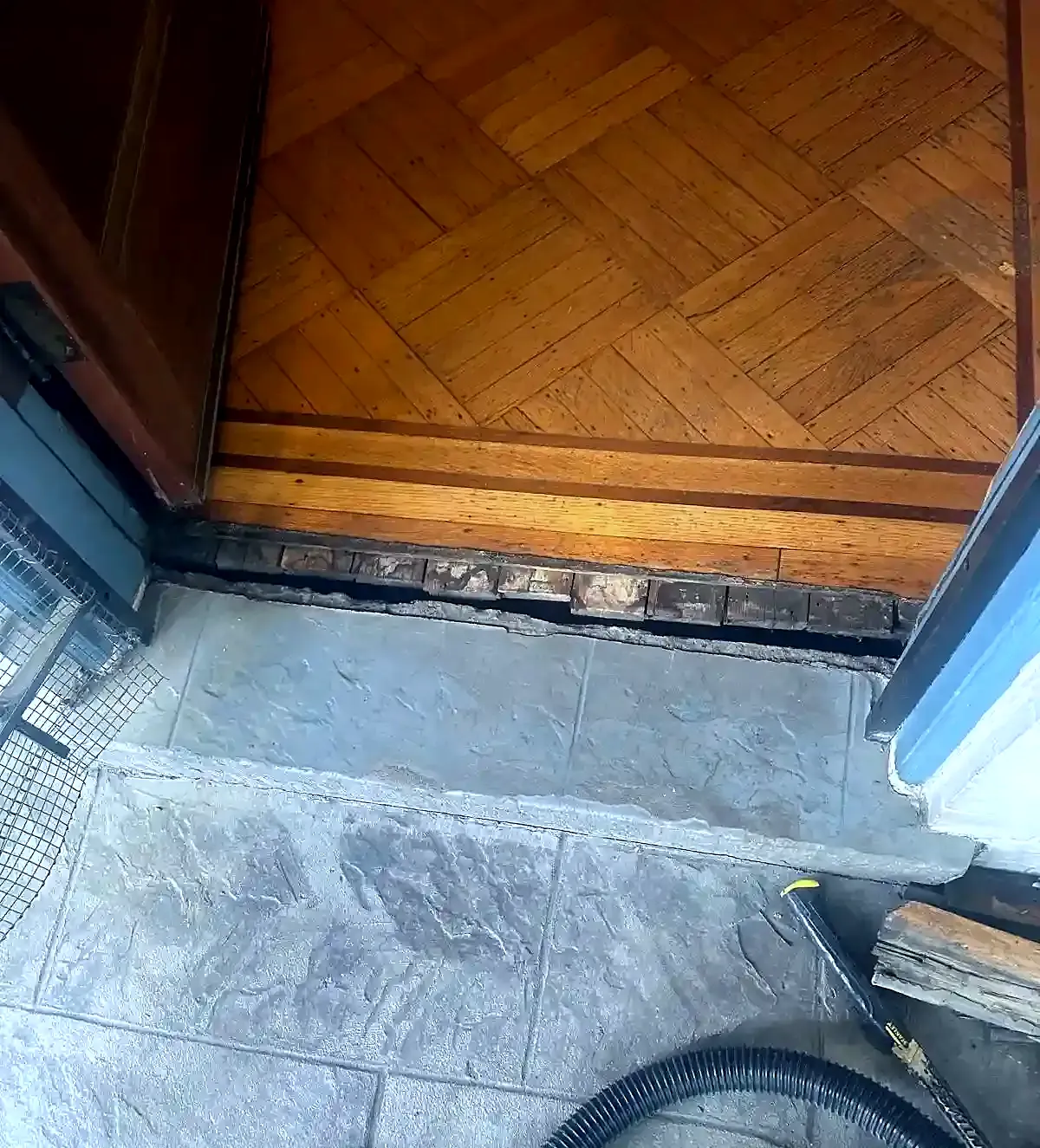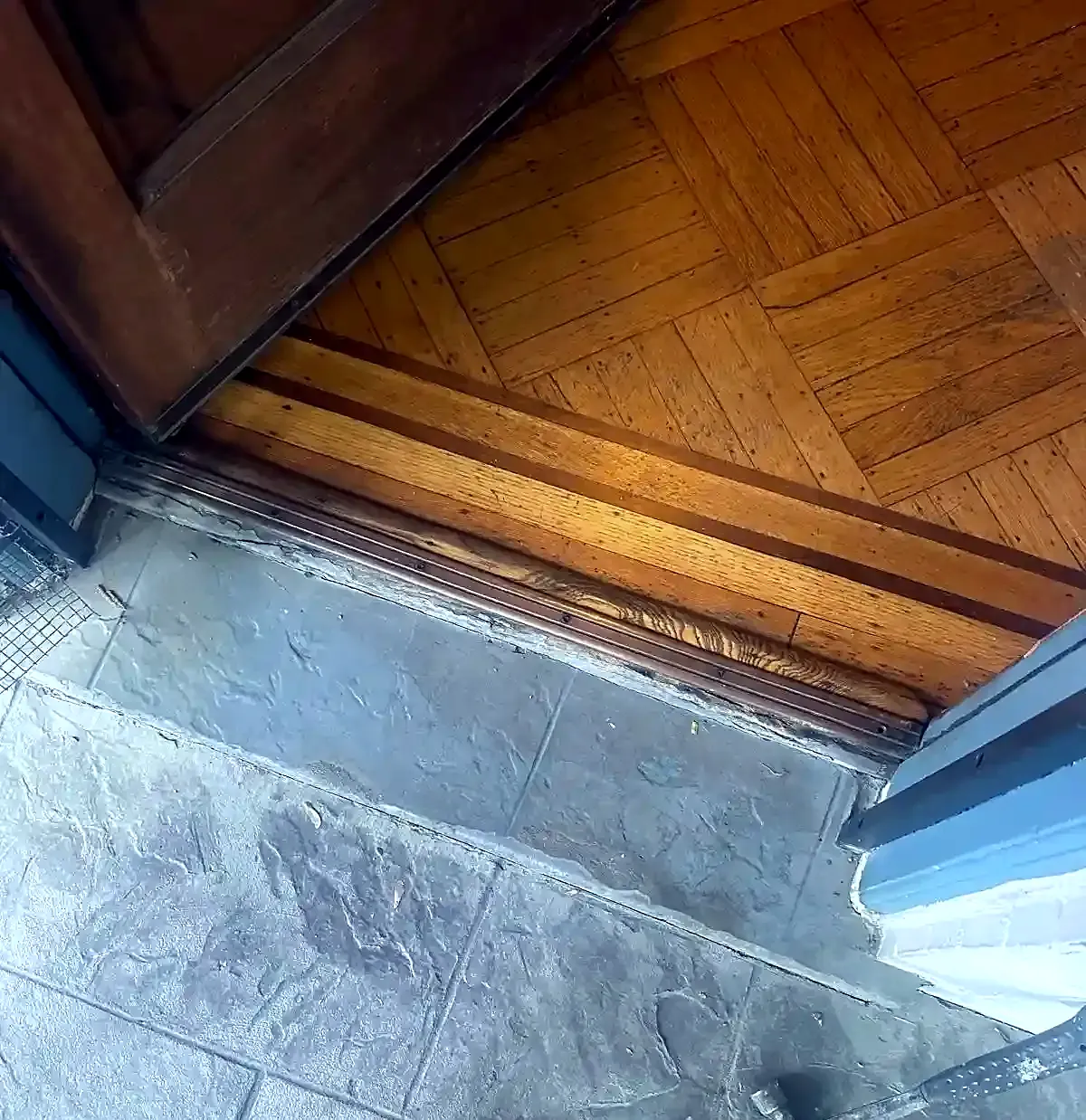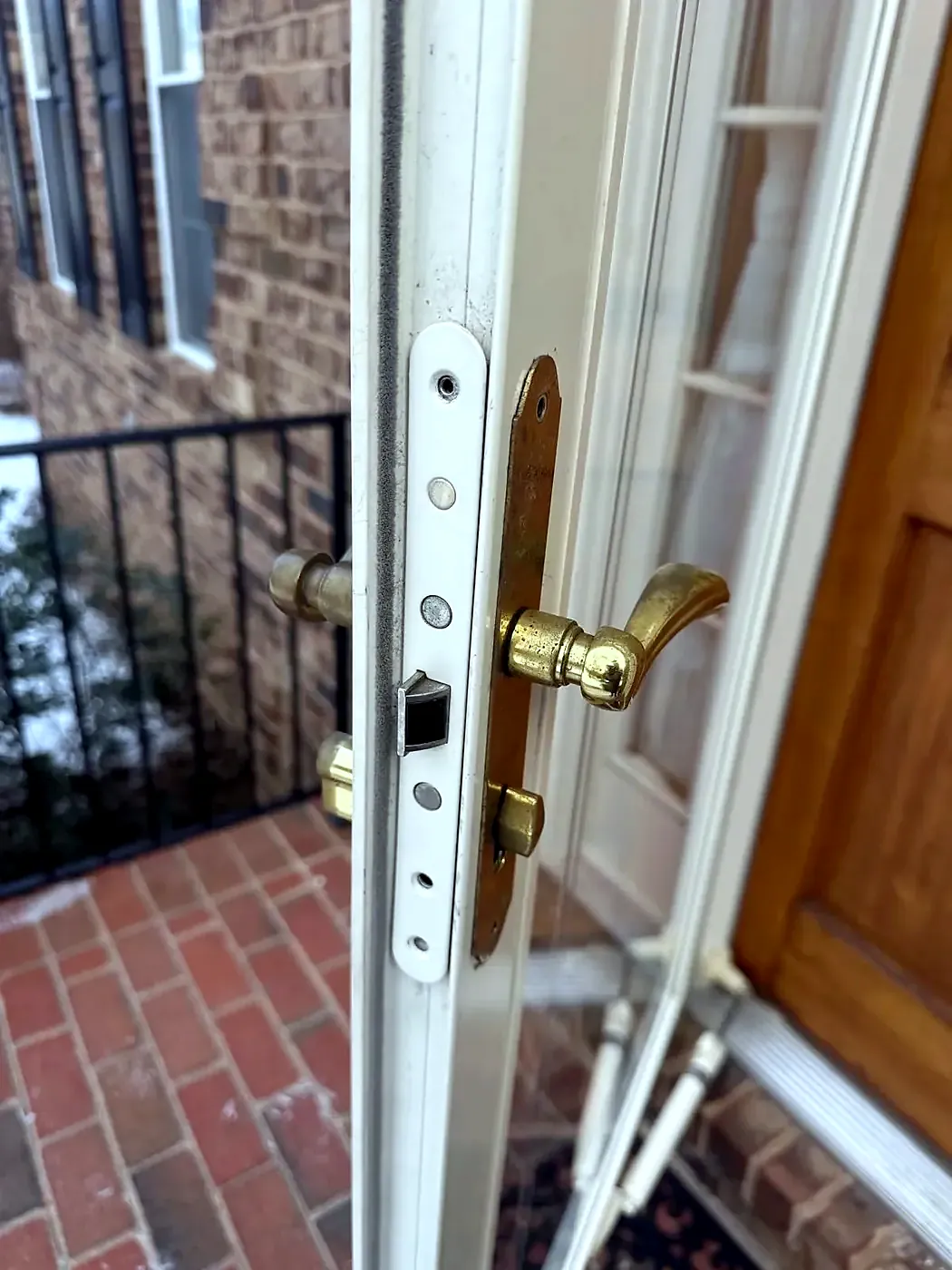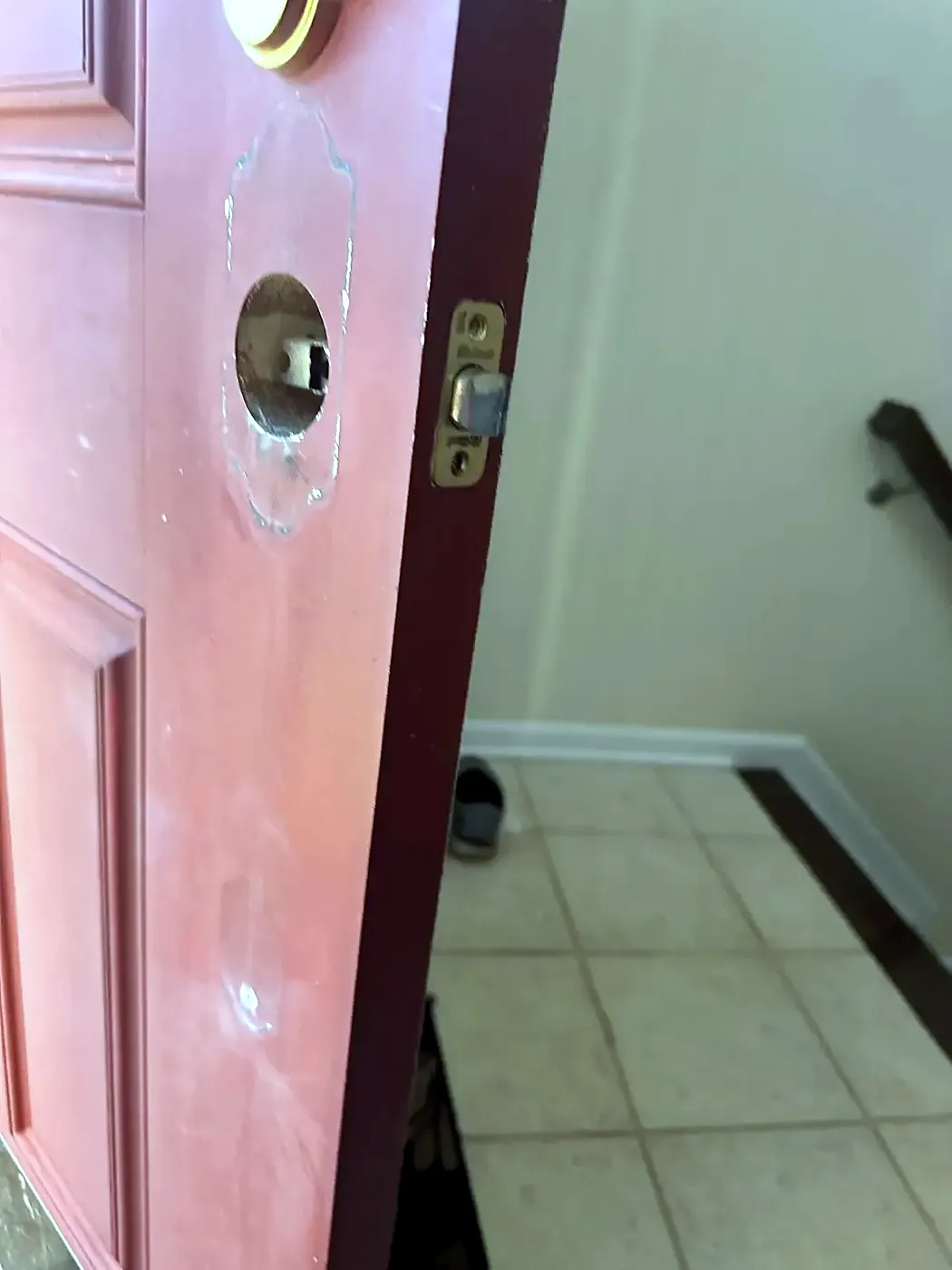
A door that sticks, drags or will not latch is almost always a geometry problem rather than a door problem. The hinges, the lockset or the frame itself has moved, so the slab no longer sits square in the opening. Most of these doors are repairable: hinges and locksets get pulled and reset into the frame for an even reveal and a level slab, worn weatherstripping under the door is replaced, and the frame is re-secured to the framing behind it. Rot in a jamb can often be cut out and spliced rather than replaced.
Why a door won't latch or close properly
A door that will not latch is telling you the latch bolt and strike plate have stopped lining up. Something moved. The job on a door repair call is working out what moved and why, because shifting a strike plate on a door failing for another reason buys a few weeks at most.
- The hinges have loosened at the jamb
- Hinge screws work their way out of soft jamb stock and the door drops on the latch side. On our repair calls this is the most common finding behind a door that catches on the strike or scrapes the floor. Hinges and lockset are removed and reinstalled, secured back into the frame so the reveal is even and the door sits level again.
- The frame itself has worked loose
- Frames come loose from the rough opening, particularly on exterior doors that take wind and slamming. We have written scopes where the frame had to be secured and adjusted before the door would close at all. No hinge work fixes a frame that is not fastened tight to the framing behind it.
- The slab is out of level in the opening
- On a property where several exterior doors were failing at once, we found door slabs sitting out of level with visibly uneven gaps around the frames. A reveal tight at the top on one side and open at the bottom on the other is a door that has racked.
- The lockset or latch hardware has failed
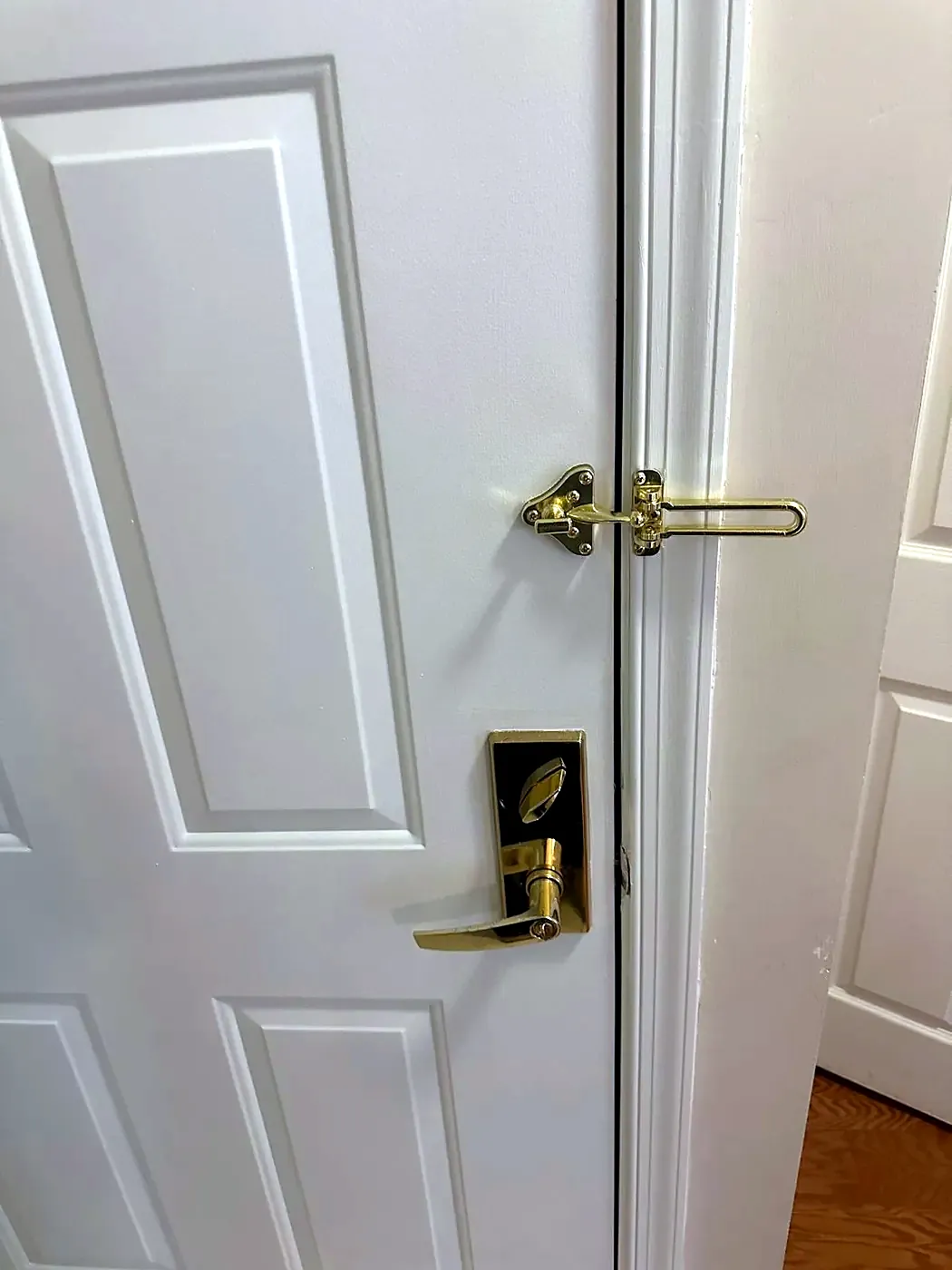
- Loose handles, a latch that no longer throws fully, a broken knob ball on a closet door, dead batteries in an electronic entry lock. Hardware is the cheapest part of a door and the first thing blamed, so it gets tested rather than assumed.
- The weatherstripping under the slab is worn
- A door that closes but drafts or shows daylight at the bottom usually needs the sweep and the weather stripping under the slab replaced, not the door — see door weatherstripping and draft sealing.
Door sticking, rubbing or dragging — what causes it
Binding doors come to us in every configuration — entry doors, laundry room doors, closet sliders, louvered doors and bifolds. The causes repeat:
- Hinges and lockset out of alignment with the frame. On a rear laundry room door that would not close and would not seal, that is exactly what we found, along with worn weather stripping underneath. Both were corrected in the same visit.
- A frame that needs securing. Where a door closes hard against one side of the stop, the frame is usually the moving part. It gets fastened and adjusted, then the door re-hung to it.
- Settlement under the opening. We have replaced entry doors where the floor below the door was out of level, and leveling it was written into the scope before the new unit went in. A door hung on a sloping floor never stops binding. Homeowners never expect this one.
- Trim and casing fouling the slab. We have replaced door trim and casing on the interior side of a main entrance where the damaged trim itself was in the way of the door.
- A storm door confusing the picture. A storm door that binds makes the entry door behind it look like the fault. Storm doors get re-hung and adjusted, and failed closers and stoppers replaced — see storm door repair and installation.
Sagging hinges and how a door is re-hung
Re-hanging a door is not just screwing the hinges back. It is a sequence, and skipping a step is why a door adjusted last year binds again this year.
- Read the reveal. The gap around the slab is measured at the top, latch side and hinge side. That tells you which way the door moved before anything is touched.
- Remove and reinstall the hinges. Hinges come off and go back with fixings that reach solid material in the frame, set so the door hangs level and the reveal is even top to bottom.
- Reset the lockset and the strike. The lockset is reinstalled to the frame so the latch throws cleanly into the strike rather than being forced into it.
- Secure and adjust the frame. The frame is fastened back to the rough framing and adjusted until the slab meets the stop evenly, top to bottom.
- Replace the weather stripping under the slab. A door that now closes correctly will only seal if the seal is intact, so worn sweeps go in the same visit.
- Cycle the door and check it again. The door is worked repeatedly and the reveal rechecked before we pack up.
Rotted door frames: when a jamb can be spliced and when it can't
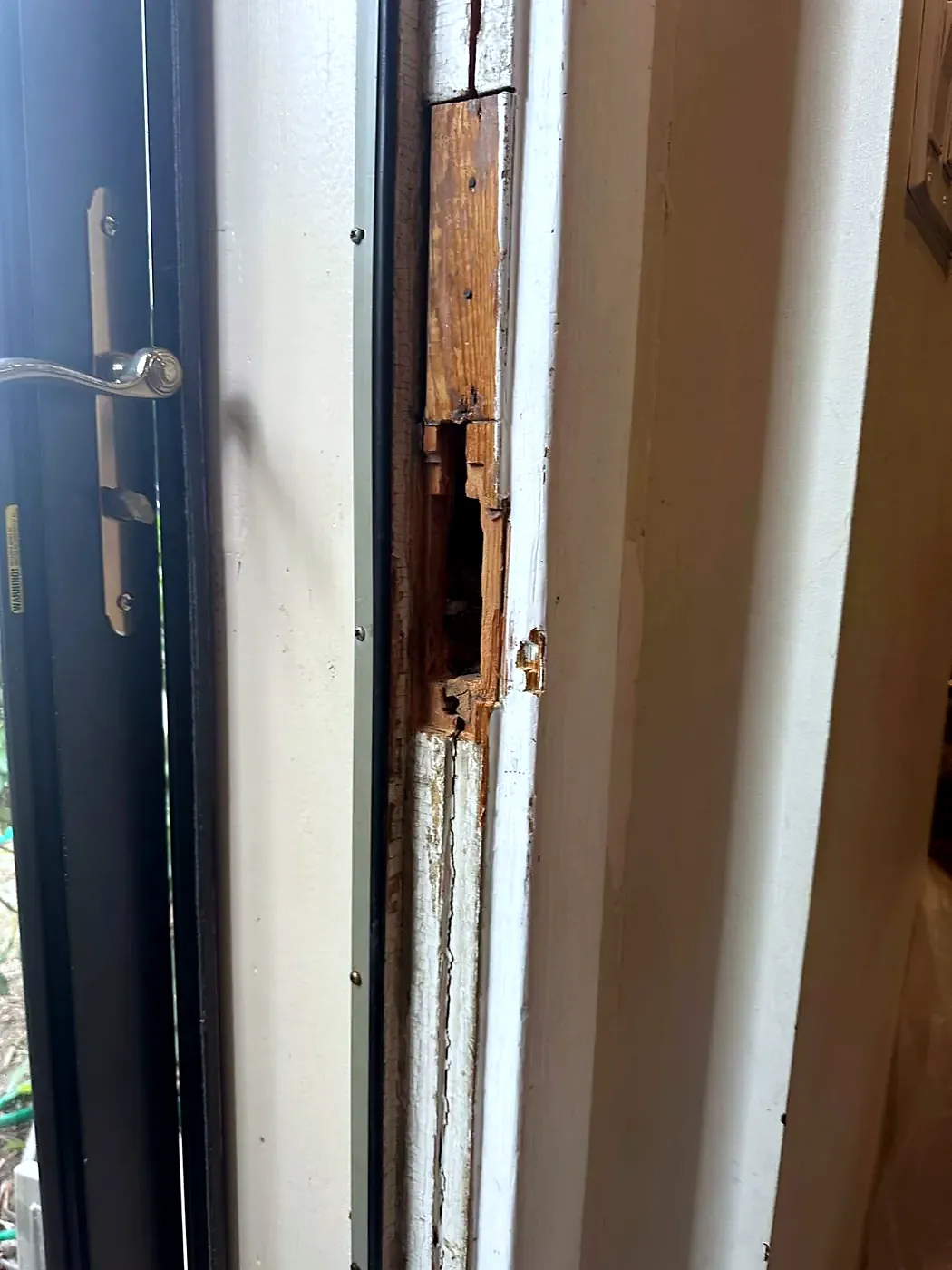
On exterior doors the damage is almost always at the bottom of the jamb where water sits, and sometimes at the top where the head trim has let go. How much of the frame is gone decides the repair.
- A few inches at the top and bottom of one jamb
- The best case, and we see it often. On frames where rot was confined to two damaged areas of roughly four inches each, the frame was spliced rather than replaced: the bad wood cut out, new stock let in and secured with glue and nails, then caulked, filled, primed and painted to match.
- Up to about six inches on both sides at the base
- We have found damaged wood running up to about six inches high on both sides of a front door frame. The bad wood comes off, the framing behind the trim is inspected, and you are told what is back there before any rebuild.
- Two to four feet of the frame
- At this point splicing is not honest work. On an entry where the lower two to four feet of the frame was damaged, the frame had to be cut out and replaced outright. A frame gone that far up has usually been wet for years.
- Damaged brick molding around the opening
- Rotted wood brick molding is replaced with rot-resistant composite rather than wood, then caulked, filled at the nail holes and painted to match. Composite is standard for us there: the same wood in the same spot fails the same way.
- Surface damage only
- Where the frame is sound but scarred, damaged areas are filled with wood filler, sanded, primed and painted. See rotted wood and trim repair.
Water damage around a door: what we find behind the trim
A surprising share of our door calls start as something else — a stained ceiling, a soft floor, a damp corner — and end at a door. Real findings from our job records:
- Missing flashing above a door head. Water leaking in above a double sliding door was traced to flashing that had never been installed above the head trim. The wall frame and sheathing had to be inspected for water and insect damage once the trim came off.
- A threshold and jamb letting water past. On a back French door that had already damaged a ceiling below, the leak was traced to the door threshold and its flashing. The unit came out, the sill plate was inspected, new threshold flashing went in sealed with polyurethane caulk, and the existing door was reinstalled.
- A rotted rim board under an exterior door. A leak showing at a soffit turned out to be the rim board behind the siding under the door. Siding and soffit came off, the rim board was replaced in pressure-treated stock, and a moisture barrier went on.
- Water entering at the siding and stoop junction. On one house, water getting in where the concrete stoop met the brick had rotted framing and plywood at the interior corner. Metal flashing was installed to stop it recurring.
- Framing that needs treating. Where a leak has wet framing, mold control is applied and the joists and studs are sealed with stain-killer primer before any new board goes back.
This is why our door scopes include inspecting the wall frame and sill plate, rather than closing the trim back over it.
Interior door repair: bifold, sliding closet and louvered doors
Interior doors fail differently from exterior doors. Nothing is rotting; the hardware and the opening are what give trouble.
- Bifold doors
- Binding bifolds are common on our punch lists. Where the track and brackets are sound the door is re-hung and adjusted. Where the door has failed, the old door, track and brackets come out, the replacement is resized to the existing opening, and it is painted to match.
- Sliding and louvered closet doors
- Sticking sliding closet doors and sliding louvered doors are usually reinstalled and adjusted so they run and close properly. Louvered slabs are light and rack easily, which is why they come back out of adjustment.
- Pocket doors
- Pocket doors hide their hardware inside the wall, so the diagnosis is different again — see pocket and barn door repair.
- Interior passage doors
- Where the slab is damaged rather than misaligned, individual slabs are replaced and the casing and baseboard made good around them.
What a door repair service call includes
- Protection first. Floor and furniture protection goes down before anything is opened up.
- Inspect the whole opening. Reveal, hinges, lockset, strike, frame fixing, threshold, weather stripping, trim and casing, and the floor under the door.
- Look for what the door is hiding. At any sign of water, the wall frame and sill plate are inspected for water, insect and other damage and you are told what is there.
- Adjust and re-secure. Hinges and locksets removed and reinstalled for correct reveal and level; frame secured and adjusted; weather stripping under the slab replaced.
- Repair rather than replace where the frame allows it. Short rotted sections cut out and spliced, damaged areas filled, brick molding replaced in composite.
- Finish the work. Caulk and seal inside and out, fill nail holes, prime and paint to match so the repair is not the first thing you see.
The work is performed according to the Virginia building code, by a licensed contractor holding Virginia DPOR license #2705070610, and we have been doing it since 1999.
Door repair or door replacement: how we decide
We would rather repair a door. It is faster and it does not put you on a delivery schedule. Four findings make a repair the wrong answer:
- The frame is gone over a long run. Rot confined to a few inches gets spliced. Damage running two to four feet up the frame means the frame and sill come out.
- The slab and the frame have both moved past adjustment. Where the slab is out of level and the gaps are uneven all the way round, resetting hinges moves the problem to a different corner.
- The weather seal cannot be restored. Doors with worn weather stripping and a failed closer that still will not seal after adjustment are finished as a weather barrier.
- The unit is wrong for the opening. We have converted failing exterior doors into fixed panels, converted bifolds to swing doors, and reframed openings for a different unit entirely.
If replacement is the answer, door installation covers fitting a new unit, and front door repair and replacement covers the entry door specifically.
What door repair costs, and how it is priced
We do not quote door repair prices by phone and we do not publish them. Two doors that look identical from the driveway can differ by a rotted sill plate, a frame that has to come out, a floor out of level, or missing flashing above the head. A number given sight-unseen is either padded to cover what nobody has looked at, or it changes once someone does.
An estimator comes to the property, opens up what needs opening, and gives you a written price before anything starts. Where the scope depends on what is behind the trim, that inspection is written into the contract rather than guessed at. We cover Northern Virginia and Washington DC, on (703) 256-8080.